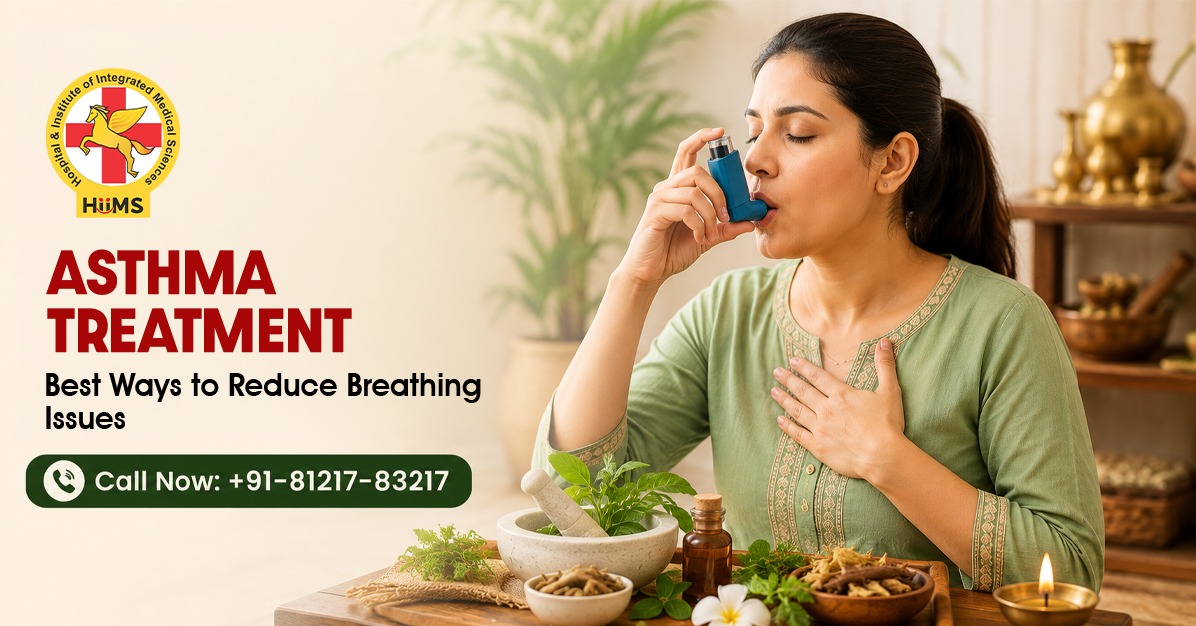
That tight feeling in your chest right before an asthma attack most people with asthma know it well enough to predict it coming. Managing this condition well means understanding your options properly, not just relying on one inhaler and hoping for the best. A solid asthma treatment plan usually combines medication, trigger management, and, in many cases, supportive natural approaches too.
This blog walks through what actually works, from conventional medicine to Ayurveda, so you have a fuller picture of what's available.
What Does Conventional Asthma Treatment Actually Involve?
There are two types of the standard asthma treatment:
Quick-relief (rescue) inhalers, short-acting bronchodilators that open airways within minutes during an attack
Controller medications, inhaled corticosteroids taken daily to reduce and prevent long-term inflammation
Combination inhalers, mixing a steroid and a bronchodilator for people with more frequent symptoms
Biologics, reserved for severe asthma that doesn't respond to standard inhalers
Proper inhaler technique matters just as much as the medication itself; a lot of poor asthma control actually comes down to incorrect usage rather than the treatment failing.
Best Asthma Doctor: What Should You Actually Look For?
Finding the right best asthma doctor isn't just about picking the nearest clinic. Some things to look for:
If they take the time to build a personalised asthma action plan with you, rather than just handing you a prescription
If they check your inhaler technique when you go in, don't just ask about symptoms
Whether they look at your particular triggers, allergens, pollution, exercise or stress
If they are open to exploring complementary approaches in addition to your prescribed medication
Best Asthma Treatment Hospital: What Facilities Actually Matter?
When comparing options for the best asthma treatment hospital, focus on a few practical things:
Proper diagnostic facilities, spirometry, and allergy testing, not just a stethoscope check
A pulmonologist or asthma specialist is actually on staff, not a general physician alone
Follow-up support between visits, since asthma management is ongoing, not a one-time fix
Willingness to combine conventional treatment with lifestyle and dietary guidance where relevant
Ayurvedic Asthma Treatment: How Does It Look at Breathing Issues?
Ayurveda refers to asthma as Tamaka Shwasa, which occurs due to excess of Kapha, blockage of respiratory tract, and poor digestion. Ayurvedic asthma treatment includes:
Vamana and other therapies for removing excess mucus
Herbs for respiratory system and inflammation reduction
Reducing Kapha-aggravating foods, especially cold, heavy, and oily items in the diet
Breathing exercises (Pranayama) to increase lung capacity over time
This approach generally works alongside prescribed medication, not as a replacement for it outright.
Is Asthma Treatment Without Inhaler Actually Realistic?
Let's be honest about this one. Some people search for asthma treatment without inhaler, hoping to avoid medication entirely, and it's important to be clear here: rescue inhalers remain essential during an actual asthma attack, and stopping them without medical guidance can be genuinely dangerous.
What Ayurveda and lifestyle changes can realistically do, for some patients under proper medical supervision, is reduce symptom frequency and support better overall lung function over time, potentially easing dependence on controller medication as things stabilize. This should only ever happen gradually, with your doctor's involvement, never as a sudden switch.
How Jeena Sikho HiiMS Derabassi Supports Asthma Patients
At Jeena Sikho HiiMS Derabassi, asthma support typically combines:
Panchakarma-based therapies, like Vamana, help clear excess mucus
A personalised diet plan built around reducing Kapha-aggravating foods
Herbal formulations to support respiratory strength
Breathing-focused routines and lifestyle guidance suited to the patient's specific triggers
Every plan is built around the patient's current medications, symptom pattern, and response over time and is meant to work alongside conventional asthma care rather than replace it.
Daily Habits That Genuinely Support Better Breathing
A few consistent habits help regardless of which treatment path you're following:
Identify and avoid your specific triggers: dust, smoke, pollen, and cold air
Practice breathing exercises regularly, not just during flare-ups
Keep your living space clean and well-ventilated
Maintain a healthy weight, since excess weight puts more strain on breathing
Stay consistent with prescribed medication, even on symptom-free days
Conclusion
Good asthma treatment rarely comes down to one single fix; it's usually a combination of the right medication, trigger management, and supportive lifestyle changes working together.
If you want to understand how Ayurvedic support could fit alongside your existing asthma medication, you can book a VOPD consultation with Jeena Sikho HiiMS Derabassi and have a proper conversation with their team.
FAQs
1. Can I stop using my inhaler if I switch to Ayurvedic treatment?
Never stop prescribed inhalers without your doctor's guidance, especially rescue inhalers used during attacks.
2. How can I understand that my asthma medicine works?
Decreased attack frequency, improvement in sleeping, and reduced use of rescue inhalers are the signs of the proper effect of the controller.
3. Can Ayurveda help reduce how often I need my inhaler?
For some patients, under proper medical supervision, it may support better overall control, but this should never be self-managed.
4. What triggers should I consider in case of asthma?
The triggers can include dust, pollen, smoke, cold air, physical activity, and respiratory infections, but each patient may have their own.
5. Do I need to visit specialists or is a general practitioner enough?
If you have persistent or severe asthma, you need to consult specialists, such as pulmonologist or asthma specialist.