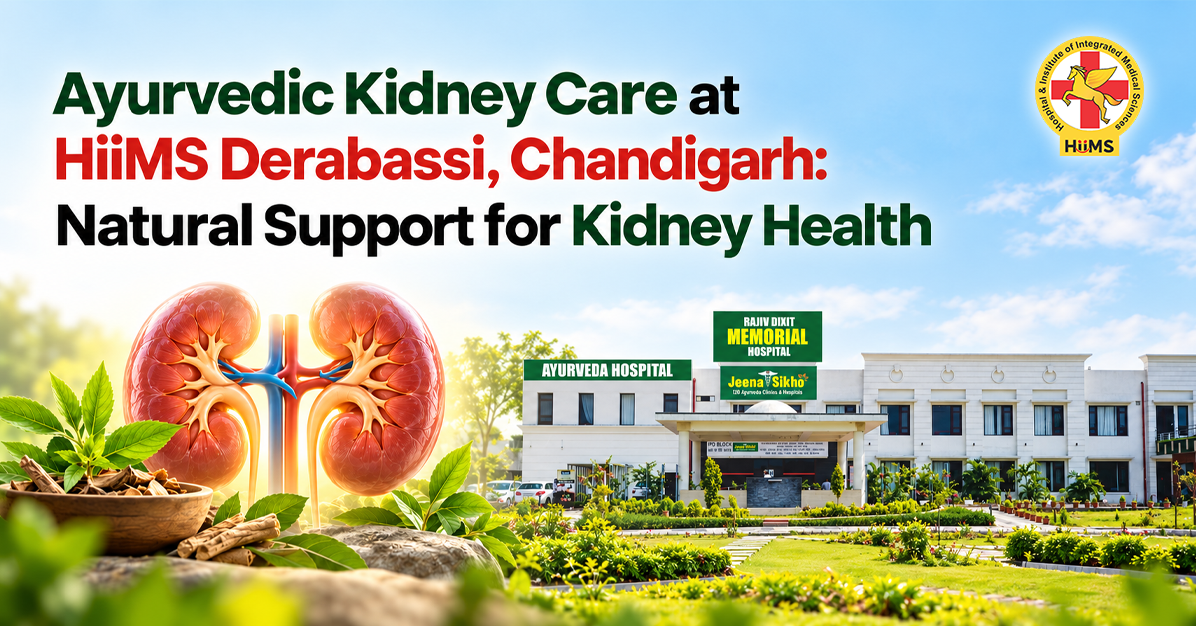
Kidney health is closely connected with many everyday functions that people usually take for granted. Such as the kidneys filter waste from the blood, manage extra fluid, and help maintain the balance of minerals in the body.
When this process starts changing, a person may notice swelling, changes in urine, tiredness, or a change in appetite, although some kidney problems may cause no clear symptoms in the early stages. That is why regular evaluation is so important, particularly for people with diabetes or high blood pressure. Ayurvedic kidney care can be considered as part of an individualized approach that looks at food, routine, lifestyle, and the person's overall condition, while appropriate kidney tests remain important.
In this blog, you will understand how kidney health is assessed, where Ayurveda fits into the picture, and how HiiMS Derabassi approaches kidney health care.
Looking for Ayurvedic Kidney Care in Derabassi?
If you are dealing with changes in kidney health or already have previous kidney reports, a professional assessment can help you understand your condition more clearly. Jeena Sikho HiiMS Derabassi provides an integrated facility where kidney-related concerns can be discussed with its healthcare team.
Why Kidney Health Needs Attention Even When You Feel Fine
Think of the kidneys as working filters that keep the internal environment of the body balanced. They remove waste through urine, help regulate fluid levels, and play an important role in maintaining healthy mineral levels. Kidney function is also closely linked with blood pressure and other aspects of overall health.
Why Early Attention Matters
One reason kidney health deserves attention is that chronic kidney disease may develop without obvious symptoms. The World Health Organization points out that kidney disease can remain asymptomatic until later stages, while blood and urine tests can help detect kidney problems earlier. Diabetes and high blood pressure are also important risk factors.
A recent ICMR-INDIAB analysis involving 25,408 people across India estimated impaired kidney function in 3.2% of the study population. The study also examined its association with diabetes and hypertension, showing why these conditions deserve attention when discussing kidney health care.
What Kidney Tests Tell You About Your Health
Two measurements are particularly useful when doctors assess kidney health. The estimated glomerular filtration rate, or eGFR, gives an indication of how well the kidneys are filtering blood, while urine albumin testing can identify protein leakage that may indicate kidney damage.
Why Previous Reports Are Important
A single test result does not always clarify the complete scenario. Looking at results over time can help a doctor understand whether kidney function is remaining stable or changing. Therefore, people visiting a doctor should carry earlier reports, prescriptions, and relevant medical records whenever possible.
Where Ayurveda Fits Into Kidney Health Care
Ayurveda takes a broader view of health by considering food habits, digestion, daily routine, sleep, physical activity, and individual constitution (body type) along with the person's symptoms. This approach can be useful when building a lifestyle plan around kidney health.
At the same time, natural care should not mean avoiding proper medical diagnosis. For someone with CKD, diabetes, high blood pressure, abnormal kidney reports, or regular medicines, any Ayurvedic therapy should be planned according to the person's condition and followed with suitable monitoring.
Ayurvedic Kidney Care at HiiMS Derabassi: The Approach
At Jeena Sikho HiiMS Derabassi, the kidney-care approach described by the hospital combines clinical evaluation with Ayurveda, Panchakarma, diet and lifestyle guidance. The hospital’s method is a root-cause, treatment-based approach, which is considered according to the person's health condition, kidney function, symptoms, and test reports rather than following exactly the same routine for everyone.
Diet, Routine, and Supportive Therapies
Food and daily habits form an important part of the approach. Instead of giving every patient the same diet, the plan can be considered around the individual's health status and existing reports. Supervised Ayurvedic therapies may also be included when appropriate.
Panchakarma is another part of the Ayurvedic model used at HiiMS. Its role should be decided after individual assessment rather than treated as a general procedure that suits every kidney patient.
What Research Says About Ayurveda and Kidney Care
A published case report in AYUSHDHARA described Ayurvedic and Panchakarma-based care for a 42-year-old woman with stage 5 CKD at Jeena Sikho Lifecare Limited Hospital, Derabassi. The authors reported improvements in symptoms and some kidney-related measures during the case.
However, this was a single case report, not a large clinical trial. The authors themselves noted that larger randomized controlled studies are needed to evaluate the safety and effectiveness of these interventions. This distinction is important when discussing Ayurvedic kidney care responsibly.
Why Consider HiiMS Derabassi for Kidney Health Care?
People searching for the best kidney hospital in Derabassi often want more than a place to get a test. They also want to understand what happens after the report is reviewed and whether the care plan can fit their daily life.
HiiMS Derabassi is an integrated model that brings Ayurveda, Panchakarma, naturopathy, and clinical assessment together. Its current doctor listing includes practitioners whose areas of care include kidney diseases, allowing patients to discuss their concerns and existing reports with the healthcare team.
For someone looking for kidney treatment in Derabassi, this integrated approach may be relevant when the goal is to understand kidney health alongside diet, lifestyle, and Ayurvedic care.
When Should You Get Your Kidney Health Checked?
Do not wait for symptoms alone if you already have diabetes, high blood pressure, or a previous kidney problem. Persistent swelling, repeated urine changes, unusual tiredness, or an abnormal creatinine, eGFR, or urine-albumin report also deserves professional attention.
If you are exploring kidney health care, taking your earlier reports to a qualified healthcare professional can make the consultation more useful and help the doctor understand what has changed over time.
Conclusion
Effective kidney care starts with understanding what your kidneys are doing and paying attention to changes before they become part of your everyday routine. Ayurvedic Kidney Care at Jeena Sikho HiiMS Derabassi focuses on an individualized approach that brings together Ayurvedic principles, lifestyle guidance, supportive therapies, and clinical assessment. It is equally important to remember that kidney conditions can vary widely, so the right plan depends on your reports, symptoms, and overall health.
If you are looking for kidney treatment in Derabassi, you can discuss your concerns and previous reports with the HiiMS healthcare team. You can also opt for a VOPD consultation with expert doctors at Jeena Sikho HiiMS to understand the next appropriate step for your kidney health.

FAQs
Q1: What does Ayurvedic Kidney Care include?
It may include individualized Ayurveda, diet and lifestyle guidance, and supervised therapies based on a person's condition and kidney reports.
Q2: Which kidney tests are commonly used?
Doctors commonly use blood testing for eGFR and urine testing for albumin to assess kidney function and possible kidney damage.
Q3: Can Ayurveda be used alongside regular kidney care?
The approach should be discussed with a qualified healthcare professional, particularly when CKD, diabetes, hypertension, or regular medicines are involved.
Q4: When should someone consult a kidney specialist?
Persistent urine changes, swelling, abnormal kidney reports, diabetes, high blood pressure, or a previous kidney condition can be reasons to seek professional evaluation.
Q5: What should I carry to a kidney consultation?
Previous kidney reports, current medicines, recent blood or urine tests, and a record of relevant symptoms can help the doctor understand your history.