Feeling dizzy after standing up suddenly? Weakness without any clear reason? Are your hands and feet usually cold? Many people ignore these signs, thinking it’s just tiredness or poor sleep. But honestly, the body often gives early signals when blood pressure starts dropping too low. Understanding low BP symptoms early may help people become more aware of what the body is trying to say before daily life is severely affected.
Low blood pressure, also called hypotension, may leave people feeling drained, mentally tired, shaky, or physically weak throughout the day. Some people find it more difficult in the summer, and others feel unwell after stress, bad eating habits, dehydration, or lack of sleep.
At Jeena Sikho HiiMS Derabassi, many people now explore supportive Ayurvedic wellness approaches alongside medical guidance to naturally improve circulation, relaxation, balance, and energy. Ayurveda focuses on gradually strengthening the body rather than offering only temporary comfort.
BP Low Symptoms and Why They Should Not Be Ignored
Blood pressure helps move blood properly throughout the body. When pressure drops too low, the brain, muscles, and organs may temporarily not receive enough blood flow. This is when many uncomfortable signs begin appearing slowly. Some frequent low blood pressure symptoms that people often notice include
Dizziness
Weakness
Blurred vision
Feeling faint
Cold hands and feet
Extreme tiredness
Poor focus
Nausea
Shakiness
Fast heartbeat
A few individuals also describe a strange heaviness in the body during low BP episodes. Many people ignore these changes because symptoms come and go at first. But repeated weakness or dizziness should never be ignored.
What causes low blood pressure in daily life?
People often search online asking, "What causes low blood pressure suddenly?" The truth is that many daily habits quietly affect circulation and nervous system balance more than you might expect. Some commonly discussed causes include:
Dehydration
Poor eating habits
Stress and anxiety
Lack of sleep
Weak digestion
Excessive heat exposure
Hormonal imbalance
Long gaps between meals
Weak immunity
Nutritional deficiency
Modern routines also play a major role. Many people skip breakfast, sleep late, drink less water, stay under stress all day, and spend long hours in front of screens. Slowly, the body begins to feel weaker internally.
Emotional exhaustion may also deeply affect circulation and energy levels. This is why many individuals experiencing low BP symptoms often say they feel mentally tired along with physical weakness.
Supportive Ayurvedic Wellness Approaches at Jeena Sikho HiiMS
At Jeena Sikho HiiMS Derabassi, many individuals now explore supportive Ayurvedic wellness practices alongside medical care because Ayurveda holds that proper healing requires balance in both body and mind. Supportive therapies commonly explored include:
Abhyanga Therapy
Abhyanga is a warm herbal oil massage therapy that many people seek for circulation support and relaxation.
Massage techniques that are rhythmic can help increase circulation and alleviate stiffness or weakness in the body. Many individuals feel lighter and calmer after the therapy.
Shirodhara Therapy
Shirodhara is commonly used to support nervous system relaxation and stress relief. Warm medicated oil is gently poured over the forehead for a fixed duration. People often describe the therapy as deeply calming mentally.
Stress and nervous exhaustion are often linked with repeated low BP symptoms, which is why supportive relaxation therapies are explored by many individuals.
Mild Swedana Support
Mild herbal steam support is sometimes explored after therapies to encourage circulation and reduce body dullness. However, supportive steam routines are usually adjusted carefully for people dealing with low blood pressure.
Janu Basti and Kati Basti
Some people dealing with weakness in the lower back or legs also explore localised oil-retention therapies for supportive muscle relaxation and body comfort.
Herbs Traditionally Associated with BP Low Management
Ayurveda also uses herbs traditionally linked with strength, circulation, relaxation, and nervous system balance. Some commonly explored herbs include:
Ashwagandha
Shatavari
Ginger
Bala
Cinnamon
Garlic
Cardamom
Arjuna
Licorice
Jatamansi
At Jeena Sikho HiiMS, wellness support is usually personalised to each person's condition rather than following a single fixed routine for everyone.
Daily Habits Also Affect BP Low Management
Honestly, therapies alone may not help much if daily routines continue disturbing the body repeatedly. Small habits quietly affect blood pressure every single day:
Poor hydration
Irregular sleep
Stress
Long fasting gaps
Excessive junk food
Overworking
Lack of physical movement
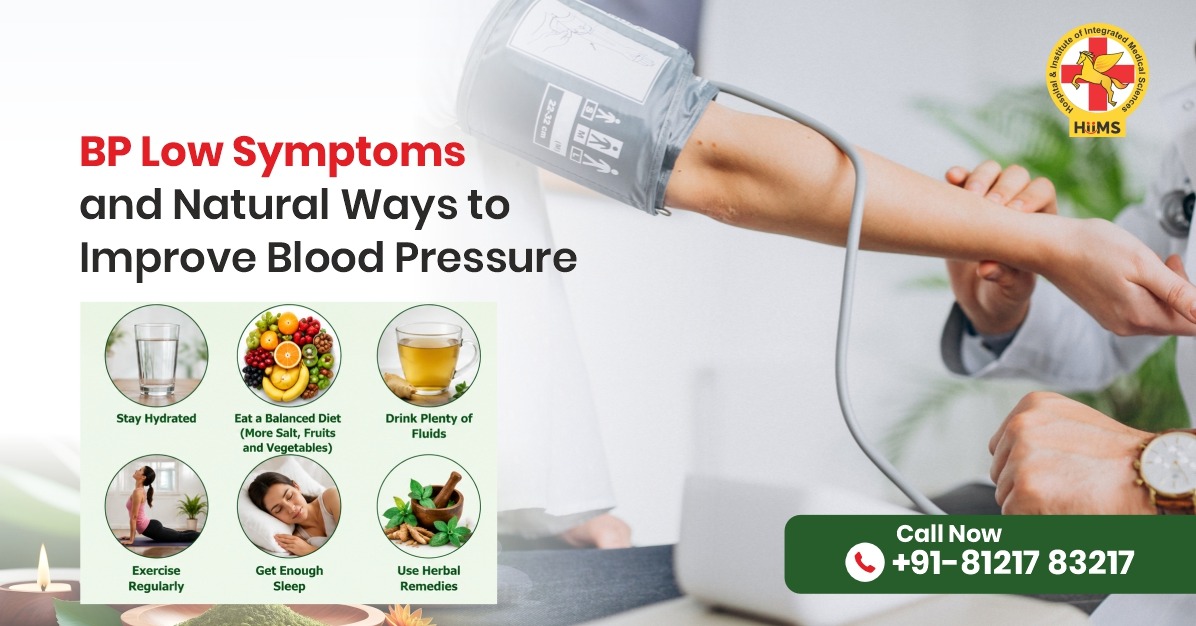
People often feel better when supportive wellness routines are consistently combined with healthier habits. Some good daily practices can be:
Drinking enough water
Eating meals on time
Sleeping properly
Reducing stress
Gentle movement or walking
Avoiding excessive screen exposure
Improving digestion naturally
Many individuals exploring low blood pressure treatment today prefer gradual, wellness-focused routines rather than relying solely on temporary solutions. Ayurveda holds that the body responds slowly but steadily as lifestyle habits improve consistently over time.
Conclusion
Understanding low BP symptoms early may help people notice body changes before weakness and dizziness significantly affect daily life. Symptoms like faintness, tiredness, blurred vision, poor focus, cold hands, and sudden weakness should never be ignored. The body often gives warning signs much earlier than expected.
Many people today explore Ayurveda because it focuses on long-term wellness rather than just temporary relief. If you still feel confused about which direction may suit your condition better, you can also explore a VOPD consultation with the doctors at Jeena Sikho HiiMS Derabassi and better understand your health condition. Many people who are researching low blood pressure medication these days are choosing to take progressive, wellness-based approaches rather than quick fixes.

FAQs
1. What are common low BP symptoms?
Signs that are often seen are dizziness, weakness, blurred vision, faintness, cold hands, and weariness.
2. What is the most prevalent cause of low blood pressure?
Dehydration, stress, bad sleep, weak digestion, and dietary imbalance are often spoken about as explanations.
3. Does stress disturb the blood pressure equilibrium?
Yes, long-term stress can subtly impact circulation, the equilibrium of the nervous system, and physical vitality.
4. What are the therapies described for BP low management?
Many try Abhyanga, Shirodhara, mild Swedana and supporting Ayurvedic wellness therapies.
5. Why do individuals seek Ayurveda for the treatment of low blood pressure?
Many people prefer Ayurveda as it naturally addresses circulation, relaxation, digestion and long-term body balance.