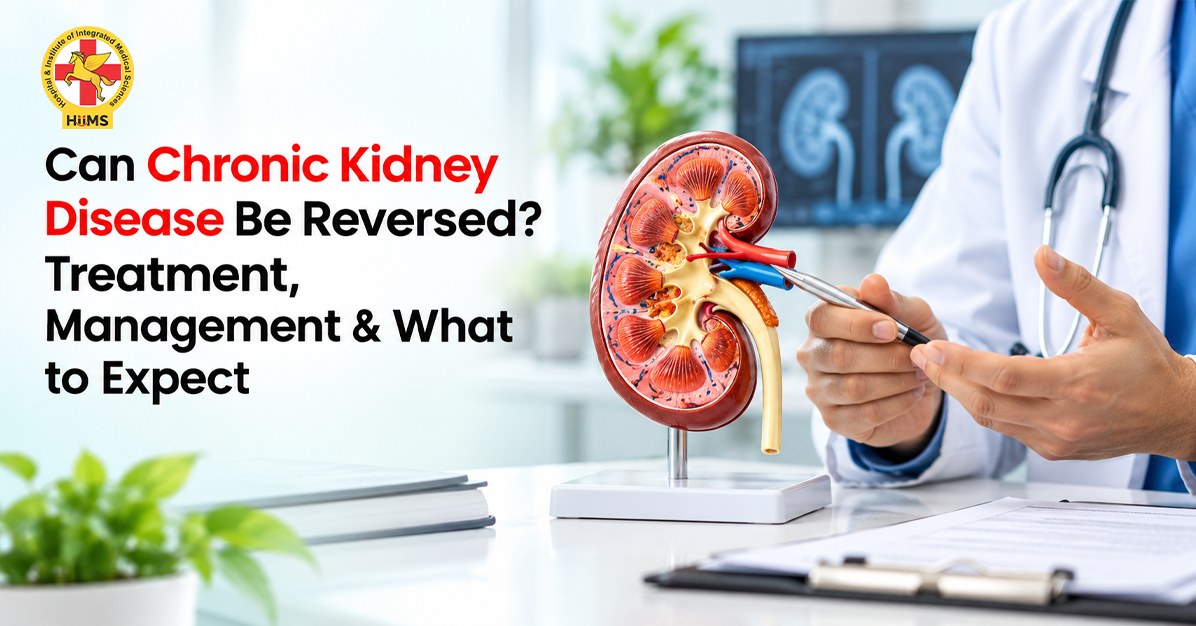
Most people find out about kidney problems late. The reason is simple: kidney damage often causes no pain for years. So the first question after a bad report is usually this: can kidney disease be reversed?
An Indian study called SEEK screened 5,588 people and found that 17.2% had a serious drop in kidney function, with about 6% at stage 3 or worse. This was a screening study, so the real number may differ. Still, it shows how common chronic kidney disease is in India. This blog explains what is realistic and what effective care looks like.
What Is Chronic Kidney Disease?
Your kidneys clean your blood. They remove waste and extra water from your body as urine.
CKD is the short name for this condition. It means your kidneys are damaged or not working well for more than 3 months. Doctors check this with a blood test called eGFR, which shows how well the kidneys filter, and a urine test for protein. CKD has five stages. Stage 1 is the mildest. Stage 5 is kidney failure.
Not sure how your kidneys are doing? Get a simple kidney function test and talk to a doctor.

Common Symptoms and Causes of CKD
Early CKD often has no signs. As it grows, you may notice:

Swelling in the feet, ankles, or face
Feeling very tired
Foamy urine
Changes in how often you pass urine
Nausea or loss of appetite
Itchy skin
Diabetes and high blood pressure are the two most common causes. Both can slowly damage the tiny filters inside the kidneys. Long-term use of some painkillers can also harm them.
Can Kidney Disease Be Reversed? What Doctors Say
The honest answer is this: in most cases, not fully. Once kidney tissue is scarred, it usually does not grow back. That is why the 2024 KDIGO guideline, a global guide for kidney doctors, focuses on slowing CKD down. It emphasizes controlling blood pressure, controlling sugar in people with diabetes, and reducing protein loss in urine. It also focuses on healthy habits like a good diet, activity, and not smoking.
Some causes can improve if they are treated in time, such as dehydration, blocked urine flow, or the side effects of a medicine. Early action gives your kidneys the best chance.
Want to know your stage and what it means? Talk to a kidney care expert today.
Conventional Treatment: What It Does and Where It Falls Short
Standard treatment helps to protect the kidney function you still have. Doctors control blood pressure and blood sugar, give medicines that protect the kidneys, and advise limits on salt and some foods. If the kidneys fail, dialysis or a transplant may be needed. Dialysis saves lives when it is needed.
However standard treatments primarily focus on slowing down disease progression rather than repairing damaged tissue or addressing root-cause imbalances. Everyday lifestyle factor such as chronic stress, poor sleep quality and gut health directly impact renal wellness. Because standard care often leaves these elements unsupported, many patients seek comprehensive lifestyle guidance and natural therapies to complement their treatment and improve their overall quality of life.
Chronic Kidney Disease Without Dialysis: What Does the Research Say?
Many people ask whether kidney disease can be managed without dialysis. In the early and middle stages doctors often use conservative care. This means protecting kidneys with diet, medicines and regular checks, and delaying dialysis where possible.
Research in the Journal of Renal Nutrition says diet is a main part of this care. It reports growing evidence that plant-based, low-protein diets may lower the risk of CKD getting worse. This depends on your stage.
An Ayurvedic View of Kidney Care
In Ayurveda, the kidneys are called Vrikka. They are described as formed from blood and fat tissue (Meda). CKD is understood as Vrikka Vikara, a disorder of the Mutravaha Srotas, the channels that carry urine. Ayurveda links the condition to imbalanced Vata and Kapha, weak digestion (Agni), and toxin buildup (Ama) that blocks these channels.
So Ayurvedic care looks at lasting wellness. It works on digestion, diet, daily routine, herbs and cleansing therapies like Panchakarma.
How Jeena Sikho HiiMS Derabassi Chandigarh Approaches Chronic Kidney Disease Care
Jeena Sikho HiiMS derabassi Chandigarh is an integrated hospital that brings together Ayurveda, naturopathy, homeopathy, and modern science. The hospital focuses on root-cause care for kidney disease management.

If you are searching for the best kidney disease treatment, it helps to know what a whole-person plan looks like. HiiMS builds its kidney care around four parts:
1. GRAD Therapy
Hot Water Immersion: Patients sit in warm water, about 42°C up to the neck. It helps you eliminate toxins through the skin in the form of sweat which lowers the burden on the kidneys. It helps blood flow and relaxes the body.
Head-Down Tilt: Patients lie on a tilted bed with their head lower than their feet, at a gentle angle. HiiMS uses it to support blood flow to the kidneys.
pH-Balanced Diet: It is a simple plant-based food plan that consist of fresh fruits and raw vegetables.
2. Herbal Support
Herbs such as punarnava, gokshura and varuna are traditionally used to support urine flow and ease swelling. The doctor picks them for your body type and condition.
3. Panchkarma
These are Ayurvedic cleansing therapies that helps support body's natural detox. The doctor picks the therapy after checking your stage and reports.
4. Lifestyle Changes
You get guidance on daily routine, sleep, light activity, and stress control through yoga and meditation. You also learn healthy food habits and how to prepare meals at home, so you can carry on the routine after you leave.
Looking for the best kidney doctor to guide your care plan? Book a consultation at Jeena Sikho HiiMS Derabassi Chandigarh today.

How to Manage Chronic Kidney Disease Day to Day
Treatment work best when your daily habits support it. These steps matter most—
Control Blood Pressure & Sugar: High blood pressure and diabetes are the top causes of kidney damage. Take your medicines on time and check your readings often.
Eat With Care: Avoid salt and choose fresh, simple food over packaged food. Ask your doctor or dietitian how much protein, potassium, and phosphorus is right for you.
Avoid Harmful Habits: Avoid smoking, alcohol, and unprescribed painkillers, as they can harm the kidneys.
Stay Active: Walk or do light exercise as your doctor advises.
Manage Stress: Yoga, slow breathing and regular sleep all help.
What to Expect: Living With CKD Long Term
CKD care is a long journey, not a quick fix. In stages 1 and 2, there are often no symptoms, and care focuses on protecting the kidneys. In stages 3 and 4 swelling and tiredness may appear and check-ups become more frequent. At stage 5, the kidneys have failed, and doctors usually advise dialysis or a transplant.
Get expert help right away if you have very little urine, sudden swelling, severe breathlessness, confusion, chest pain, or repeated vomiting.
Conclusion
Kidney care works best when you start early and stay steady. Know your stage, follow your doctor's advice, and build healthy daily habits. Living with chronic kidney disease is easier when you have the right plan and regular care. Take the first step for your kidney health today. Book your consultation at Jeena Sikho HiiMS derabassi Chandigarh, or talk to a doctor from home through VOPD (video consultation).

FAQs
What are the early signs of CKD?
Early CKD often has no signs. Later, you may notice swelling, tiredness, foamy urine, or changes in urination. Only blood and urine tests can confirm it.
Can CKD be cured?
In most cases, CKD cannot be fully cured because scarred kidney tissue usually does not grow back. Care aims to slow the damage and protect the kidney function you still have.
Can CKD be managed without dialysis?
In the early and middle stages, doctors often use diet, medicines and regular checks to delay dialysis. When the kidneys fail doctors usually advise dialysis or a transplant.
Which foods should I limit if I have CKD?
Avoid salt and packaged food. How much protein, potassium, and phosphorus is right depends on your stage, so ask your doctor or dietitian.
Can I take Ayurvedic treatment along with my medicines?
Ayurveda can support regular kidney care effectively. Tell your doctor about any herb you take, and never stop medicines or dialysis on your own.