Walk into any family gathering in Punjab today, and someone will mention a sugar report. A father checks his fasting number every morning, a cousin has just been told by the doctor that he is "borderline", and a young colleague quietly skips dessert. Diabetes has moved from a rare diagnosis to an everyday conversation.
The numbers explain why. The ICMR-INDIAB study, published in The Lancet Diabetes & Endocrinology, estimated that India had about 101 million people with diabetes and 136 million with prediabetes in 2021. Long working hours, packaged snacks, little walking and rising weight all add to that figure.
Also because the condition stays for years, a single lab report never tells the whole story. Effective diabetes management asks for daily choices around food, movement, sleep and stress.
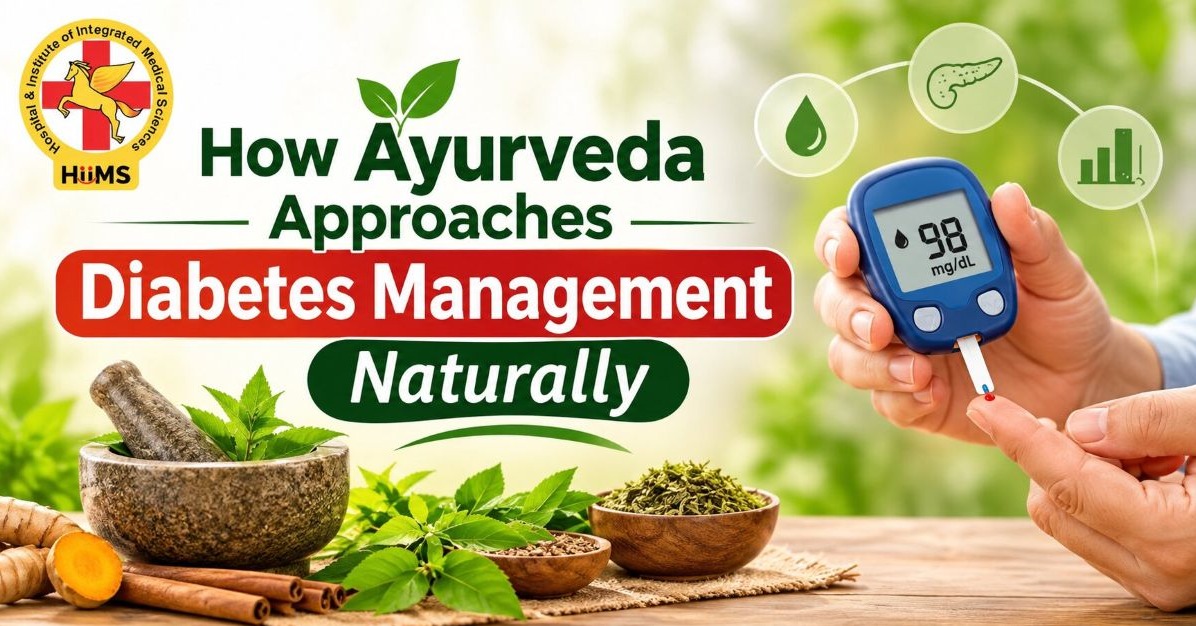
In this blog, you will learn how the body handles sugar, how Ayurveda understands diabetes, which habits, herbs and therapies it uses, and how to take your first step towards care.
Did You Know?
101.3 million adults in India (about 11.4%) were estimated to live with diabetes in 2021, and 136 million (about 15.3%) had prediabetes, which is roughly one in seven adults.
The study's lead author warned that more than 60% of people with prediabetes may convert to diabetes within five years.
Punjab recorded the highest prevalence of hypertension in the study, another risk that travels alongside diabetes.
Source: ICMR-INDIAB Study, The Lancet Diabetes & Endocrinology, 2023.
CTA: Not sure where your sugar levels are now? Talk with qualified Ayurvedic doctors.

What Happens Inside the Body When Someone Develops Diabetes?
Think of blood sugar, or glucose, as fuel that every meal releases. Insulin, a hormone made by the pancreas, works like a key that lets this fuel enter your cells.
In diabetes, the pancreas makes too little insulin, or the cells stop responding to it properly. Glucose then piles up in the blood instead of powering the body.
Over the years, this extra sugar damages small blood vessels and nerves. That is why the eyes, kidneys, feet and heart often suffer first. Doctors call the early in-between stage prediabetes, and it is the best time to act.
Common Signs That May Indicate High Blood Sugar
Watch for these signals, which the WHO lists among the symptoms of diabetes:
Frequent urination, especially at night
Increased thirst and hunger
Unexplained tiredness
Blurred vision
Slow healing of cuts and wounds
Tingling or numbness in the hands and feet
Why Managing Diabetes Requires More Than Just Checking Sugar Levels
A glucometer only shows where your sugar stands today. It cannot show what is happening inside your kidneys, eyes, nerves and heart. Uncontrolled sugar harms all four slowly and often painlessly, so regular monitoring is important.
Diet, lifestyle, herbs and check-ups also work as a team. When one falls off, the others carry an extra weight.
This is why crash diets don't always help. The body is intelligent and it responds to consistency, not to one strict couple of weeks followed by months of old habits. A good plan therefore looks at the full week, not just one morning reading.
How Ayurveda Understands Diabetes: The Concept of Prameha and Madhumeha
Ayurveda has described diabetes-like conditions for centuries under the name Prameha. Madhumeha, which means "honey-like urine," is one of its types.
Classical texts link Prameha with Kapha, Pitta and Vata, and Kapha usually dominates. The Ministry of AYUSH's diabetes protocol describes it mainly as a disorder of Meda dhatu, the body's fat tissue.
Ayurveda does not look at sugar alone. It studies digestion (agni), metabolism, body build, food habits and daily routine together. Because every person has a different prakriti (body constitution), two people with the same HbA1c may receive different plans.
The Four Ayurvedic Pillars That Support Diabetes Management

Jeena Sikho HiiMS provides care on four pillars:
Aahar: food and dietary habits
Vihar: daily routine, exercise and lifestyle
Shaman: Ayurvedic medicines and formulations
Shodhan: cleansing procedures such as Panchakarma
We use them together, because long-term diabetes management very rarely comes from one change alone.
Aahar – How the Right Diet Supports Blood Sugar Management
Food is considered to be the first medicine in Ayurveda. Eat meals at fixed times and avoid long gaps. Eat the meal in two plates. Plate 1 with raw fibre-rich vegetables, salads and fruits, and all should be seasonal, and in Plate 2 add a light homemade meal or vegetable soup and whole grains such as millets.
Cut down refined flour, sugary drinks and packaged snacks. Keep portions moderate, and choose fruit according to your sugar level rather than habit.
Why Personalised Diet Planning Matters
The same chart cannot suit everyone. Age, weight, activity level, sugar readings and other conditions, such as kidney problems, all change what is safe.
Vihar – Building a Daily Routine for Better Metabolic Health
Daily habits shape how well insulin works. The WHO advises adults to complete at least 150 minutes of moderate physical activity every week, and a short walk after meals adds to it.
Yoga and pranayama, such as Anulom Vilom and Bhramari, calm stress. Keep your weight in a healthy range, sleep at a fixed hour and avoid sitting for long stretches. Each habit increases insulin sensitivity a little, and together they support overall metabolic health.
Shaman – The Role of Traditional Ayurvedic Herbs
Ayurveda uses several herbs in diabetes-related formulations. Their traditional roles look like this:
No single herb can control or reverse diabetes on its own. A doctor should choose and combine them, because herbs can interact with chemical based regular medicines.
Neem Karela Therapy – A Traditional Supportive Practice
Neem Karela therapy is an external practice that diabetes patients undergo at Jeena Sikho HiiMS. A fresh paste of neem leaves and karela (bitter gourd) is prepared and applied. Both plants are valued in Ayurveda for their bitter qualities.
The paste goes into a large tray, and the patient walks or stands on it with bare feet. The paste stays in contact with the soles, which is why the therapy is known as a foot-based external application.
Shodhan – Understanding Panchakarma in Ayurvedic Diabetes Care
Panchakarma is a group of traditional cleansing procedures, considered only after individual assessment:
Vamana: supervised therapeutic emesis
Virechana: therapeutic purgation
Basti: medicated enema
Nasya: prescribed preparations given through the nose
Not every procedure suits every person with diabetes. The decision depends on your health condition and your doctor's assessment.
CTA: Wondering which herbs or therapies could suit your body? Talk to a diabetes specialist in Derabassi at Jeena Sikho HiiMS.

What Does Research Say About the Ayurvedic Approach to Diabetes?
A 2022 systematic review in Frontiers in Pharmacology looked at 199 randomised controlled trials with 21,191 participants and 98 Ayurvedic medicines. Several herbs lowered HbA1c, and fasting blood glucose fell by 4 to 56 mg/dl, depending on the herbal formulation.
How Jeena Sikho HiiMS Derabassi Approaches Diabetes Management
Jeena Sikho HiiMS Derabassi works as an integrated model, and it is a 100-bed hospital. It combines Ayurveda, naturopathy, yoga, diet guidance and Panchakarma. For people searching for an Ayurvedic hospital in Derabassi, this means several options under one roof.
A usual journey follows these steps:
The diabetes doctor in Derabassi first reviews your health history and current medicines.
Then the healthcare team studies your blood sugar reports and other investigations.
You receive personalised diet and lifestyle guidance.
Ayurvedic assessment leads to suitable formulations and therapies.
Regular follow-ups track your progress.
Taking the First Step Towards Better Diabetes Management
Do not wait for symptoms to become severe. Early consultation gives you more options and often calmer outcomes.
An experienced diabetes doctor in Derabassi at Jeena Sikho HiiMS can assess your condition before suggesting any plan. Carry your recent blood reports, HbA1c results, and every prescription to the first visit.
Whether you search for a diabetes hospital in Derabassi, a diabetes specialist in Derabassi, or an Ayurvedic hospital in Derabassi, Jeena Sikho HiiMS Derabassi is one option for Ayurvedic and integrated diabetes care.
Conclusion
Diabetes needs steady attention to diet, lifestyle, and medical monitoring. Ayurveda adds a traditional view that considers food, daily routine, medicines, and therapies together.
The right plan always starts with individual assessment and continues with regular medical supervision. That balance defines sensible diabetes management. For those exploring a trusted diabetes hospital in Derabassi, Jeena Sikho HiiMS offers services like OPD, VOPD, Daycare and IPD with experienced doctors.
You can also opt for a VOPD consultation with expert doctors at Jeena Sikho HiiMS for your health concern, from the comfort of your home.

FAQs
1. How does Ayurveda approach diabetes management naturally?
Ayurveda combines personalised diet, daily routine, herbal medicines and cleansing therapies after assessing your prakriti (body constitution), digestion and metabolism, instead of focusing only on the sugar number.
2. Which Ayurvedic herbs are traditionally used for diabetes?
Gudmar, jamun, methi, karela and amla are commonly discussed herbs. A doctor should guide their use, since they may interact with regular chemical based medicines.
3. Can diet and lifestyle changes help manage blood sugar levels?
Regular meals, fibre-rich foods, daily walking, good sleep and stress control can support blood sugar control, though results vary from person to person.
4. Is Panchakarma suitable for everyone with diabetes?
Suitability depends on each person's overall health, blood sugar pattern and the doctor's assessment, so Panchakarma is advised only after a proper consultation.
5. Where can I consult a diabetes specialist in Derabassi?
You can visit Jeena Sikho HiiMS Derabassi for OPD (walk-in), or choose a virtual consultation if travelling to the hospital is difficult.