Many women notice small changes that develop, such as periods that extend beyond the usual, stubborn acne, extra weight around the belly, or a steady low energy that makes days feel heavier. These are some useful signals the body gives, and learning what they mean is more helpful than worrying over terms. Polycystic ovary syndrome (PCOS) affects menstrual balance, skin, mood, and sometimes fertility, so clear, practical steps help more than confusion.
In this blog, we will explain in a simple way how to manage PCOS using sensible diet choices, regular movement, better sleep, stress management, and measured Ayurvedic support, with no unnecessary complications.
By the end you will see what early signs of PCOS look like, which daily habits make a real difference, and which natural approaches are sensible to try with a trusted doctor and hospital.
Understanding PCOS: What Happens Inside the Body
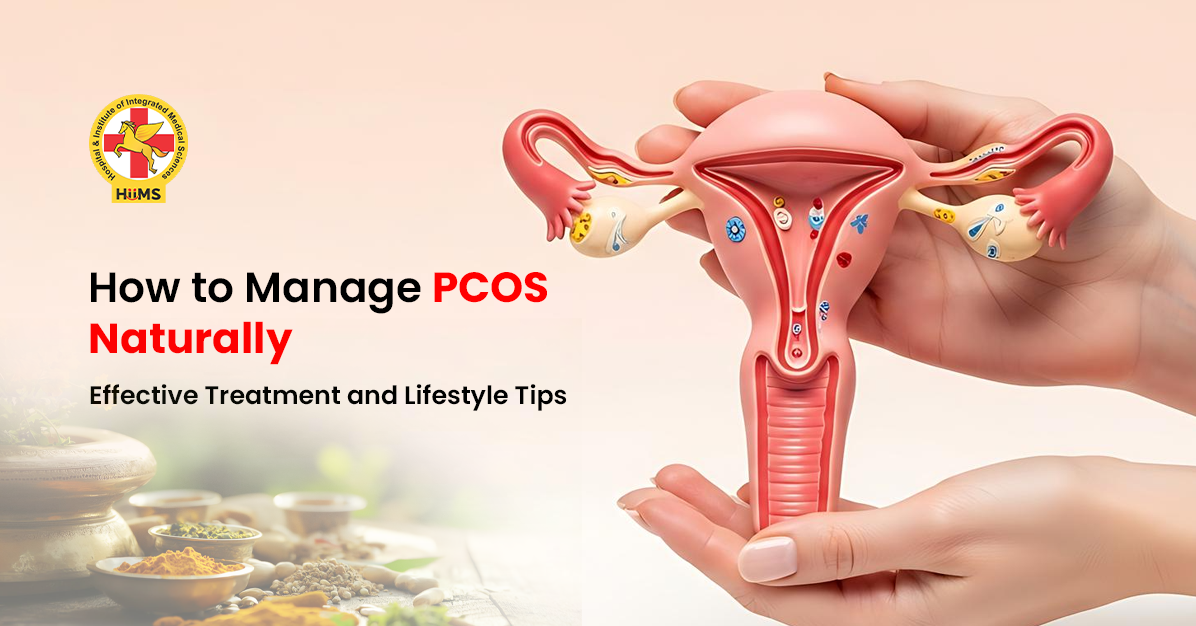
Polycystic ovary syndrome (PCOS) changes the way the ovaries release eggs and also affects how hormones function throughout the body. Many women experience irregular ovulation or cycles that stretch beyond the expected time frame. This basic pattern explains why periods can become irregular and why certain symptoms may start showing on the skin and in the hair.
Insulin resistance generally plays an important role in these changes. When the body struggles to use insulin efficiently, the pancreas produces more of it. Higher insulin levels can make the ovaries produce more androgens, which can disturb regular ovulation and lead to several metabolic changes in the body. When this happens, many women begin to notice different signs related to hormones and metabolism. Understanding this connection helps people see why everyday metabolic choices play an important role in supporting healthy reproductive function.
Common Signs of PCOS Women Should Not Ignore
Early signs of PCOS typically show up in routine life, like periods that arrive late, persistent acne beyond the teenage years, or consistent weight gain around the belly area.
Over time, other concerns such as excess facial hair, thinning scalp hair, and difficulties conceiving may appear. Noting these changes early makes it easier to plan sensible steps rather than chasing behind only quick fixes.
How to Manage PCOS Naturally: A Holistic Approach
When asking how to manage PCOS, think of a steady plan rather than a single cure. The answer to how to manage PCOS means stabilising blood sugar, supporting regular ovulation, and making pcos symptoms and treatment as a primary objective. Adopting small, steady shifts over months tends to produce more reliable and lasting improvement than abrupt, short-term fixes that the body resists.
The main things are quite simple: following a balanced pcos diet, staying physically active, keeping stress under control, getting proper sleep, and using natural support in a careful and guided way.
PCOS Diet: Eating Habits That Support Hormonal Balance
A properly planned pcos diet helps the body receive steady energy from meals and also prevents sudden spikes in blood sugar levels. Eating simple foods like whole grains, pulses, fresh vegetables, fruits, and good protein sources helps the body handle insulin in a smoother and healthier way. Cutting back on refined sugars and processed snacks lowers metabolic pressure.
Warm, home-cooked meals are easier for the body to digest, and eating at regular times helps the body keep a steady metabolic rhythm. Small habits such as choosing whole grains, adding legumes to meals, and eating food cooked at home can slowly bring visible improvement over the coming weeks and months.
Lifestyle Habits That Help Manage PCOS Naturally
Physical activity helps with both insulin sensitivity and mood. Consistent movement such as brisk walking, yoga, or gentle strength work supports better hormonal signals and weight management. Increasing daily activity often brings measurable benefits for insulin handling and overall energy.
Stress also impacts a lot in this case because chronic tension changes hormone patterns. So, short daily practices such as breathing exercises, a brief evening relaxation routine, or slow walks help calm the nervous system and lower the pressure on hormones. Prioritising consistent sleep and waking times gives the body room to repair and regulate hormones each night.
Conclusion
Managing PCOS requires steady and patient changes instead of expecting quick fixes. When a person understands which foods help keep blood sugar stable, stays physically active, maintains a healthy sleep routine, and practices ways to handle stress, the body often begins to respond in a more balanced and supportive way over time.
Combining common-sense habits with guided pcos treatments reduces symptoms and improves overall well-being. Keep in mind that how to manage PCOS is deeply personal, and many women find personalized advice more useful than general rules.
If symptoms continue or fertility starts becoming a concern, it is better to consult a qualified doctor at HiiMS Jeena Sikho Derabassi who guides patients with natural treatment methods along with proper medical diagnosis. For personalised guidance call +91 80427-55629 or email care@jeenasikho.com.
FAQs
Q1. What are the earliest signs I should notice?
Watch for irregular periods, ongoing acne, unexpected weight gain around the abdomen, or new facial hair, and try to notice if these changes repeat over several menstrual cycles.
Q2. How does food really affect this condition?
A healthy pcos diet that avoids refined sugars and includes fiber and balanced proteins helps control insulin and eases hormonal swings over time.
Q3. Which daily activities help the most?
Regular movement like brisk walking, yoga, or light exercises supports insulin sensitivity and mood without needing intense gym sessions.
Q4. Can herbal support be useful alongside lifestyle changes?
When chosen and supervised by a qualified doctor, specific herbs and Ayurvedic routines can complement diet and exercise to support hormone balance.
Q5. When should I seek medical advice?
If menstrual irregularity persists, symptoms worsen, or you face fertility concerns, consult a doctor at the best facility for the integration of natural treatment methods with modern diagnosis, Jeena Sikho HiiMS Derabassi.