When kidney function starts to change, treatment often becomes a part of everyday life rather than something handled during a hospital visit. Diet, fluid balance, movement, medicines, and regular reports can all become important, especially when the kidneys are already under severe strain.
This is where many people start looking beyond tablets alone and ask whether a natural approach can fit into their kidney disease care plan. The GRAD system is followed at Jeena Sikho HiiMS Derabassi as part of an integrated approach to kidney care.
It is designed around three ideas: using heat, using gravity, and being more mindful about food. The purpose is not to follow a routine blindly but to understand how each part is used under supervision and according to an individual’s health status.
In this blog, you will learn what GRAD includes, how its therapies are used, and where professional guidance matters.
What Is the GRAD System for Kidney Disease?
GRAD stands for Gravitational Resistance and Diet. At Jeena Sikho HiiMS, the system brings together Hot Water Immersion (HWI), Head Down Tilt (HDT), and a structured pH balance diet instead of treating them as separate routines. The approach is carried out with supervision, while the duration, intensity, and dietary guidance can be adjusted according to the patient’s condition. Jeena Sikho HiiMS Derabassi currently describes GRAD as part of its structured approach to kidney disease treatment.
The idea behind kidney disease care through GRAD is fairly simple to understand. Heat, gravity, and food each have a different place in the routine, and the three are brought together instead of asking the patient to depend on one therapy alone.
Why Is GRAD Considered a Natural Approach to Kidney Care?
The natural aspect of the GRAD system comes mainly from the way it works with heat, body positioning, food habits, and daily routine. Jeena Sikho HiiMS Derabassi presents the system as an integrated approach in which these elements are used under professional supervision that everyone can follow in exactly the same way.
For someone exploring kidney disease, this approach may feel different from a plan that focuses only on medicines or reports. Ayurveda and naturopathy can be brought into the wider care plan, while the patient’s reports and present health condition remain important when deciding what can be done safely.
What Are the Three Parts of the GRAD System?
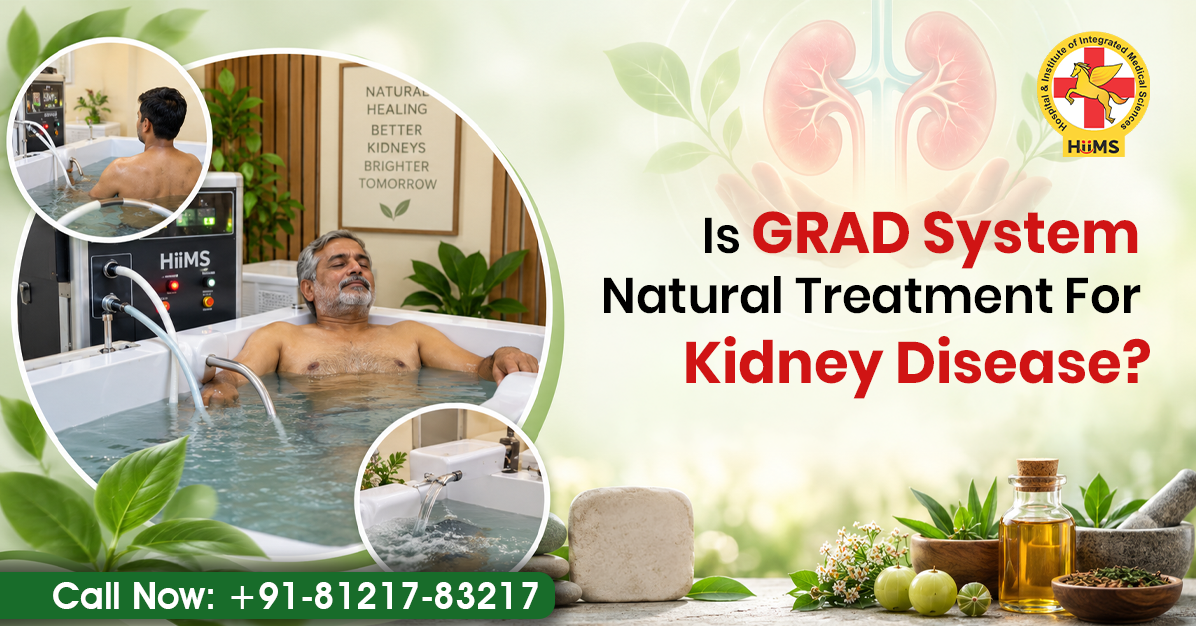
1. Hot Water Immersion: Using Heat as Medicine
Hot water immersion involves sitting in a therapeutic tub filled with heated water around 40 to 40 degrees Celsius. The water level may be kept below the navel, around the diaphragm, or higher towards the clavicle, depending on the protocol being followed. The temperature and duration are also decided according to the individual rather than using one predetermined standard for everyone.
The Jeena Sikho HiiMS Derabassi approach explains HWI through the effect of controlled heat on circulation and sweating. The warmth can widen blood vessels and make the body feel more relaxed during the session. This therapy acts as a “third kidney” within this approach, as sweating provides the body with an additional route for removing certain substances through the skin.
2. Head Down Tilt: Bringing Gravity Into the Routine
Head Down Tilt uses a specially inclined position in which the head remains lower while the legs are positioned higher. At angles such as 5, 10, and 15 degrees, with the position selected under supervision.
The reasoning behind HDT is to use gravity to influence the distribution of blood within the body during the session. Since blood pressure, fluid status and other health factors can differ from one person to another, so this is not something that someone with kidney problems should simply copy at home.

3. pH Balance Diet: Making Food Part of the Plan
Food is the third part of GRAD, and this is where everyday habits become especially important. The pH Balance Diet gives importance to plant-based foods such as seasonal fruits, vegetables, green leafy vegetables, nuts, and seeds, along with simple home-style meals.
The diet is organized around meals rather than habitual munching. The plan presents separate plate portions (Plates 1 & 2) and defined meal timings. However, a kidney patient cannot assume that every fruit, vegetable, or amount of fluid will suit them. Potassium, sodium, phosphorus, protein, and fluid needs may change with kidney function, so the final diet should always be planned around the person’s reports and condition.

What Does Research Say About the GRAD Approach?
GRAD is not presented only as a theory. A prospective cohort study by researchers from Dayanand Ayurvedic College, Jalandhar, Punjab (Shridhar University, Pilani, Rajasthan), looked at the GRAD system among 100 dialysis patients from across India. The patients were observed for an average of 100 days between August 2021 and March 2022, with some receiving GRAD training at HiiMS centers, including Derabassi, while others were trained online.
The study reported that patients who followed the GRAD system showed changes in dialysis frequency, use of supporting medicines, and quality of life. Among the 28 patients who fully adopted the system, 21 were reported to have become free from dialysis and supporting medications, while patients who partially followed the system also showed a reduction in dialysis frequency.
Then, a 2024 case report published in the Journal of Ayurveda and Integrated Medical Sciences looked at Ayurvedic management of a 35-year-old woman with CKD and hypertension at Jeena Sikho Lifecare Limited Hospital, Derabassi (Chandigarh). Her treatment included Avagaha Sweda, Head Down Tilt (HDT), Panchakarma therapies, and individualized Ayurvedic formulations. The report described improvements in her symptoms and some kidney-related measurements during follow-up.
Is GRAD Suitable for Every Kidney Patient?
A natural approach still needs careful planning when the kidneys are affected. The stage of kidney disease, urine output, blood pressure, fluid retention, diabetes, medicines, and other health conditions can all change what a person can safely follow.
For this reason, GRAD should be viewed as a supervised program rather than a routine adapted from an online article. Anyone considering kidney disease treatment should first have their reports reviewed and understand which therapies and dietary changes are appropriate for them.
Why Choose an Ayurvedic Kidney Hospital With an Ayurvedic Kidney Specialist Doctor?
Kidney care becomes easier to understand when the patient has one place where reports, therapies, food habits, and progress can be reviewed together. At Jeena Sikho HiiMS Derabassi, the kidney program is presented as an integrated model that brings Ayurveda, naturopathy, and other natural treatment systems together with modern medical diagnosis.
Choosing an Ayurvedic kidney hospital with access to an Ayurvedic kidney specialist doctor can also help patients avoid making sudden changes based on advice found. online. A kidney disease treatment plan needs to reflect the person sitting in front of the doctor, not just the name of the condition on a report. Regular review also helps the team decide whether the ongoing plan needs any changes.
If you are considering the GRAD approach for your kidney health, you can speak with the experts at Jeena Sikho HiiMS Derabassi to understand the best way to proceed.

Conclusion
So, is the GRAD system a natural treatment for kidney disease? At Jeena Sikho HiiMS, it is presented as an approach combining hot water immersion, head-down tilt, and a pH balance diet, with the plan adjusted to the patient’s condition.
Kidney care needs assessment when medicines, fluid intake, or advanced disease are involved. If you are exploring kidney disease care through an Ayurvedic approach, speak with a kidney specialist doctor first.
You can also opt for a VOPD consultation at Jeena Sikho HiiMS Derabassi to discuss your concerns and options with doctors.

FAQs
Q1: What does GRAD stand for in kidney care?
'GRAD' refers to Gravitational Resistance and Diet, combining head-down tilt, hot water immersion, and structured dietary guidance.
Q2: How is hot water immersion performed in GRAD?
A patient sits in a supervised therapeutic tub, with the water level, temperature, and session adjusted according to individual requirements.
Q3: What is the purpose of head-down tilt therapy?
HDT uses a controlled inclined position as part of the GRAD approach, with the angle and duration decided under professional supervision.
Q4: What foods are included in the GRAD diet?
The pH Balance Diet focuses on plant-based foods such as seasonal fruits, vegetables, leafy greens, nuts, and seeds, with individual changes when required.
Q5: Where can I discuss GRAD for my kidney condition?
A consultation at a kidney hospital like Jeena Sikho HiiMS Derabassi can help you understand whether this approach suits your reports, current treatment, and overall health.
Disclaimer: The information provided on this blog is for general educational and informational purposes only. It is not intended to replace professional medical advice, diagnosis, or treatment. Always consult a qualified healthcare professional before making any changes to your diet, lifestyle, or treatment plan. Individual results may vary.

Author: Dr. Pooja Thakur
Dr. Pooja Thakur has more than 5 years of experience in ayurveda. She is one of the best ayurvedic doctors in Dera Bassi. Her areas of expertise include management of diabetes, lung disease, liver disease, kidney disease, hypothyroidism, skin disease, PCOD, joint pain disease, etc. Many individuals have benefited from her ayurvedic treatment. Her motive is to spread the information about the ancient old heritage healing system of Indian culture—"Ayurveda. "Her specialization is PGD in Panchakarma.