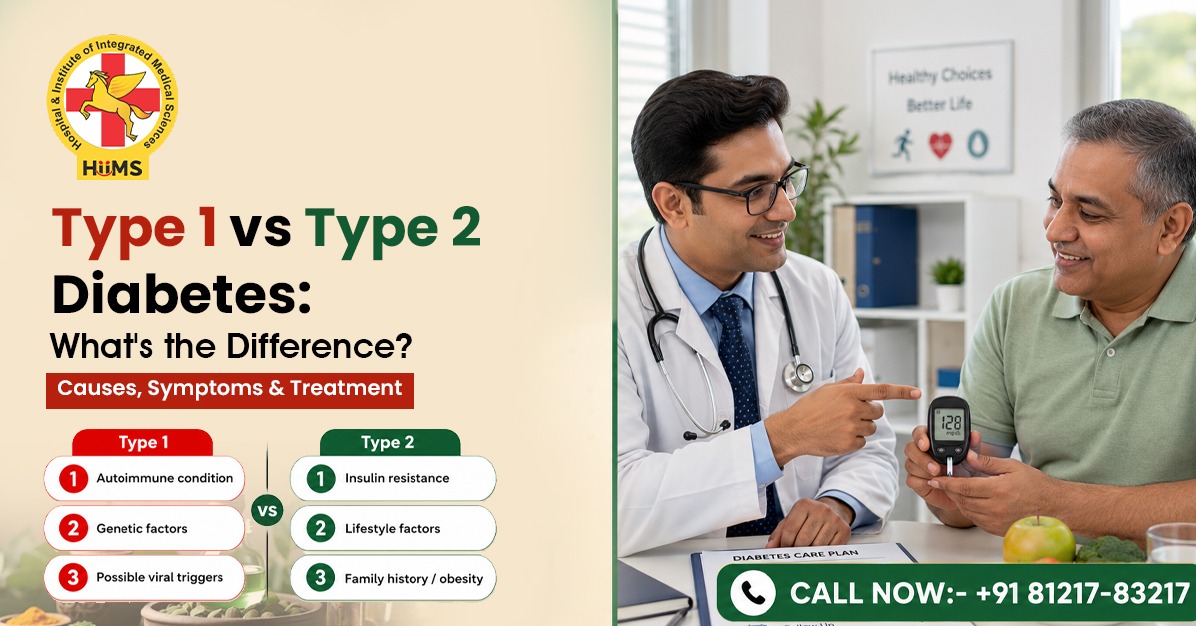
Two conditions, same name confusion, completely different stories underneath. Type 1 vs Type 2 Diabetes gets lumped together constantly, but understanding the difference genuinely changes how you approach treatment, diet, and daily management.
One is an autoimmune condition that shows up fast, often in childhood. The other builds quietly over the years, tied closely to lifestyle. This blog breaks down exactly what separates the two and where Ayurveda genuinely fits in supporting each one.
Type 1 vs Type 2 Diabetes: What's Actually Different at the Root?
The core difference in Type 1 vs Type 2 diabetes comes down to why insulin isn't working properly. Type 1, the immune system turns on itself, attacks the insulin-making cells in the pancreas, and just like that, insulin production stops entirely. No fixing that from the inside.
Type 2 works differently; the pancreas is still churning out insulin, but the body's cells have basically stopped listening to it. Insulin resistance—that's the term. Over the years, the pancreas tries to keep pace and eventually can't. Different roads, same destination, blood sugar climbing higher than it should.
Causes of Type 1 and Type 2 Diabetes
Understanding the causes of type 1 and type 2 diabetes helps explain why they're managed so differently:
Type 1 is autoimmune; nobody's fully cracked why it triggers, but diet and lifestyle have nothing to do with it
Type 2 builds up from a mix of genetics, extra weight, inactivity, and years of eating patterns that didn't do the pancreas any favors
Family history nudges risk higher for both, though the pattern each one follows looks different
Type 1 usually shows up in childhood or the teenage years, though honestly, it can hit at any age
Type 2 tends to creep in slowly during adulthood, with obesity and a sedentary routine sitting right at the center of it
Early Signs of Diabetes: How Fast Do Symptoms Show Up?
This is genuinely one of the biggest differences between the two. Early signs of diabetes with type 1 tend to appear suddenly and escalate over just a few weeks, including excessive thirst, frequent urination, unexplained weight loss, constant hunger, and fatigue.
Type 2, on the other hand, develops so gradually that people can go years without noticing anything, sometimes only getting diagnosed after a routine blood test flags it. If symptoms come on fast and intensely, that's more typical of type 1, and it needs urgent medical attention rather than waiting it out.
Type 1 Diabetes Treatment Options: Ayurvedic Support Alongside Insulin
Insulin is non-negotiable for type 1 diabetes; the body simply can't survive without it once production has stopped. That said, among type 1 diabetes treatment options, Ayurveda can offer genuine supportive care alongside insulin therapy.
This typically includes dietary guidance built around the person's constitution, herbs traditionally used to support digestion and overall strength, and stress management practices, all working to support general well-being rather than replacing or reducing insulin, which should only ever be adjusted under a doctor's direct guidance.
Type 2 Diabetes Treatment and Management: Where Ayurveda Fits In
Type 2 diabetes treatment and management look quite different, since lifestyle correction plays such a central role here. Ayurveda calls this condition Prameha, generally tied to weakened digestion and excess Kapha, and treatment typically combines a personalised diet plan, herbs like bitter gourd, fenugreek, and Gudmar known to support healthy blood sugar levels, and consistent daily routine correction.
This is generally used alongside prescribed medication, particularly in the early stages, and can support the broader lifestyle changes doctors already recommend.
What Should You Look for in the Best Diabetes Hospital?
Finding the best diabetes hospital comes down to a few practical things. Look for a place that takes time to understand your specific type of diabetes and current stage, rather than offering the same generic advice to everyone.
Regular monitoring of blood sugar trends, personalised diet guidance, and doctors who explain your condition clearly all matter more than flashy marketing.
Finding the Best Diabetes Doctor for Your Specific Type
A genuine best diabetes doctor should ask detailed questions about your symptoms, family history, and daily routine before recommending anything and should be upfront about whether your case needs insulin, oral medication, or primarily lifestyle correction.
If you're exploring Ayurvedic support alongside your existing treatment, look for a doctor who's willing to coordinate care rather than working in isolation from your other providers.
How Jeena Sikho HiiMS Derabassi Approaches Type 1 vs Type 2 Diabetes
At Jeena Sikho HiiMS Derabassi, care starts with understanding which type of diabetes a patient is dealing with, since the approach genuinely differs.
For type 2, this typically means a personalised pH-balanced diet plan, herbal support, and Panchakarma-based therapies aimed at improving digestion and metabolic balance. For type 1, the focus stays on supportive care, nutrition, stress management, and general strength, working alongside the insulin therapy a patient is already on, never as a substitute for it.
Conclusion
Understanding Type 1 vs Type 2 Diabetes properly changes how you approach treatment, diet, and daily habits, since what works for one type genuinely doesn't apply the same way to the other.
If you want a personalized, Ayurvedic layer of support alongside your current diabetes care, you can book a VOPD consultation with Jeena Sikho HiiMS Derabassi and talk it through with our team.
FAQs
1. Can someone with type 2 diabetes end up needing insulin eventually?
Happens sometimes, yeah. If pills and lifestyle changes stop keeping blood sugar in check, insulin comes into the picture.
2. Does eating too much sugar cause type 1 diabetes?
No, not even close. Autoimmune condition, nothing to do with diet; that's really more a type 2 kind of connection.
3. Can herbs be used for insulin if someone has type 1?
No, and this one's important; insulin's not optional here. Ayurveda can sit alongside it as support, never in its place.
4. Why does type 2 sneak up on people for years without notice?
Slow burn, basically. Symptoms build up so gradually that a lot of people don't catch anything until a routine test flags it.
5. Does family history matter for both types equally?
It matters for both; yes, it just plays out differently. The genetic thread behind type 1 isn't the same one behind type 2.