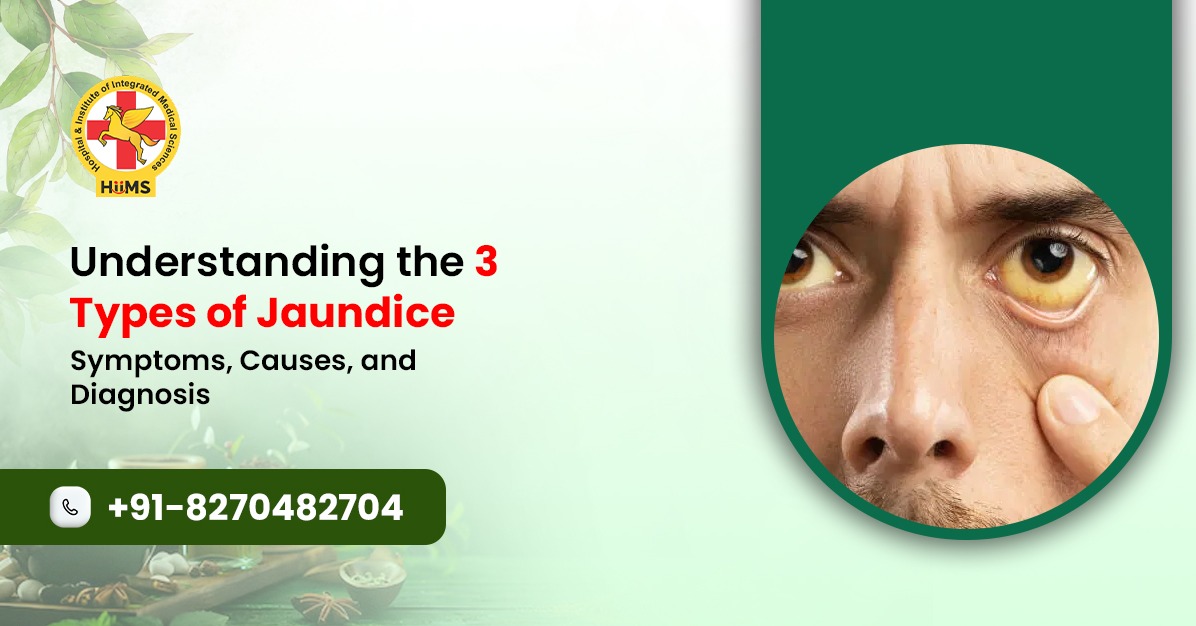
When someone gets jaundice, people usually first notice the yellow color of the skin and eyes. This often creates fear and confusion. Many people think jaundice only happens because of liver disease, but that is not always true.
It develops when bilirubin increases in the blood, and this problem can start before, within, or after the liver does its work. In this blog, we explain the 3 types of jaundice in a clear and easy way. You will understand their symptoms, causes, and how doctors identify them.
Understanding these differences helps families read medical reports clearly, spot early warning signs, and get timely treatment. With the right knowledge, recovery becomes easier for people of all ages.
What Is Bilirubin, and Why Does It Matter?
The body produces bilirubin when old red blood cells break down. This bilirubin goes to the liver, gets cleaned there, and then leaves through urine and stool.
But if too much bilirubin collects, the liver cannot manage it properly, or bile gets blocked, jaundice starts showing.
3 Types of Jaundice
Jaundice is mainly classified based on where the problem starts in the bilirubin process.
1. Pre-Hepatic Jaundice (Before the Liver)
Pre-hepatic jaundice happens when red blood cells begin breaking down faster than normal in the body. Because of this, too much bilirubin is produced, and the liver is not able to process it properly, which leads to jaundice.
Causes of jaundice:
Hemolytic anemia – a condition where red blood cells break down too fast, raising bilirubin levels.
Malaria or serious infections that damage red blood cells quickly.
Genetic blood problems that cause early damage to red blood cells.
Jaundice Symptoms & Signs
Yellowing of eyes and skin.
Fatigue and weakness.
Dark urine.
Diagnosis
Doctors check blood reports and bilirubin levels to understand if red blood cells are breaking down too quickly. Doctors also pay attention to body symptoms and digestion habits to find the root problem.
2. Hepatic Jaundice (Within the Liver)
This type of jaundice happens when the liver becomes weak or swollen, which affects how bilirubin is handled in the body.
Causes of jaundice:
Viral hepatitis – an infection that damages the liver and disturbs its normal working.
Fatty liver disease caused by abnormal fat accumulation in liver cells.
Alcohol-related liver damage.
Jaundice Symptoms & Signs
Yellow skin and eyes.
Loss of appetite and nausea.
Itchy skin and abdominal discomfort.
Diagnosis
Liver function tests, viral markers, and imaging studies confirm liver involvement.
3. Post-Hepatic Jaundice (After the Liver)
This type of jaundice is also known as obstructive jaundice because bile flow gets blocked. It happens when bile flow gets blocked after the liver has already processed bilirubin.
Causes of jaundice:
Gallstones.
Blockage in the bile duct.
Tumors in the pancreas or bile duct.
Symptoms & Signs
Stools become pale or clay-colored.
Persistent itching of the skin.
Dark urine and pain in the abdomen.
Diagnosis
Doctors usually use basic blood reports and scans to check if there is any blockage in the bile ducts. At holistic hospitals like Jeena Sikho HiiMS Navi Mumbai, doctors carefully observe digestion, stool colour, urine pattern, appetite, and overall body balance to find the real cause.
Ayurvedic Treatment Approach at Jeena Sikho HiiMS Navi Mumbai
Jeena Sikho HiiMS Navi Mumbai follows a holistic Ayurvedic approach for jaundice treatment, focusing on balancing the liver and improving digestion. Every patient is given a treatment plan that matches their body type and medical condition.
The treatment focuses on herbs, detox programs, and easy-to-digest, liver-friendly food for natural healing. Patients are also guided about daily routines, stress control, and healthy lifestyle habits. Regular check-ups and follow-ups help in steady healing and long-term liver health.
Prevention of Jaundice and When to See a Doctor
Many cases of jaundice can be avoided by following simple and healthy habits every day. Drinking safe water, keeping proper hygiene, and taking vaccines on time helps keep the liver healthy. Staying away from alcohol, avoiding shared needles, and using medicines carefully also lowers risk. Regular health checkups and healthy weight management help in early diagnosis.
If jaundice symptoms appear, do not ignore them. If yellow color in the eyes or skin stays for more than two or three days, or if there is weakness, fever, vomiting, stomach pain, dark urine, or light-colored stools, medical help should be taken immediately. Ignoring these signs may lead to serious liver problems.
Conclusion
Knowing the 3 types of jaundice helps you look beyond visible symptoms and understand the real problem. Early diagnosis and correct identification make treatment more effective and help recovery become smoother. If you or your loved one notices lasting signs of jaundice, timely medical guidance is necessary. For expert support and personalized care, contact care@jeenasikho.com or call +91 8121783217 to connect with Jeena Sikho HiiMS Navi Mumbai.
FAQs
1. What are the first signs of jaundice?
Early signs usually include yellowing of the eyes, dark urine, and constant tiredness.
2. Are all types of jaundice related to liver disease?
Some types develop due to blood problems or bile duct blockage, not only liver issues.
3. Is jaundice contagious?
Jaundice itself does not spread, but certain infections behind it may pass to others.
4. Can jaundice occur in newborns?
Jaundice is common in many babies and mostly settles within a few days.
5. What foods should be avoided during jaundice?
Oily, processed, and alcohol-based foods should be avoided during recovery.