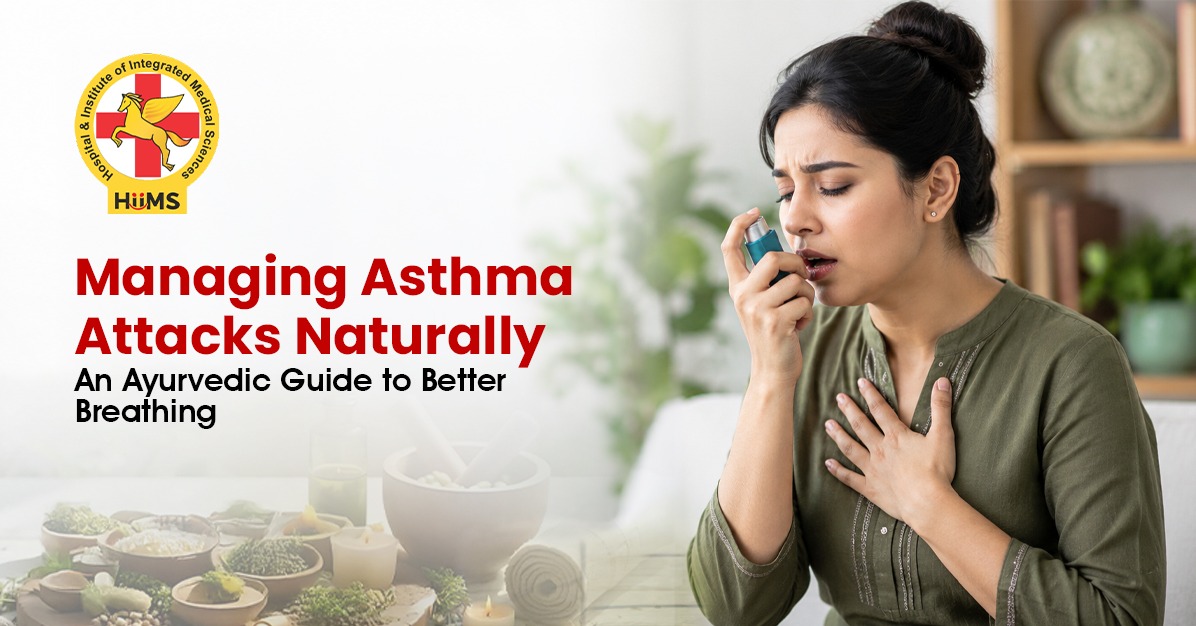
The immediate panic of sudden asthma attacks can leave your chest feeling completely locked up. Standard rescue inhalers help temporarily by opening the airways, but true relief comes from stopping the underlying inflammation before it starts. By recognising the early warning signs, making immediate physical breathing adjustments and clearing the deep mucus blockages from your respiratory system you can safely reclaim your breath.
Chronic breathing problems mean living with the constant fear of unpredictable triggers like a sudden change in weather, dust or emotional stress. True, lasting recovery means addressing why your body overreacts in the first place. Jeena Sikho HiiMS offers a practical path to sustained relief by combining ancient cleansing sciences with precise health monitoring. In this blog we are going to talk about how to handle sudden asthma attacks and how to rebuild your lung health with natural methods.
Early Warnings and Symptoms of an Attack
Lungs always signal distress before a full crisis hits. Paying close attention to these vital warnings is a core part of understanding asthma symptoms and treatment:
Frequent Coughing: A persistent, dry cough that worsens significantly at night or early in the morning.
High-Pitched Wheezing: A squeaking or whistling sound that is made on each exhalation.
Chest tightness: A feeling of heaviness in the chest (as if a tight band is being squeezed around your ribs).
Severe Breathlessness: Trouble talking even a sentence without taking a breath.
What Triggers Asthma Attacks
Asthma is a long-term respiratory condition that makes the airways in the lungs inflamed, sensitive and easily irritated. When these airways respond to a trigger, they tighten and fill with thick mucus.
In Ayurveda, weak digestion creates toxic waste. This sticky waste settles in your lungs, mixing with excess Kapha (mucus) to form rigid plugs. When common external factors stir up this hidden waste, your airways instantly spasm and close.
The most frequent everyday triggers include cold weather, dust & smoke, fried food and stress.
When these signs flare up, it is a sign that your airways are spasming and closing. Dealing with these symptoms requires two things: an immediate first-aid protocol to restore airflow during sudden asthma attacks and a deep cellular cleanup to prevent the next one.
Immediate Breathing Support Using CAAT
During sudden asthma attacks, the CAAT method works like quick first aid to open your airways and stop panic:
C – Capacity (Chest Space): Sit down immediately and lean your upper body forward slightly. This simple posture creates extra physical room in your chest cavity so your lungs can expand with less effort.
A – Afferent Mismatch (Brain Connection): Get a gentle breeze on your face. Sit near an open window or turn on a small fan. This cool sensation fools your brain into turning down the panic alarms.
A – Air Flow: Breathe in through your nose and blow out slowly through pursed lips, like blowing out a candle. This backpressure keeps your breathing tubes from collapsing.
T - Test: Pay close attention to how you feel. Notice which exact leaning position gives you the fastest relief so you can use it to stabilise your breathing.
Natural Ayurvedic Asthma Healing with HiiMS
HiiMS doctors use natural asthma management that focuses on clearing out internal blockages, soothing your airways and stopping your body from overreacting to common triggers.
Panchakarma & Shodhana: Deep Respiratory Cleansing
Clearing out the sticky metabolic waste that accumulates inside your airways over time.
Vamana: A guided cleansing therapy that safely draws out deep-seated mucus from the upper digestive tract and chest.
Nasya: Medicated herbal drops are applied through the nostrils to clear out the sinuses and reduce nasal hypersensitivity.
Dhoomapana: Inhaling gentle, non-irritating medicated herbal smoke soothes the lining of hyper-reactive breathing tubes.
Basti & Virechana: Gentle detoxification of the digestive tract clears toxins internally and soothes gut irritation that often triggers respiratory flare-ups.
Herbal Support for Better Breathing
Relying on herbal remedies provides an effective, long-term Ayurvedic treatment for asthma by repairing tissue from within. Herbs like Tulsi and Mulethi together act naturally to break down stubborn mucus and soothe airways. Vasaka is a highly effective natural bronchodilator that keeps your airways open. Regular use of Haridra (turmeric) and Shunthi (dry ginger) reduces chronic internal inflammation and increases your lungs’ resistance to common allergens.
Dietary Adjustments
What to Eat: Focus entirely on warm and easily digestible home-cooked meals like fresh khichdi or vegetable soups. Boost your digestive fire by adding warming kitchen spices like black pepper, ginger, and cumin.
What to Drop: Completely cut out cold, sticky, and heavy foods. Steer clear of ice cream, refrigerated drinks, thick curd, cheese, and deep-fried snacks, which instantly create more mucus and slow down your recovery.
Lifestyle Routines for Better Respiration
Consistent daily habits keep your respiratory system steady and strong. Spending just fifteen minutes every morning on Anulom Vilom (alternate nostril breathing) and Bhramari (humming bee breath) uses gentle internal vibrations to soothe hyper-sensitive chest tissues and calm an overactive nervous system. Practice bhujangasana (Cobra Pose), a simple yoga posture that physically stretches your chest muscles and helps you breathe deeper throughout the day.
Conclusion
You do not have to live in constant fear of sudden asthma attacks. By combining immediate physical breathing support with regular internal cleansing, you can safely rebuild your respiratory strength.
To create a natural recovery plan tailored to your body type, visit your nearest HiiMS hospital to speak with an experienced Ayurvedic asthma specialist. Or you can also consult senior doctors through HiiMS VOPD (video consultation) to get the right guidance for recovery.
FAQs
1. How does the CAAT protocol provide immediate relief during a breathing crisis?
It uses specific seating postures to physically open up space in your chest cavity while controlled breathing relaxes your tight airway muscles to restore oxygen flow.
2. Can Panchakarma therapies like Vamana be safely taken by chronic asthma patients?
When performed under expert supervision at HiiMS, Vamana safely removes the deep, built-up mucus and toxins that cause chronic chest congestion.
3. Why does changing diet help prevent future asthma attacks?
Eating warm, light foods keeps your digestion strong, which stops the creation of undigested toxic waste (ama) that travels to your lungs and turns into heavy mucus.
4. How quickly can I expect results with Ayurvedic treatment for asthma?
Immediate protocols like CAAT work within minutes to ease distress, while long-term herbal therapies and cleansing routines usually show lasting improvements within a few weeks.
5. How can I consult a HiiMS Ayurvedic asthma specialist if I cannot visit the hospital?
You can easily book an online video consultation from the comfort of your home using the HiiMS VOPD (Virtual Out-Patient Department) system.