Heart attacks are often imagined as sudden chest pain, collapse, and emergency hospital visits. But not every cardiac problem arrives that dramatically. Sometimes the body whispers instead of shouting. A little pressure in the chest. Unusual tiredness after small work. Mild breathlessness. Strange discomfort that feels more like acidity or stress than a heart issue. This is where a silent heart attack becomes dangerous because many people never realise what is actually happening inside the body.
The scary part is simple. Damage to the heart may continue quietly while daily life goes on normally. Some people only discover they had a silent heart attack weeks later during a routine ECG or health checkup. That’s why understanding the warning signs matters more than people think.
At Jeena Sikho HiiMS, we believe awareness is one of the biggest protections for heart health. When people understand the body earlier, better decisions become possible before complications grow deeper.
What is a Silent Heart Attack?
A silent heart attack develops quietly. Symptoms stay mild, confusing, or so random that people brush them off as tiredness, acidity, stress, or poor sleep. Blood flow to part of the heart becomes reduced, but the person may not experience the dramatic pain usually linked with cardiac emergencies.
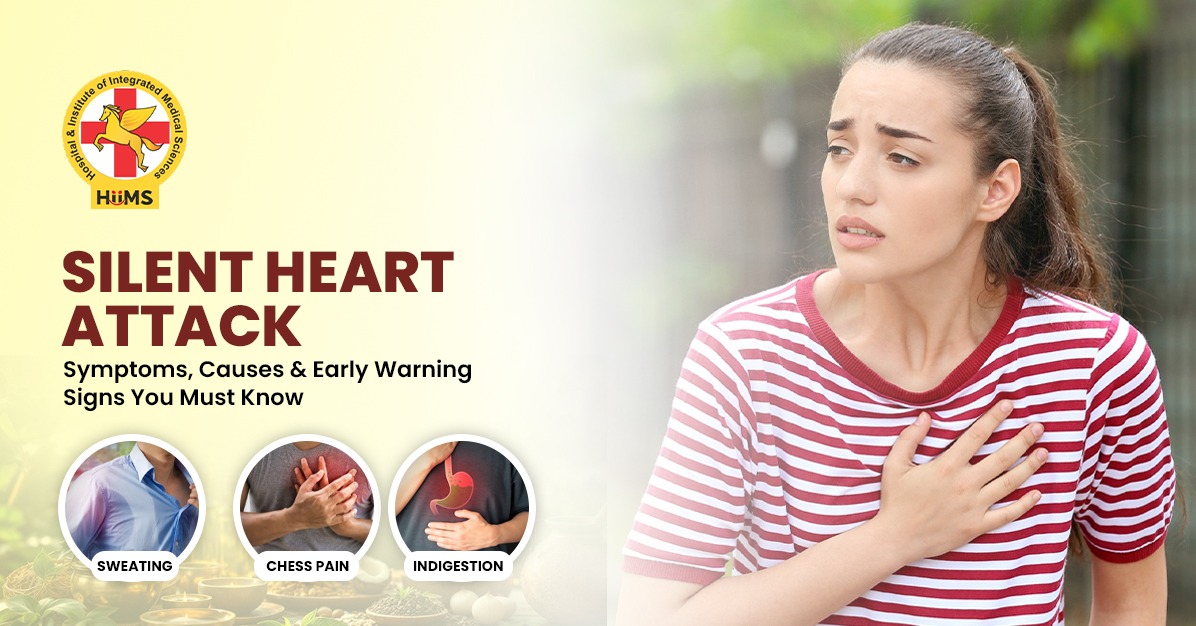
Because symptoms feel manageable, many people mistake them for tiredness, indigestion, stress, poor sleep, or weakness. Still, the heart muscle may continue getting damaged quietly. Some common silent heart attack symptoms include:
Mild chest pressure
Sudden tiredness without reason
Light dizziness
Breathlessness during small activity
Nausea or acidity like discomfort
Pain around the jaw, neck, shoulder, or arm
One difficult thing about a silent heart attack is that symptoms sometimes appear slowly instead of suddenly.
Why Silent Heart Attacks Often Go Unnoticed
People usually expect severe chest pain in heart problems. So when discomfort feels mild, they delay medical attention. Honestly, modern lifestyle makes this even more complicated.
Stress, poor sleep, screen exhaustion, irregular eating habits, and long working hours already leave many people physically drained every day. Because of that, the body’s warning signs get ignored easily.
This is why recognising the early signs of heart attack becomes extremely important, especially for people with diabetes, high blood pressure, obesity, or a family history of heart disease.
Main Causes Behind Silent Heart Attack
Several health conditions slowly increase the risk over time. Most risk factors for heart attack develop quietly for years before symptoms appear.
Plaque buildup inside arteries
Over time, fat deposits slowly narrow the blood vessels. Because of that, oxygen supply to the heart starts reducing little by little.
Diabetes and blood sugar imbalance
People dealing with diabetes sometimes don’t feel pain in the usual way. That’s one reason cardiac symptoms may go unnoticed for much longer.
High blood pressure
Long-term pressure damages arteries and puts extra stress on the heart.
Smoking and unhealthy lifestyle
Smoking, alcohol excess, poor food habits, inactivity, and obesity increase cardiac risk steadily.
Stress and disturbed sleep
Emotional pressure affects heart health more deeply than many people realise.
These are some of the most common risk factors for heart attack seen today.
Silent Heart Attack Symptoms People Commonly Ignore
Many symptoms appear ordinary at first. That’s exactly why a silent heart attack becomes dangerous. People often continue their daily routine despite warning signs. Watch carefully for these silent heart attack symptoms:
Unusual fatigue
Feeling exhausted after small tasks may sometimes indicate reduced heart efficiency.
Mild chest discomfort
Sometimes, it could be pressure or heaviness instead of sharp pain.
Breathlessness
Climbing stairs or walking short distances suddenly feels difficult.
Indigestion like feeling
Some individuals feel nausea, burning, acidity, or stomach discomfort rather than actual chest pain. That confusion delays diagnosis a lot.
Jaw, neck, or shoulder discomfort
Pain does not always stay in the chest area.
Recognising these early signs of heart attack can genuinely help avoid larger complications later.
Who Faces Higher Risk?
People naturally have a higher chance due to their medical history, age, or lifestyle patterns accumulated over time. Common risk factors for heart attack include:
Diabetes
High cholesterol
Smoking habits
Obesity
High blood pressure
Family history of heart disease
Lack of physical activity
Long-term stress
Men above 45 and women above 55 generally face higher risk too.
Why Early Detection Matters So Much
A silent heart attack may seem “small” because symptoms are mild, but the heart damage can still become serious. Without proper attention, complications may slowly develop later, including:
Heart weakness
Irregular heartbeat
Reduced circulation
Future cardiac events
Heart failure risk
This is why doctors recommend regular ECGs, cholesterol checks, blood sugar monitoring, and heart screening for people at higher risk.
Heart Attack Prevention Tips That Actually Matter
The good thing is this. Many cardiac risks improve through consistent lifestyle correction. Simple daily habits genuinely matter for long term heart protection. Helpful heart attack prevention tips include:
Improved eating habits
Fresh produce, vegetables, plain balanced dishes, and smaller eating patterns generally help a heart stay healthier over time.
Keeping physically active
Walking, stretching, yoga, or even doing some form of physical activity each day positively influences the circulation system.
Handle stress well
Besides affecting the mood, mental stress disturbs the heart rate rhythm, the quality of sleep, and the blood pressure level as well.
Proper sleep
Poor sleep slowly disturbs hormones and puts unnecessary pressure on the cardiovascular system.
Avoiding smoking
Smoking damages blood vessels gradually. The effect builds quietly for years before symptoms become obvious.
These small but steady heart attack prevention tips often help more than sudden extreme routines.
A Simple Support Option for Daily Routine
Along with these, Jeena Sikho HeartJS Drops may be included as part of a daily heart care routine under proper guidance. They are often used to support circulation and overall heart function in a gentle way.

They contain Crataegus Oxy, Aurum Muriaticum, and Convallaria Maj, and the usual guidance is 15 drops with water twice a day, or as advised by the physician.
Ayurvedic Perspective on Heart Health
Ayurveda views heart wellness as closely connected with circulation, digestion, emotional balance, and lifestyle discipline. At Jeena Sikho HiiMS Bengaluru, supportive Ayurvedic care focuses on naturally improving overall balance rather than focusing solely on symptoms. Supportive wellness approaches may include:
Hridaya Basti to produce warmth that heals
Panchakarma to clean the root cause
Diet balance according to body needs
Stress management practices
Lifestyle correction
Guided breathing support
Herbal wellness support associated with circulation balance
Many people now explore supportive Ayurveda because prevention and long term stability matter deeply in heart health.
Conclusion
A silent heart attack becomes dangerous mainly because people fail to recognise it in time. The symptoms often look small, ordinary, or temporary, but the impact on the heart may continue quietly in the background. That’s why listening carefully to the body matters so much.
At Jeena Sikho HiiMS, we believe prevention, awareness, and balanced living play a major role in protecting long term heart health. Supportive Ayurvedic wellness approaches focus on lifestyle correction, emotional balance, circulation support, and overall well-being naturally.

If you still feel confused about symptoms or want to understand what approach may suit your condition better, you can also consider a VOPD consultation with the doctors at Jeena Sikho HiiMS for more personalised guidance regarding your health.
FAQs
1. Can a silent heart attack happen without chest pain?
Yes, and that’s what confuses many people. Sometimes there’s only tiredness, breathlessness, nausea, or slight pressure instead of severe pain.
2. What early signs of heart attack do people usually ignore first?
Extreme tiredness, seeing stars, slight chest heaviness, jaw ache, and strange weakness are most likely to be disregarded at first.
3. Who faces higher risk of a silent heart attack?
A person with diabetes, high blood pressure, obesity, smoking, or a family history will most likely be at a higher risk.
4. Are silent heart attack symptoms different in women?
Sometimes yes. Women may experience nausea, tiredness, breathlessness, or back discomfort more commonly than severe chest pain.
5. Do heart attack prevention tips really help long term?
Yes, consistent habits like healthier eating, stress management, movement, proper sleep, and avoiding smoking strongly support heart health.