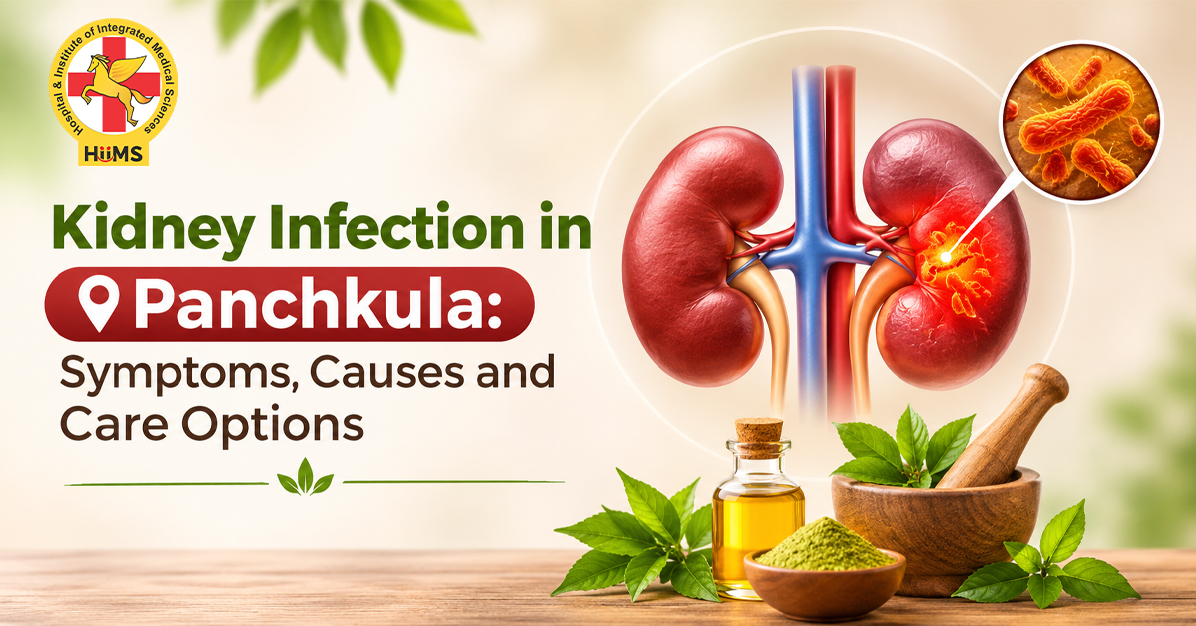
The kidneys work quietly every day. Each kidney filters waste from the blood and sends it out as urine. The kidneys also keep the water and salt of the body in balance.
Because the kidneys never pause, problems in the urinary system can affect them. Hot weather, low water intake, and long hours of sitting add to this strain.
One such problem is a kidney infection. The National Institute of Diabetes and Digestive and Kidney Diseases explains that it is a type of urinary tract infection. It usually begins in the bladder and moves up to one or both kidneys.
Doctors often treat a kidney infection with antibiotics, which act against bacteria. However, antibiotics can upset the stomach and overuse can make bacteria resistant. For this reason, many people also explore natural approaches such as food, lifestyle, and Ayurvedic care.
For kidney infection treatment in Panchkula, Jeena Sikho HiiMS offers natural and Ayurvedic care. This care includes diet guidance, lifestyle practices and herbal formulations. Severe symptoms always need medical attention without delay.
What Is a Kidney Infection?
A kidney infection is also called pyelonephritis. It happens when germs infect one or both kidneys. The kidneys remove waste from the blood and keep the water and salt of the body in balance.
Most infections begin in the bladder. The germs then travel up to the kidneys. E. coli, a common bacterium from the bowel, is one of the main causes. An untreated infection can spread and affect the whole body. So the signs need early attention.
Need guidance for your kidney health? Burning urine, fever, back pain, or repeated urinary trouble deserve a proper check. Speak with a qualified healthcare professional and understand your condition at the right time.

Understanding the Kidney Infection Symptoms
The kidney infection symptoms differ from person to person. Some people notice urine problems first. Others feel fever, chills, or back pain more strongly.
Common signs include,
Burning or pain while passing urine
A sudden or frequent urge to urinate
Cloudy, dark, or unusual-looking urine
Pain in the lower back or side area, just below the ribs
Fever and chills
Nausea or vomiting
Weakness or unusual tiredness
A fever above 100.4°F (38°C) is a typical sign of an acute kidney infection, as the American Academy of Family Physicians explains. However, the fever may be missing in early or mild cases, and in older or frail people.
Kidney Infection Causes and Risk Factors
Bacteria cause most kidney infections. They can enter the urinary tract and reach the kidneys. When the urine passage becomes blocked, normal urine flow slows down, which can increase the risk of infection.
Common risk factors include,
Earlier urinary tract infections
Kidney stones or other blockage
Trouble in emptying the bladder fully
Poor urinary hygiene
Conditions that weaken the body's defence against infection
Pregnancy
Diabetes and other long term health conditions
Kidney stones need special attention because they are one of the key kidney infection causes. A stone can block the ureter, the tube that links the kidney to the bladder. This blockage can lead to infection.
Diagnosis of a Kidney Infection
A proper check shows whether the problem sits in the bladder, the urinary tract, or the kidneys. Doctors compare these symptoms with test results.
Common tests include,
Urine routine examination
Urine culture
Blood tests
Ultrasound or other imaging when needed
A urine culture identifies the bacteria in the urine. Doctors may recommend the blood tests to look for infection and check kidney function. Imaging helps when doctors suspect a stone or a blockage.
Medical Care and Support for Kidney Infection
The right kidney infection Care depends on the severity of the infection and the general health of the person. Conventional care often uses the antibiotics when doctors confirm or strongly suspect a bacterial infection. Serious cases may need hospital care.
Antibiotics have limits. They can upset the stomach and disturb the natural balance of the gut. The World Health Organization also warns that overuse helps bacteria become resistant to medicines. For this reason, many people look to Ayurveda for daily kidney support.
Ayurvedic Approach to Kidney Infection Treatment in Panchkula
Ayurveda studies health through food, lifestyle, medicines, and therapies. At Jeena Sikho HiiMS Panchkula, the focus stays on the root cause and not only on the symptoms.
For kidney infection care, the practical focus includes,
Suitable fluid intake
Simple food that matches individual needs
Less strain on the body
A regular daily routine
The hospital also uses naturopathy, Panchakarma, and other integrated therapies. A brief description follows:
GRAD (Gravitation and Resistant Diet therapy): a supportive therapy that includes three parts: hot water immersion therapy (a warm water therapy that relaxes the body), head-down tilt therapy (a gravity-based therapy that uses body position for support), and a pH-balanced diet (a planned diet that keeps food choices balanced).
Panchakarma: 5-step cleansing procedures that Ayurvedic doctors select by need.
Herbal support: herbal formulations, including kadhas, which are herbal decoctions made by boiling herbs in water. Doctors select them by need.
This gentle, whole-body approach is why many people explore the kidney infection treatment in Panchkula through natural care.
Food and Lifestyle Habits for Kidney Health
Daily habits keep the urinary system in better shape. Small changes make a routine easier to follow.
Drink enough water for individual health needs
Do not hold urine for long periods
Keep up personal hygiene
Eat fresh and simple meals
Limit processed and very salty foods
Stay active as strength allows
Rest when the body feels unwell
Avoid medicines or herbal products without guidance
These simple habits protect the kidneys and lower the chance of infection returning.
Why Early Kidney Care Matters
A kidney infection differs from ordinary back pain or mild urine discomfort. The kidneys are delicate organs, and a severe infection can affect the whole body.
Kidney infection treatment therefore begins with a proper check. After that, food, lifestyle, and natural care can join a long term wellness plan where suitable. Early action gives the best base for the treatment.
Conclusion
A kidney infection can begin with simple urine discomfort and turn serious when ignored. Learning the symptoms of kidney infection, understanding the causes, and seeking timely help lead to better health decisions.
People who explore kidney infection treatment in Panchkula can consider natural and Ayurvedic care as part of a personal plan. Jeena Sikho HiiMS follows an integrated approach built on food, lifestyle, Ayurvedic care and supportive therapies. Book your VOPD consultation today and discuss your symptoms with the care team.

FAQs
1. What causes a kidney infection?
Bacteria, mostly E. coli, travel from the bladder up to the kidneys.
2. Can holding urine lead to an infection?
Holding urine for long periods gives bacteria more time to grow.
3. Is a kidney infection riskier during pregnancy?
Yes, pregnancy raises the risk, so any symptom needs a prompt check.
4. How can people lower the chance of the infection returning?
They can drink enough water, pass urine on time, keep up hygiene and treat urine trouble early.
5. Can food habits support kidney health?
Yes, the fresh and simple meals with less salt and fewer processed foods support the kidneys.
Disclaimer: The information shared in this blog is for general educational and informational purposes only. It should not be considered a substitute for professional medical advice, diagnosis, or treatment. Please consult a qualified healthcare professional for advice based on your individual health needs. Do not make changes to your diet, lifestyle, or treatment plan without proper guidance.
Author: Dr. Jayant Batra

Dr. Jayant Batra is an experienced Ayurveda and yoga practitioner with 10 years of experience. He holds qualifications in BAMS, PDBM, PGDCC, and M.A. Yoga. At Jeena Sikho HiiMS, he uses his knowledge of Ayurveda and yoga to provide guidance on health, wellness, lifestyle, and supportive care. His areas of work include cancer care, kidney care, and holistic wellness, with a focus on helping patients understand their health and make informed lifestyle choices.