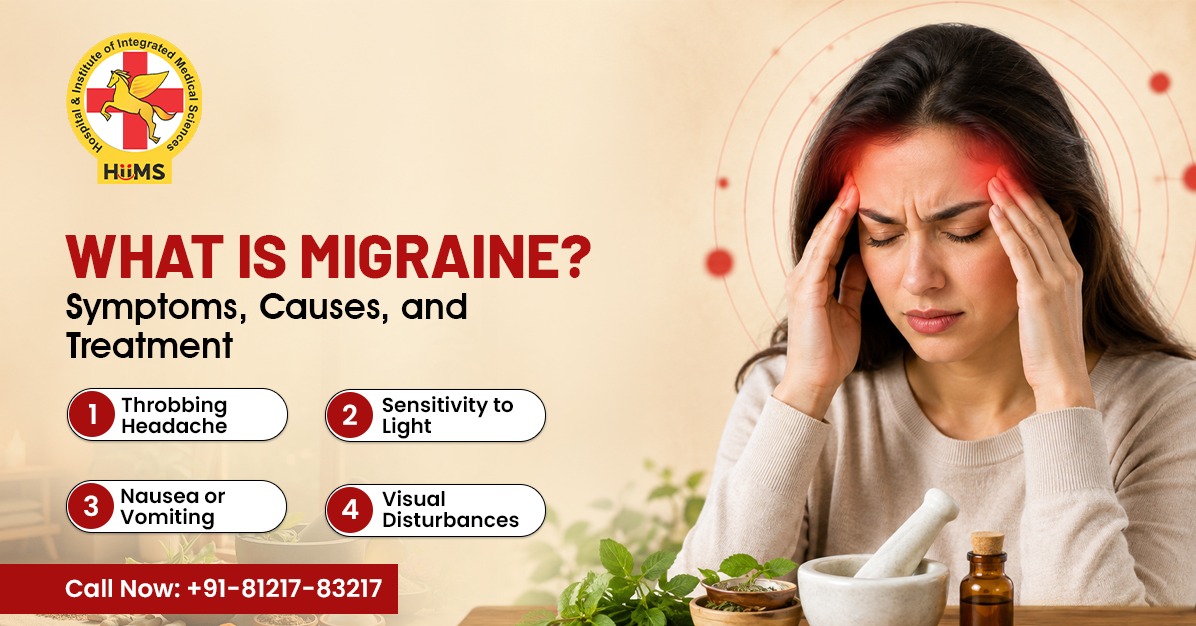
Someone tells you they have a migraine, and it's easy to assume "bad headache, needs some rest." But what is migraine actually, medically speaking? It's a neurological condition, not just intense pain sitting on one side of your head. The throbbing, the light sensitivity, the nausea that sometimes comes with it, none of that happens with a regular headache.
And that distinction matters more than people realise, because how you treat a migraine is genuinely different from how you'd treat everyday head pain. This blog goes through the stages an attack moves through, the different types, what actually sets one off, and both the conventional and Ayurvedic sides of managing it.
What is Migraine, Exactly? Beyond Just a Bad Headache
Head pain's only one part of it, really. What is migraine boils down to throbbing or pounding pain, usually one-sided, paired with at least one other symptom, sensitivity to light or sound, nausea, and sometimes vomiting. Tension headaches don't behave this way.
Migraine pain tends to get worse with movement, walking, and climbing stairs, which is exactly why people curl up and stay still during an attack rather than push through it.
Types of Migraine You Should Know About
Not one uniform condition. A few common types of migraine:
Migraine with aura, visual disturbances or sensory changes showing up before the headache kicks in
Migraine without aura, the more common form, roughly 70% of cases fall here
Menstrual migraine, tied to hormonal shifts around a woman's period
Silent migraine, where the aura happens but the headache itself never really does
Signs of Migraine: The Four Stages
Attacks tend to move through stages, though nobody experiences all of them every time. Signs of migraine across these phases:
Prodrome, mood swings, food cravings, fatigue, sometimes showing up a full day before the actual headache
Aura, visual changes, numbness, trouble speaking, lasting anywhere from five minutes to an hour
Headache phase, the throbbing itself, four to seventy-two hours, depending on severity
Postdrome, the "migraine hangover," fatigue and foggy thinking that lingers after the pain fades
Migraine Symptoms Worth Recognising
Beyond the headache, a few migraine symptoms show up consistently. Nausea, sometimes vomiting. Sensitivity to light, sound, and even smell. Neck stiffness.
A stuffy nose that doesn't make sense given there's no cold going around. Some people even notice they're urinating more or feeling unusually thirsty right before an attack starts.
Migraine Causes: What Triggers an Attack?
No single cause here, more a stack of triggers that vary person to person. Common migraine causes worth knowing:
Hormonal shifts, especially around menstruation
Stress, or sudden emotional swings
Skipping meals, dehydration, too much caffeine
Sleep that's irregular or just not enough
Certain foods, alcohol, strong smells
Long stretches of screen time and eye strain
Migraine Treatment: What Doctors Typically Recommend
Conventional migraine treatment splits into two lanes, really: medication taken right at the first sign of an attack to try and stop it in its tracks, and preventive medication taken regularly to cut down how often attacks even happen.
No permanent cure exists right now, but a doctor can genuinely help manage things through medication, identifying your specific triggers, and lifestyle adjustments. If your headaches keep coming back, get worse suddenly, or just feel off in some way you can't explain, that's worth a proper evaluation rather than managing it solo indefinitely.
Ayurvedic Perspective: Ardhavabhedaka and Dosha Imbalance
Ayurveda calls migraine Ardhavabhedaka, and generally links it to dosha imbalance, Vata specifically, tied to dryness and neurological irregularities, which lines up with that sharp, throbbing quality migraine pain has.
Poor digestion, chronic stress, disrupted sleep, and irregular eating are all considered root contributors in this framework. Overlaps quite a bit, honestly, with the modern trigger list above.
Migraine Treatment Support at Jeena Sikho HiiMS Panchkula
At Jeena Sikho HiiMS Panchkula, migraine support usually combines a handful of specific therapies.
Shirodhara, a slow, continuous stream of warm herbal oil poured across the forehead, is commonly used to calm the nervous system down.
Nasya, herbal oil administered through the nose, works on the idea that the nose is a gateway to the head, aimed at easing congestion and that heavy, foggy feeling. Abhyanga, a full-body oil massage, supports circulation and helps balance Vata.
Swedana, herbal steam therapy, eases tension further. Herbs like Brahmi tend to be included too, for their calming effect, alongside simple daily practices, Anulom Vilom breathing, and gentle poses like Balasana, that patients are often encouraged to build into their routine.
All of it is generally offered as supportive care, sitting alongside whatever medical treatment or trigger-management plan is already in place.
Conclusion
Understanding what is migraine, beyond just writing it off as a bad headache, genuinely helps you recognise your own patterns, your triggers, and when it's actually time to see a doctor instead of managing it alone month after month.
If you like to explore how Ayurvedic support could work alongside your existing migraine care, you can book a VOPD consultation with Jeena Sikho HiiMS Panchkula and communicate with our team.

FAQs
1. Is migraine just a more severe headache?
Not exactly. Migraines are a neurological condition with additional symptoms, such as nausea and light sensitivity, that regular headaches don't usually bring along.
2. Can migraine actually be cured for good?
Not permanently, no. But medication, trigger avoidance, and lifestyle changes can genuinely manage symptoms and cut down how often they show up.
3. Why do some people see an aura before the headache hits?
Roughly a third of migraine sufferers get this, sensory changes, mostly visual, that act as an early warning sign before the actual pain starts.
4. Do stress and bad sleep genuinely set off migraines?
Yes, both show up constantly as triggers, right alongside dehydration, skipped meals, and hormonal shifts.
5. When should I actually see a doctor about recurring migraines?
If they're getting more frequent, feel different than usual, or come back fast even after medication, that's worth a real evaluation.