
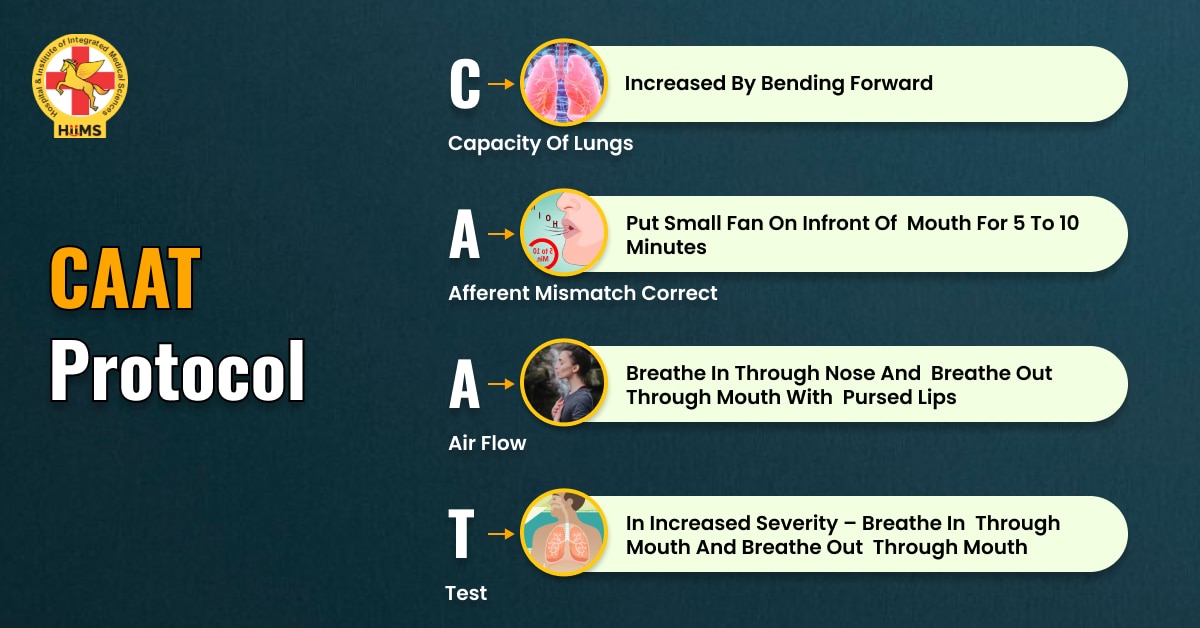
CAAT Protocol: A Respiratory Support Technique
The CAAT protocol is a systematic approach designed to improve lung capacity, correct afferent mismatch, enhance airflow, and conduct a self-assessment test for individuals experiencing respiratory distress or compromised lung function. The protocol benefits specifically individuals diagnosed with COPD and asthma patients who experienced complications after COVID recovery or individuals with any other breathing issues. The protocol contains vital features to improve respiratory function and general health performance, yet healthcare professional supervision remains necessary due to potential limitations.
Breaking Down the CAAT Protocol
"CAAT" stands for:
“C” stands for Capacity of Lungs
“A” stands for Afferent Mismatch Correction
“A” stands for Air Flow
“T” stands for Test
Multiple parts of the CAAT system evaluate distinct air intake and lung condition elements. Let’s explore them in detail.
1. Capacity of Lungs
The primary purpose of the CAAT protocol is to maximise lung capacity, which measures the most significant amount of air the lungs retain during full breaths. Holding oxygen optimally enables efficient exchange that sustains proper bodily operations.
How to Increase Lung Capacity Using the CAAT Protocol:
Bending Forward: When breathing with the body forward, the diaphragm receives less pressure while the lungs open up more effectively for greater capacity. The breathing technique supports breathless people because it enhances their air intake capacity.
Controlled Breathing Exercises: Multiple different deep breathing exercises (diaphragmatic breathing and pursed-lip exercises) will slowly improve your lung abilities.
Physical Activity: Physical exercise that combines walking with yoga and swimming at moderate intensities benefits lung performance because these activities strengthen respiratory muscles.
2. Afferent Mismatch Correction
Afferent mismatch occurs when the brain receives conflicting signals from the body regarding respiration. This can lead to breathing difficulties, dizziness, or a feeling of air hunger (shortness of breath). The CAAT protocol aims to correct afferent mismatch through targeted interventions.
Steps to Correct Afferent Mismatch:
Using a small Fan: Place a tiny fan in front of your mouth for five to ten minutes to help activate the airflow receptors around your face. This will send more accurate signals to your brain, reducing the feeling of being out of breath. Patients who suffer from disorders like anxiety-related difficulty breathing or panic attacks can significantly benefit from this.
Methods of Breathing: If the body is instructed to breathe systematically, the brain will receive the proper signals regarding oxygen levels and airflow. As a result, the efferent (motor) and afferent (sensory) respiratory processes will be better balanced.
3. Air Flow Management
Effective breathing depends on the respiratory tract's ability to circulate air properly. Limited airflow can cause breathing difficulties, respiratory distress, and general discomfort. The CAAT program integrates techniques that maximise oxygen intake and airflow.
Methods of Breathing for the Best Airflow:
Pursed-lip breathing involves inhaling through the nose and exhaling through the mouth. This technique improves oxygen exchange, lowers airway resistance, and decreases breathing. Additionally, it helps those with illnesses like COPD breathe more effectively by preventing airway collapse and encouraging better exhalation.
For severe cases, you can practise breathing in and out via your mouth for a short while if your dyspnoea gets worse.
4. Test (Self-Assessment of Breathing Efficiency)
Self-assessment is the method for analysing the effectiveness of breathing exercises and therapies. This self-monitoring enables individuals to control their health and monitor their progress.
How to Perform the Breathing Test:
Small Fan: Evaluate the experience when a small fan is directed towards the mouth. If more than half is relieved, an afferent mismatch can be resolved by continuous airflow stimulation.
Monitor Response to Breathing Techniques:
If pursed-lip breathing or bending forward helps increase the oxygen level and decrease breathlessness, these techniques provide relief and hope for long-term respiratory support.
Monitor Improvement of Lung Capacity over time: As applied in the execution of the CAAT protocol, lung capacity should improve, and breathlessness during exercises should also be reduced. Further interventions, such as additional breathing exercises or medical intervention, may be called for if there is no significant improvement.
It is advisable to consult a doctor, as they can help to calm a person down and advise how to behave in case of respiratory diseases.
FAQ
Is it necessary to consult a doctor while following the CAAT protocol?
Yes, it is always advisable to seek medical advice, significantly when the condition worsens, or there is no improvement.
Can the CAAT protocol replace my medication?
The CAAT protocol is not a substitute for medication but a complementary therapy. As always, seeking a doctor’s advice before changing any of the arrangements in a treatment plan is advisable.
Is the CAAT protocol safe to use at home?
Yes, the CAAT protocol can be practised at home once a healthcare professional has taught a person the proper technique.


