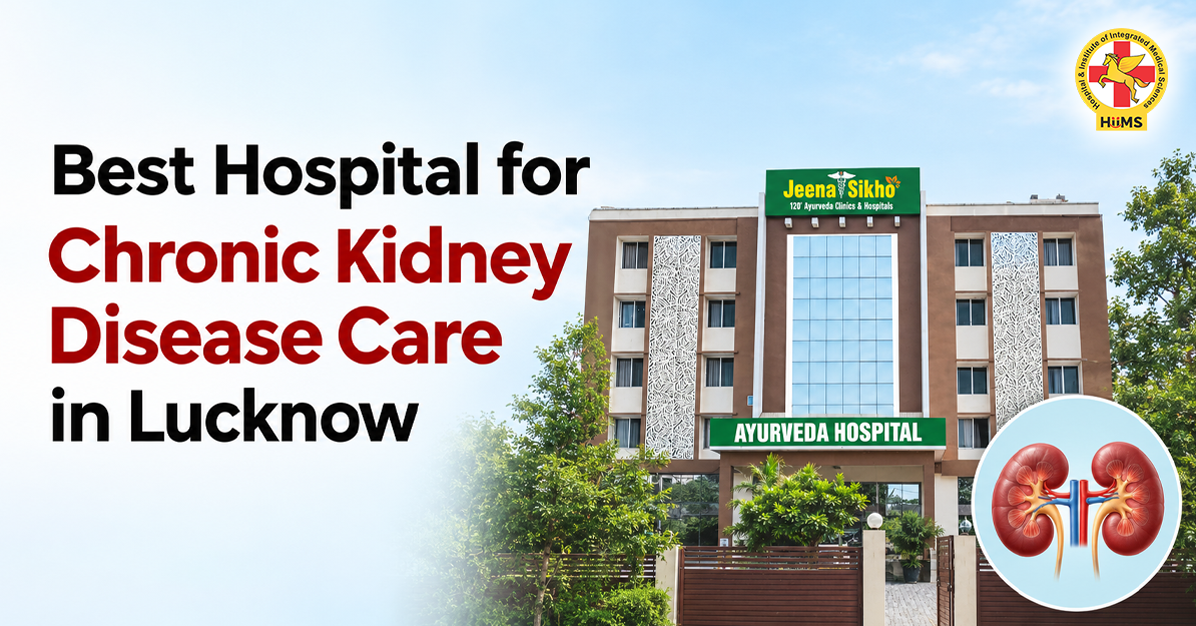
A creatinine value that goes up a little with every report, swelling around the ankles by evening, or a doctor saying “your kidneys need attention” can leave a family with more questions than answers. Where should we go, who should we see, and what should we ask? This blog is written to help you with exactly that.
We start with what chronic kidney disease is, its causes and symptoms, then go through what to look for when choosing chronic kidney disease care in lucknow, and end with what Jeena Sikho HiiMS offers.
What is Chronic Kidney Disease?
Your kidneys filter waste and extra water out of your blood, balance salts like sodium and potassium, and help control blood pressure. Chronic kidney disease (CKD) means this filtering has been reduced, or the kidneys are showing damage such as protein in the urine, for three months or more.
Doctors measure it with the eGFR, a number worked out from your blood creatinine, age and sex. An eGFR of 90 or above is considered normal when there is no other sign of damage. CKD is divided into five stages.
Stage 1 and 2 are early and often give no symptoms; stage 3 is the middle stage where many people are first told, and stages 4 and 5 mean the kidneys are working at a much lower level. The earlier it is found, the more room there is to protect the filtering you still have.
What Causes Chronic Kidney Disease?
High blood sugar and high blood pressure are the two big ones, because both slowly damage the tiny filters in the kidney. A study at Muzaffarnagar Medical College and Hospital in Uttar Pradesh, published in the Indian journal IJCBR in 2017, screened 6,668 people and found CKD in 11.19% of them. Among those with CKD, more than half (52.95%) had both diabetes and high blood pressure, 29.49% had diabetes alone, and 16.75% had high blood pressure alone.
A larger picture comes from the Indian Chronic Kidney Disease (ICKD) study in Clinical Kidney Journal (2022), which enrolled 4,056 people at 11 centres. Diabetic kidney disease was the most common cause (24.9%), followed by chronic interstitial nephritis (23.2%), while in 19.5% the cause stayed unknown. High blood pressure was present in 87% of participants.
Other common causes include:

Long-term use of pain medicines such as diclofenac or ibuprofen without a doctor’s advice
Repeated kidney infections or kidney stones
Glomerulonephritis, a group of conditions that inflame the kidney filters
Inherited conditions such as polycystic kidney disease
Tobacco, and not drinking enough water in hot weather
In our OPD, many people tell us they found out only because of a routine blood test done for something else, and that their creatinine had been creeping up for a year before anyone mentioned it.
Symptoms of Chronic Kidney Disease: What to Notice
Early CKD is quiet. Symptoms often show up only after a good part of kidney function is lost, which is why testing matters if you have sugar or blood pressure. These are the signs to watch for:
Puffiness around the eyes, or swelling in the feet and ankles
Foamy urine, or passing urine much more or less than usual, especially at night
Tiredness, weakness or poor appetite that does not go away
Itchy, dry skin, nausea or a metallic taste in the mouth
Blood pressure that is hard to bring down
Muscle cramps and trouble sleeping
None of these proves a kidney problem on its own, since many conditions can cause them. But if two or three keep appearing, a kidney function test is a small step that gives a clear answer.
Noticing these symptoms regularly? Get your kidney health checked and speak with our experts for the right guidance.

Tests That Show How Your Kidneys Are Doing
A proper kidney check usually has four parts. A blood test for serum creatinine and urea, with the eGFR worked out from it. A urine test for albumin, because protein leaking into the urine is an early sign of damage.
An ultrasound of the kidneys to look at size and shape. And a blood pressure and blood sugar check, since both decide how quickly the kidneys wear down.
If you have diabetes or high blood pressure, ask for the kidney tests at least once a year, and more often if your doctor advises. Keep every report in one file, because trends over time tell your doctor more than a single value.
Chronic Kidney Disease Care in Lucknow: What Usually Goes Into It
Good chronic kidney disease care in lucknow is rarely one visit or one medicine. It is an ongoing plan built around your stage, and it normally covers a few things together: keeping blood pressure and sugar in range, taking prescribed medicines on time, staying away from medicines that strain the kidneys, a diet set by your reports, and repeat tests to see how things are moving.
Lucknow has large government institutes such as SGPGI, which has its own Department of Nephrology and runs World Kidney Day awareness events for the public, along with many private hospitals and clinics. Because there are so many options for chronic kidney disease care in lucknow, it helps to know what to look for before you decide, and that is what the next section covers.
Things to Consider in the Best Hospital for Chronic Kidney Disease in Lucknow
There is no single yardstick for the right place, and what works for one family may not suit another. These are the points that matter most when you compare options for chronic kidney disease care in Lucknow.
1) A Doctor Who Reads Your Reports Closely
CKD is a kidney specialist’s field. Look for a doctor who goes through your old reports, notes the trend in your eGFR and urine protein, and explains what your stage means in plain words. If you leave the room with the same questions you walked in with, ask again.
2) A Team Approach to Care for Chronic Kidney Disease
Strong care for chronic kidney disease involves more than one person. A doctor, a dietitian who understands kidney diets, and a doctor looking after your sugar and blood pressure should all know your plan. Ask who your point of contact is when your numbers change between visits.
3) Clear Testing and Follow-Up
Ask how often the tests will be repeated, which ones, and what number would make them call you in sooner. A good hospital for chronic kidney disease in lucknow gives you a follow-up schedule you can write down.
4) Diet Advice Based on Your Reports
Potassium, phosphorus, salt and fluid limits differ from person to person and change with the stage. A printed generic chart is not enough. The diet should be explained against your own blood reports, and updated when they change.
5) Honest Talk About Medicines, Herbs and Supplements
Some painkillers, herbal products and supplements can strain the kidneys or raise potassium. A hospital that is careful about your kidneys will ask what you take, including home remedies, and will tell you plainly what to stop or check first.
6) Reach, Cost and Communication
CKD needs repeat visits, so distance matters. Ask about visit costs, test costs and whether follow-up can be done on video when you cannot travel. Clear answers before you start to save worry later.
Jeena Sikho HiiMS: Chronic Kidney Care in Lucknow With Ayurveda and Diet
Now to our own approach. At Jeena Sikho HiiMS Lucknow, we offer Ayurvedic and diet support for people with kidney disease, and it is meant to work together with your doctor’s plan, not replace it.
A visit begins with an OPD consultation, where the doctor goes through your creatinine, eGFR, urea, urine reports and current medicines. If travel is hard, a VOPD video consultation with follow-ups is also available. Our team works under Acharya Manish Ji’s guidance.
1) The GRAD System
GRAD is the routine we give kidney patients, and it has three parts:
Hot water immersion: sitting in warm water (about 42°C) up to navel height for 20 to 30 minutes, fully relaxed
Head-down tilt: lying flat with the legs slightly raised on a pillow, so the head sits a little lower, for 10 to 15 minutes
Diet: the two-plate, pH-balanced diet described below
The Two-Plate pH-Balanced Diet
Acharya Manish Ji’s diet is plant-based and eaten in two plates. Plate 1 is raw food, such as seasonal fruit at breakfast and a fresh salad at lunch. Plate 2 is a cooked meal, such as a millet dish or roti with dal and vegetables. Dinner is light and taken before sunset. In kidney disease, potassium and fluid limits matter, so the doctor adjusts the fruit, salad and water to your reports. Fasting should be done only under medical supervision.
Panchakarma and Herbs
Panchakarma at HiiMS Lucknow includes Vamana, Virechana, Basti, Nasya and Raktamokshana, along with a few other therapies such as Zero-Volt Therapy. Some of these are cleansing or purging in nature, so they do not suit everyone with reduced kidney function, and the doctor decides case by case.
We may also suggest a Kidney Care Kadha, Corn Silk Kadha or white pumpkin juice, and herbs such as Punarnava, Gokshura and Guduchi. Because some herbs and juices affect potassium, fluids and blood pressure, please show everything you take to your doctor as well. Yoga, sunlight and earthing are part of the daily routine we talk about.
Everyday Habits That Support Chronic Kidney Disease Care in Lucknow
Whichever hospital you choose, home habits carry a lot of the weight.
Keep salt low, since extra salt raises blood pressure.
Drink water throughout the day unless your doctor has set a fluid limit.
Do not buy pain medicines over the counter.
Check your blood pressure and sugar at home if you can, and note the readings.
Walk for 30 minutes most days, keep your weight in a healthy range and stay away from tobacco.
Carry your reports to every visit.
Conclusion
Kidney disease is easier to manage when it is found early, and a blood and urine test is all it takes to start. Choosing the right place for chronic kidney disease care in lucknow comes down to a clear plan, a team that explains things, and follow-up you can keep up with.
If you want chronic kidney care in lucknow that adds Ayurveda and diet guidance to your regular medical plan, our team at Jeena Sikho HiiMS will go through your reports with you. Keep taking your prescribed medicines unless your doctor advises otherwise.
Can’t come in person? Book a VOPD with Jeena Sikho HiiMS Lucknow and review your kidney reports with a doctor on video.

FAQs
1. How often should I get my kidneys tested if I have diabetes?
At least once a year, with creatinine, eGFR and a urine protein test. Your doctor may ask for it more often.
2. Is it safe to take painkillers for knee or back pain with CKD?
Many common painkillers can strain the kidneys. Always ask your doctor which ones are safe for you.
3. Do I need to cut down on protein?
It depends on your stage. Some people need to limit protein and others do not, so follow the advice from your reports.
4. Will drinking a lot of water protect my kidneys?
Enough water is good, but more is not always better. In later stages, fluid is often limited, so check with your doctor.
5. Can CKD go away on its own?
Kidney damage that lasts more than three months usually does not go away. Steady care can slow it down, so keep up with tests and follow-up.