These days, health conversations generally revolve around weight, blood sugar levels, or heart health, yet kidney health somehow stays away from center until something starts to feel different. That makes it more concerning because everyday habits like irregular eating, low water intake, or long-term medication use quietly put pressure on these vital organs without much notice. Understanding the causes of kidney failure becomes important not only for those already dealing with health concerns but also for anyone who wants to maintain balance in daily life.
At places like a dedicated kidney hospital like Jeena Sikho HiiMS Derabassi, the focus is progressively changing toward early awareness and natural support rather than waiting for advanced stages.
In this blog, you will clearly understand what kidney failure means, its causes, and simple ways to prevent it naturally.
What is Kidney Failure?
The kidneys act like natural filters in the body, clearing waste, keeping fluids balanced, and helping manage blood pressure. When they slowly start to lose this ability, waste products slowly build up, which affects how the body feels and functions overall. This condition is referred to as kidney failure.
Sometimes this change happens suddenly because of an infection or dehydration, while in other cases, it develops slowly over the years due to underlying problems. When you understand the causes of kidney failure at the right time, it becomes easier to select the right kidney failure treatment before the condition gets more difficult to handle.
Common Causes of Kidney Failure You Should Know
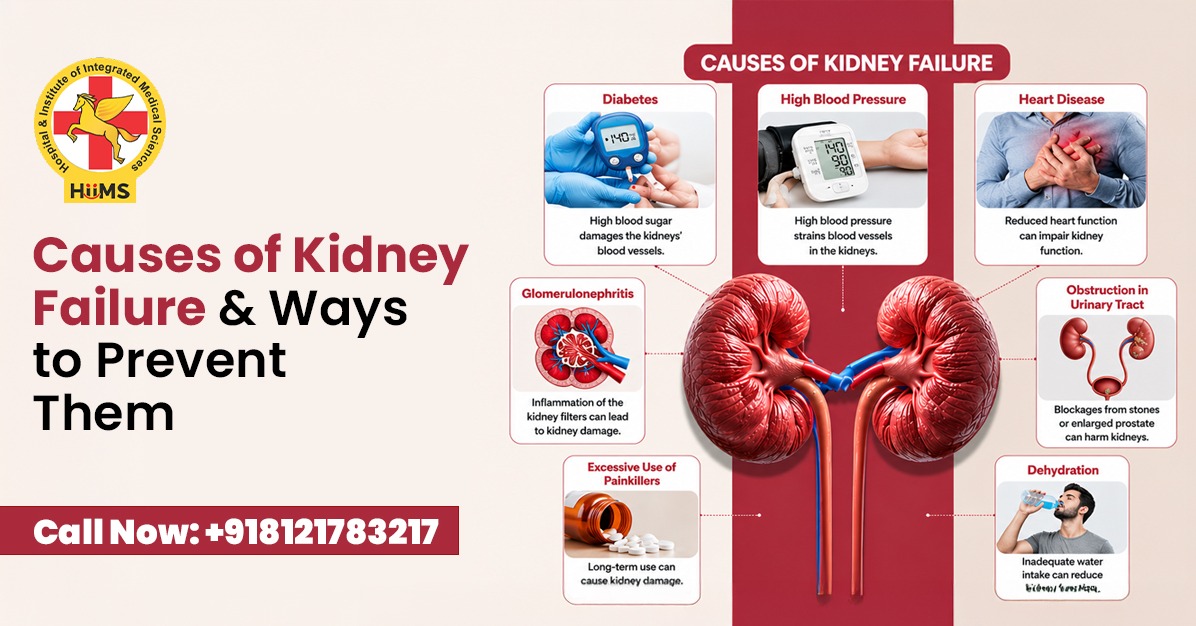
Uncontrolled Diabetes: When blood sugar remains high for a long time, it damages the small blood vessels inside the kidneys, making filtration less effective over time.
High Blood Pressure (Hypertension): Constant pressure in blood vessels affects kidney function directly, which is why many patients visiting a kidney doctor often have a history of hypertension.
Loss of Blood Flow to Kidneys: Situations like dehydration, severe infections, or heart conditions can reduce blood flow, which directly affects kidney performance.
Urine Blockage and Related Problems: Kidney stones or internal blockages prevent proper urine flow, leading to toxin buildup that increases the need for kidney failure treatment.
Long-Term Use of Medicines: Frequent use of painkillers or certain medications without guidance may slowly damage kidney tissues.
Recurrent Infections and Inflammation: Repeated infections create long-term stress on the kidneys, making recovery difficult if not treated on time.
Lifestyle Habits That Add Stress: If a person drinks less water, eats more salty food, and regularly has packaged items, the kidneys slowly come under extra load, and many such cases are commonly seen at a kidney hospital.
Other Medical and Autoimmune Conditions: Some conditions directly affect kidney structure, making early consultation with a kidney doctor essential.
Why Early Detection Makes a Big Difference
Many people ignore small changes like fatigue, swelling, or changes in urination, assuming they are temporary. Over time, these signs may reflect deeper issues linked to the causes of kidney failure.
Early tests and timely advice from a kidney doctor help in identifying the condition before it progresses. At this point, even a few simple changes, along with the right kidney failure treatment, can still make a real difference.
Ways to Prevent Kidney Failure in Daily Life
Keep Blood Sugar and Blood Pressure in Check: Keeping a regular check on things helps take some load off the kidneys and can lower the chances of damage building up over time.
Stay Properly Hydrated Throughout the Day: Drinking the right amount of water throughout the day helps the kidneys work smoothly and lets the body clear out waste in a natural way.
Be Careful with Medicines: Avoid taking medications without proper advice, especially painkillers, which are a known risk factor.
Improve Daily Eating Habits: Reducing salt and packaged food while choosing natural foods helps ease the burden on the kidneys.
Maintain an Active Routine: Simple activities like walking or stretching improve overall circulation and organ function.
Do Not Ignore Recurrent Infections: Treating infections early prevents long-term complications that may require advanced kidney failure treatment.
Regular Health Check-Ups: Routine tests at a trusted Kidney hospital like Jeena Sikho HiiMS Derabassi, help in early detection especially for those at higher risk.
Kidney Failure Treatment and When to Seek Help
If swelling, low urine, or constant tiredness keeps bothering you for days, it’s better to see a kidney doctor without waiting. A good kidney hospital can then guide you with proper tests and a clear plan to follow.
At Jeena Sikho HiiMS Derabassi, the focus stays on combining natural therapies with lifestyle correction, aiming to reduce dependency on aggressive procedures while supporting long-term recovery through a balanced approach to kidney failure treatment.
Conclusion
Understanding the causes of kidney failure gives a clear direction toward prevention, and in many cases, simple daily changes can reduce the risk significantly. When people stay aware, listen to their body, and seek timely advice from a kidney doctor, they often avoid complications that require intensive care at a kidney hospital. Building small habits around hydration, food, and routine creates a steady foundation for long-term health.
If you feel unsure about your symptoms or want guided support, you can also consider a VOPD consultation with expert doctors at Jeena Sikho HiiMS, where you can discuss your concerns comfortably and take the first step toward better kidney care.

FAQs
1. What are the early signs of kidney failure?
Changes in urination, swelling, fatigue, and low appetite often appear in the early stages.
2. Who is at higher risk of kidney failure?
People with diabetes, high blood pressure, or long-term medication use face higher risk.
3. Can kidney failure be prevented naturally?
Healthy habits like a balanced diet, hydration, and regular check-ups help reduce risk.
4. When should someone visit a kidney doctor?
Persistent symptoms like swelling or unusual tiredness require timely medical attention.
5. Is early treatment effective in kidney problems?
Early-stage care and the right approach improve outcomes and slow down progression.