Your digestive system does hard work every single minute of the day. It processes the food you eat, extracts vital nutrients to fuel your body, and safely removes waste products. However, because modern life gets so busy and fast-paced, it is very easy to ignore minor stomach upsets, occasional gas, or small shifts in your daily bathroom habits.
Paying close attention to these signals from your gut is actually one of the most important things you can do for your health. Colon cancer often develops very slowly over many years. When you notice these subtle changes early, taking action is much easier and far more successful. Recognising the subtle signs of colon cancer gives you the best chance to get checked before a minor issue turns into a serious health crisis.
What Is Colon Cancer and What Causes It
The colon forms the lower part of your digestive system which is also commonly known as the large intestine. It plays a major role in absorbing remaining water and storing solid waste before it leaves your body. When normal, healthy cells inside the colon lining undergo abnormal changes and start growing out of control, a small growth or tumour can slowly form over time.
Understanding common colon cancer causes helps you make smarter choices for your daily lifestyle. Long-term inflammation in your digestive tract, diets packed with processed foods and red meat, a severe lack of dietary fibre, smoking, heavy drinking and an inactive lifestyle all increase your risk.
Furthermore, chronic constipation is a big hidden factor that many people overlook. When bowel movements are delayed, solid waste sits inside your intestines for days at a time. This trapped waste releases harmful toxins that constantly irritate the delicate colon lining, creating an unhealthy environment that makes abnormal cell growth much more likely over the years.
7 Unnoticeable Warning Signs of Colon Cancer
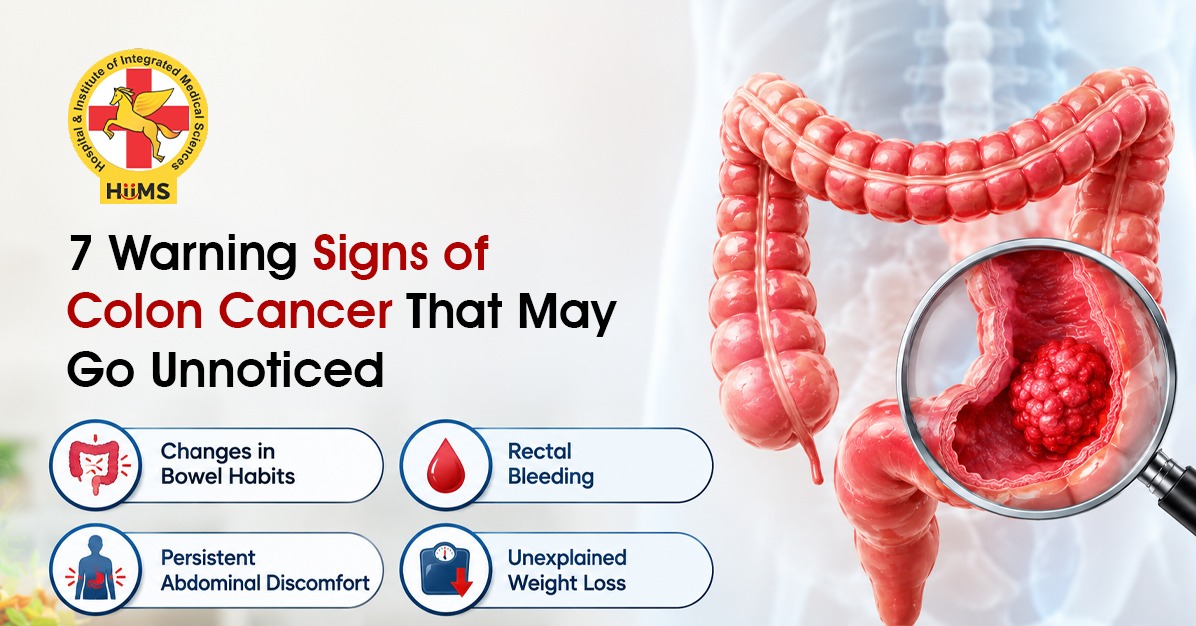
Many early warning signals feel like routine stomach trouble which is why people frequently ignore them as simple indigestion. Paying attention to how long symptoms last is key. Here are seven warning signs you should watch closely
Persistent Changes in Bowel Movement
Experiencing ongoing constipation, unusually loose stools or sudden shifts in your normal bathroom schedule that last for more than a few days without an obvious reason.
Sudden Weight Loss
Constant loss of weight without even trying, changing your daily food intake, or increasing your physical activity.
Abdominal Cramping or Bloating
Experiencing frequent stomach pain, gas buildup, painful cramps, or feeling full even after eating very small, light meals.
Unexplained Fatigue and Weakness
Feeling exhausted, dizzy, or weak even after getting enough sleep. This happens due to blood loss inside your gut which lower your red blood cells and leads to anemia.
Blood in Stool or Rectal Bleeding
Noticing bright red blood on toilet paper, dark red streaks in your stool, or unusually dark, sticky black stools after using the bathroom.
Feeling That Your Bowel Does Not Empty
A continuous feeling that you still need to pass stool, even immediately after using the bathroom. This sensation is often caused by a growth pressing against the colon wall.
Pencil-Thin Stools
Passing unusually narrow, thin or ribbon like stools caused by a tumour narrowing the physical passage inside the colon.
While these colon cancer symptoms can also develop from simpler issues like piles, stomach ulcers, or irritable bowel syndrome getting evaluated early by a professional brings complete clarity and peace of mind.

How Colon Cancer Progresses Through Stages
When medical experts evaluate a tumour they divide its growth into specific stages. This helps them choose the safest and most effective care plan for the patient. Understanding colon cancer stages show why early awareness makes such a massive difference in treatment success.
Stage 0 & Stage I - The abnormal cell stays entirely inside the innermost lining of the colon wall. Finding the issue at this early point leads to very high recovery rates with simple medical care.
Stage II - The tumour has grown deeper into or through the thick muscle wall of the colon but it has not yet reached nearby lymph nodes.
Stage III - The cancer cells have spread through the colon wall and entered nearby lymph nodes. This stage requires more comprehensive treatment strategy.
Stage IV - The cancer has travelled through the bloodstream or lymphatic system to distant organs in the body such as the liver, lungs, or bones.
Knowing these stages shows why listening to early body signals is always your best defence.
Ayurvedic Support for Colon Health
Ayurvedic care offers a time tested approach to maintaining gut health by focusing on internal cleansing, proper digestion and metabolic balance. In Ayurveda chronic colon issues often stem from weak digestive fire and accumulated toxin that settle in the lower intestine. To clear these deep-seated impurities traditional Panchakarma therapies like Virechana and Basti are used to gently cleanse the intestinal tract, restore healthy bowel movements, and calm tissue inflammation.
Jeena Sikho HiiMS offers integrated care by combining these Panchakarma treatments with naturopathy, pH balanced diet and healing herbs. By combining traditional Ayurvedic therapies with modern medical diagnostics, HiiMS helps repair the internal colon environment, reduce inflammation, and support natural body recovery from within, giving you a strong foundation while managing early signs of colon cancer.
Conclusion
Your digestive system gives you clear clues whenever it needs help or extra attention. Being proactive about early signs of colon cancer allows for timely checkups, accurate diagnosis and far better health outcomes over time.
If you're experiencing any symptom or want to consult a healthcare professional, visit your nearby Jeena Sikho HiiMS centre. Or you can also easily book a VOPD (video consultation) to consult an expert online and get a personalised care plan.
FAQs
What are the earliest signs of colon cancer that people often ignore?
Persistent fatigue, mild stomach bloating, subtle shifts in bowel habits and pencil-thin stools are common early signs that people often mistake for simple indigestion or temporary stomach bugs.
How does Panchakarma therapy help in maintaining colon health?
Specialised Ayurvedic Panchakarma therapies like Basti and Virechana gently remove accumulated toxins from the lower digestive tract, improve natural gut movement and reduce tissue inflammation.
Can colon cancer be prevented with dietary changes?
While diet alone cannot guarantee complete prevention, eating a high fiber diet rich in fresh fruits, raw vegetables and green juices lower toxin build-up and keeps your gut clean.
Is blood in the stool always a sign of colon cancer?
No. Blood in the stool can also be caused by piles (hemorrhoids), anal fissures or stomach ulcers. However you should always get it checked by a doctor to rule out serious conditions.
How long should digestive symptoms last before I consult a doctor?
If you experience persistent changes in your bowel habits, stomach pain, gas, or unexplained tiredness that last more than two weeks you should schedule a checkup with a healthcare professional rather than waiting for it to clear up on its own.

Dr. Jayant Batra has 10 years of experience and holds qualifications in BAMS, PDBM, PGDCC and M.A. Yoga. His work in cancer care draws on his background in Ayurveda and yoga. He guides patients with an emphasis on supportive lifestyle practices, wellness and a better understanding of their overall health.