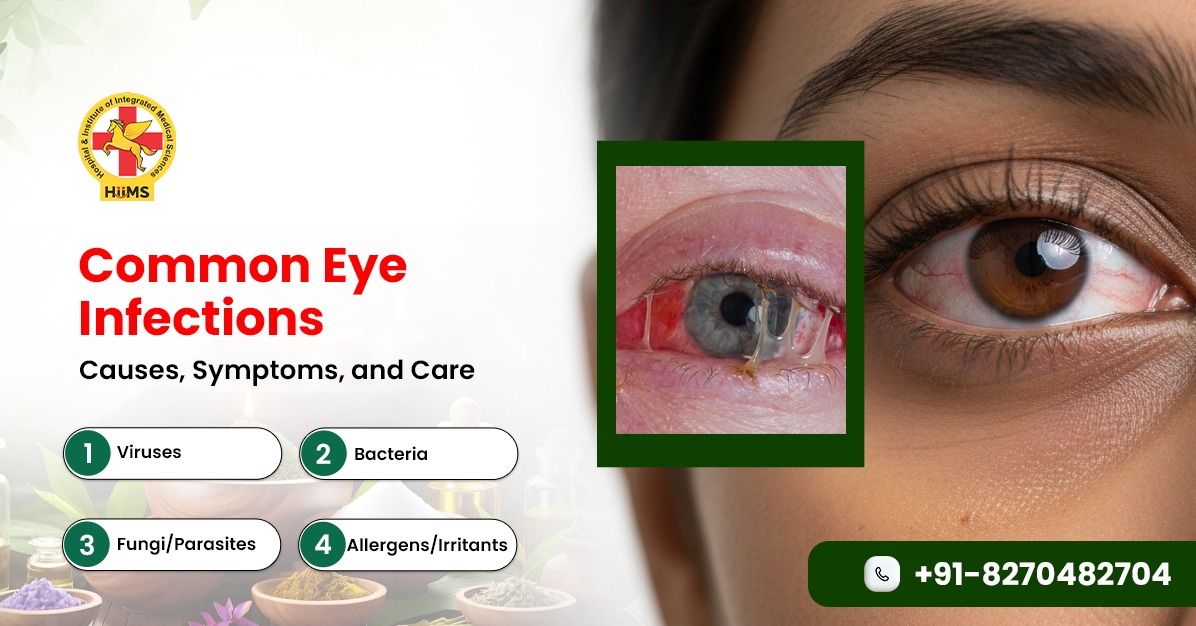
Eye health is often overlooked until we experience discomfort, pain, or vision problems. An eye infection can affect one or both eyes, causing symptoms like redness, irritation, or watering, and if left untreated, it can even affect sight.
At Jeena Sikho HiiMS, we frequently see patients visiting with issues that could have been avoided through simple awareness and preventive care. These infections occur when bacteria, viruses, fungi, or other germs enter the eye and begin to multiply.
While some infections are mild, others can be serious, so knowing the early signs is essential for timely care. Understanding common eye infections and the factors that trigger them can help you take daily steps to protect your eyes. This guide will walk you through the causes, warning signs, and treatment options for eye disease, as well as the right time to seek professional help, helping you act quickly and avoid complications.
What is an Eye Infection?
An eye infection happens when germs like bacteria, viruses, or fungi get into the eye. They can irritate the eyelids, cornea, or the conjunctiva. One eye or both can be affected. Sometimes it’s just mild redness; sometimes it’s more serious.
Types of Common Eye Infections
Understand the various types of common eye infections and how they impact your vision and eye comfort.
Conjunctivitis (Pink Eye) – Inflamed eye membrane and inner eyelid. Spread through direct contact.
Keratitis – Cornea infection from lens misuse or injury. It needs prompt care.
Stye (Hordeolum) – Red, painful bump on eyelid from an infected oil gland.
Blepharitis – Eyelid edge inflammation causing flakes or irritation.
Endophthalmitis & Other Serious Infections – Rare inner-eye condition. It can cause vision loss if untreated.
Eye Infection Causes
Knowing the eye infection causes can help prevent them. Here are some common ones:
Germs (Bacteria, Viruses, and Fungi)
Bacteria and viruses are the most common causes of conjunctivitis and keratitis. Fungal infections are less common but can occur, especially after eye injuries.Poor Hygiene
Touching eyes with unwashed hands, using dirty towels, or old makeup introduces germs. Contact lens misuse adds risk too.Allergies & Irritants
Allergens like pollen or animal hair may trigger allergic conjunctivitis. Dust and chemicals can also irritate the eye.Contact Lens Misuse
Sleeping in lenses, wearing them too long, or not cleaning them properly can allow microbes to grow and infect the eye.
Signs and Symptoms of Eye Infections
Symptoms can differ by type, but usually include:
Redness and Irritation: Eyes may look red or feel scratchy.
Itching or Burning: Seen in conjunctivitis or allergy-related infections.
Discharge or Tearing: May be watery or thick, pus-like in bacterial infections.
Swelling of Eyelids: Eyelids may appear puffy.
Pain or Light Sensitivity: Bright light or severe discomfort may point to deeper infections like keratitis.
Blurry Vision: Some infections can blur vision and should be checked immediately.
Effective Ways to Treat and Care for Eye Problems
Managing the eye disease involves more than just medicines. It requires a combination of home care, professional therapies, and simple lifestyle changes. Early attention can reduce discomfort, prevent complications, and help the eyes heal faster.
Home Care for Eye Conditions
Small home habits can make a big difference in recovery:
Gently clean the eyes with a warm, damp cloth to remove discharge.
Use sterile saline drops or artificial tears to ease dryness and irritation.
Avoid rubbing or touching your eyes with unwashed hands.
Rest your eyes and reduce screen time while infected.
Do not share towels, pillowcases, or eye makeup.
These simple steps create a strong foundation for healing. At Jeena Sikho HiiMS, home care is combined with Ayurvedic therapies to provide a gentle and effective approach for eye infection treatment.
Ayurvedic Approach to Eye Care
Ayurveda treats the body as a whole and focuses on nourishing the eyes naturally. Treatments are personalized according to individual needs:
Netra Tarpana and Akshi Tarpana: Medicated herbal oils or ghee gently calm irritation and strengthen eye tissues.
Panchakarma Therapies: Detox routines restore balance and support natural healing.
Regular Monitoring: Frequent check-ups ensure steady recovery and prevent recurrence.
This holistic approach addresses symptoms while also improving long-term eye health without relying solely on medicines.
Diet and Hygiene for Faster Recovery
Proper nutrition and hygiene are key for supporting eye health:
Eat light, cooling foods such as fresh fruits and green vegetables to reduce internal strain.
Stay hydrated to help the body heal from within.
Avoid oily, spicy, packaged, or heavy dairy foods that may worsen irritation.
Maintain personal hygiene, wash hands often, use separate towels, and change pillowcases regularly.
Combining home care, Ayurvedic therapies, and good diet and hygiene helps manage eye condition effectively. At Jeena Sikho HiiMS, this holistic method reduces irritation, supports healing, and strengthens eye health while helping prevent infections from returning.
Conclusion
Eye infections may occur in anyone, regardless of age. Being aware of the causes, early warning signs, and treatment methods helps you act in time. Simple preventive habits, such as clean hands and careful contact lens use, play a huge role.
If you experience redness, discharge, or pain, seek advice from specialists at Jeena Sikho HiiMS Navi Mumbai Hospital for effective and personalized treatment. Contact care@jeenasikho.com or call +91 8121783217.
FAQs
1. Can eye infections affect both eyes?
Yes, depending on the type, an infection can involve one eye or both.
2. What are the most common eye infections?
Some usual ones include conjunctivitis, keratitis, styes, blepharitis, and rare inner-eye conditions like endophthalmitis.
3. What causes eye infections?
They can be caused by bacteria, viruses, fungi, allergies, poor hygiene, or contact lens misuse.
4. Can allergies lead to the infection of eyes?
Allergies may irritate the eyes and sometimes allow bacteria to cause infection.
5. What are the early symptoms?
Redness, irritation, discharge, swollen eyelids, pain, light sensitivity, or blurry vision.