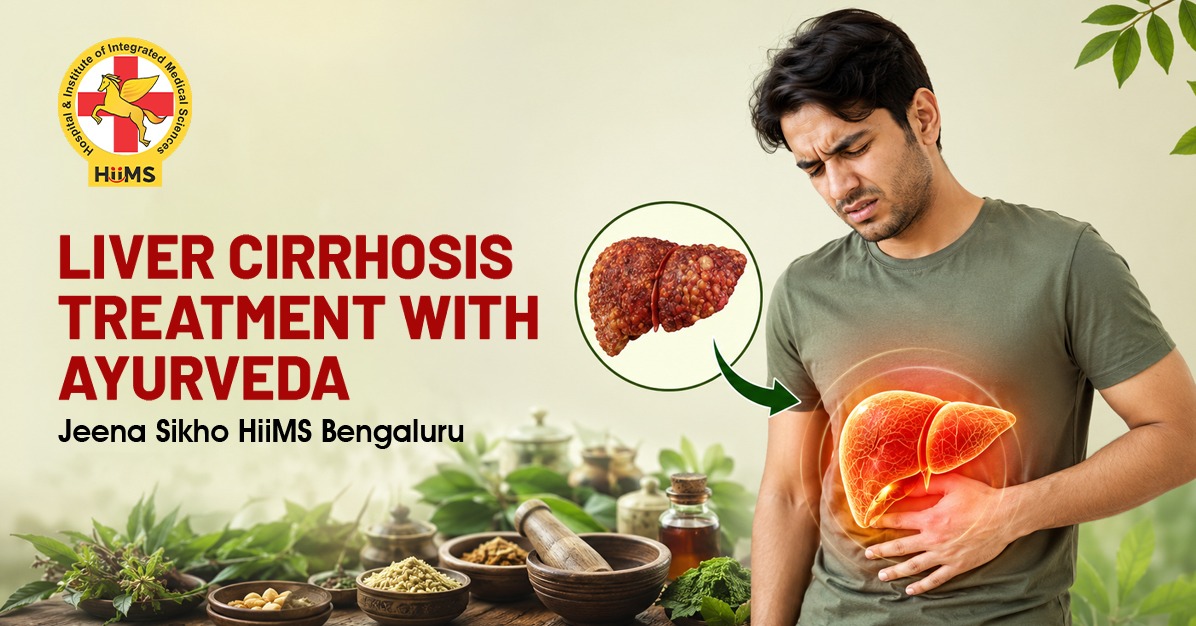
Many liver issues go unnoticed at first. They come in quietly, through years of small carelessness, a delayed checkup, and an ignored moment of fatigue until one day the body starts sending signals that are hard to ignore.
Liver cirrhosis develops in this way. It builds gradually, often without any warning, and by the time symptoms feel obvious, the liver has usually been under strain for a long time already.
This is also why more people today are turning toward liver cirrhosis treatment that is combined with Ayurvedic wisdom and everyday lifestyle correction rather than only symptom management. At Jeena Sikho HiiMS Bengaluru, this is approached through an integrated Ayurvedic system that looks at the whole person.
In this blog, you will understand what actually causes cirrhosis, the early signs worth noticing, and how a well-planned Ayurvedic approach supports the liver.
What Is Liver Cirrhosis and Why Does It Develop?
Liver cirrhosis happens when the organ gets damaged repeatedly over months or years, and instead of healing back to normal, the tissue turns into scar tissue. Scar tissue doesn't function the way healthy liver cells do. As more of it builds up, digestion slows down, toxins don't clear properly, and the whole metabolic rhythm of the body starts feeling the pressure.
Common Reasons Behind Liver Cirrhosis
A number of everyday habits and conditions can push the liver toward this state. Like:
Fatty liver is one of the biggest contributors today, largely because of sedentary routines and poor food choices.
Long-term alcohol consumption remains a well-known cause, and so does chronic hepatitis, which silently damages liver cells over time.
Beyond this, obesity, diabetes, certain long-term medicines, and autoimmune conditions where the body's own defence system attacks the liver can all play a role.
Along with these, poor dietary habits tie almost all of these causes together.
Early Signs You Should Never Ignore
Constant tiredness, a poor appetite, yellowing of the eyes or skin, swelling in the legs or abdomen, mild nausea, unexplained weight changes, persistent itchy skin, and even trouble concentrating are all signals worth taking seriously.
None of these feels like a warning sign on their own, which is exactly why they get overlooked so often.
How Ayurveda Looks at Chronic Liver Disease
In chronic liver disease, Ayurveda principles work quite differently from a just symptom-focused approach. Ayurveda looks at dosha imbalance as the root disturbance behind most chronic conditions, and the liver is no exception to this.
Special attention goes to Agni, or the body's digestive fire, since weak digestion is often where liver stress begins. Over time, undigested waste accumulates as Ama, a form of internal toxin buildup that further burdens the liver.
Rather than only chasing symptoms, this approach works toward restoring the body's internal balance so the liver gets genuine support to recover its function.
Natural Treatment for Liver Cirrhosis Through Ayurveda
A well-structured natural treatment for liver cirrhosis usually starts with a detailed individual assessment, because no two patients respond to the same plan in the same way.
After that, herbal support, dietary changes, and lifestyle adjustments function as an integrated approach. Panchakarma therapies may be included where appropriate, and regular monitoring keeps the plan aligned with how the body is actually responding over time.
Ayurvedic Herbs Commonly Used for Liver Health
Ayurvedic herbs for liver health have been studied and used for generations, and a few of them come up again and again in liver care. Such as:
Bhumi Amla is known for supporting liver cell function.
Kutki helps manage internal heat and supports digestion.
Kalmegh is often used for its detoxifying properties.
Punarnava is valued for easing mild fluid retention.
Guduchi supports the body's natural immune balance.
These herbs should always be taken under qualified Ayurvedic supervision, since dosage and combination are important far more than people usually assume.
Panchakarma and Detoxification in Liver Cirrhosis Treatment
Panchakarma, Ayurveda's set of five classical detox therapies, plays a meaningful role when used correctly. Other detox therapies may be added depending on the individual's strength and condition.
Not everyone receives the same combination, because the intensity and choice of therapy depend entirely on how the patient's body is positioned at that point in treatment.
Diet and Lifestyle Changes That Complement Liver Cirrhosis Treatment
Food and daily routine carry more weight in liver recovery than most people expect.
Fresh, home-cooked meals that are easy to digest reduce the burden on an already stressed liver.
Staying well hydrated, avoiding alcohol and processed food completely, and maintaining regular sleep timings all support the body's natural repair rhythm.
Gentle yoga, daily walking, and consistent stress management round out a routine that works alongside medical care rather than against it.
Holistic Liver Cirrhosis Treatment at Jeena Sikho HiiMS Bengaluru
Holistic liver cirrhosis treatment at Jeena Sikho HiiMS starts with a personalised consultation supported by modern diagnostic evaluation alongside traditional Ayurvedic assessment.
Every treatment plan is built around the individual, combining herbal medicines, Panchakarma therapies where suitable, diet counselling, and lifestyle guidance. Regular follow-ups ensure the plan keeps evolving as the patient's condition changes, rather than staying fixed on a one-time prescribed medication.
Why Patients Choose Jeena Sikho HiiMS Bengaluru for Ayurvedic Liver Care
Ayurvedic liver care here is guided by experienced Ayurvedic doctors who focus on individualised treatment plans instead of generic protocols. The focus stays on identifying the root cause rather than temporarily managing symptoms.
Integrated diagnostic support, ongoing lifestyle counselling, and long-term patient monitoring bring together a system of holistic care under one roof, which is what most patients say they were searching for in the first place.
Conclusion
Liver cirrhosis develops slowly, which makes recognising its early signs genuinely important rather than optional. Liver cirrhosis treatment works best when timely diagnosis meets consistent, well-monitored care rather than sporadic effort.
Ayurveda offers a structured, personalised way to support the liver through herbs, diet, detox, and daily discipline, and Jeena Sikho HiiMS Bengaluru brings this approach together under one roof.
If you are dealing with liver concerns or any other health issue, you can also opt for a VOPD consultation with expert doctors at Jeena Sikho HiiMS to understand the right path forward for your condition.
FAQs
Q1: Can Ayurveda be included in liver cirrhosis treatment?
Ayurveda can be included as a supportive, structured approach alongside proper medical evaluation, focusing on herbs, diet, and lifestyle correction for the liver.
Q2: Which herbs are commonly used for liver health in Ayurveda?
Bhumi Amla, Kutki, Kalmegh, Punarnava, and Guduchi are commonly used herbs, always recommended under qualified Ayurvedic supervision.
Q3: Is Panchakarma suitable for every person with liver cirrhosis?
Panchakarma therapies are personalised based on the patient's strength and condition, so the approach varies significantly from one individual to another.
Q4: What foods are generally recommended during liver care?
Fresh, home-cooked, easily digestible meals along with proper hydration are generally recommended, while processed food and alcohol are avoided.
Q5: Why is early diagnosis important in liver cirrhosis?
Early diagnosis allows treatment planning to begin before liver damage progresses further, giving the body a much better chance to respond well.