Blood sugar, also called blood glucose, is the amount of sugar present in our blood at a given time. It is an important fuel that keep the functioning of the body proper. A hormone called insulin, released by the pancreas, help sugar move from the blood into the cells. When the insulin does not work properly, or the body does not make enough of it, sugar start collecting in the blood instead of reaching the cells.
This condition is called high blood glucose, or hyperglycemia in the medical terms. Many people do not notice the signs of high blood sugar in the early stage, and mistake it for tiredness or a seasonal illness. If left untreated for long, it can slowly affect several organs. With the guidance from Jeena Sikho HiiMS Panchkula, this article covers the causes, common signs, and simple ways to manage elevated blood sugar.
Understanding the Causes of High Blood Sugar
The blood sugar rises when the body is not able to use insulin properly, or it does not produce enough of it. Insulin is a hormone made by the pancreas that moves sugar from the blood into the cells, so that it can be used as the energy. When this process breaks down, sugar keeps floating in the bloodstream instead of entering cells, and this pushes the sugar level up. The common causes of high blood sugar are:
Eating too much sugary or processed food,
Sitting for long hours without physical movement,
Carrying excess body weight,
Going through constant mental stress,
Not sleeping enough,
And having a family history of diabetes
Certain illnesses, infections, and even some medicines can also push glucose levels upward for a short period.
In most cases, however, it is a mix of poor diet and inactive lifestyle that slowly builds up the problem over years, and paying attention to early high glucose symptoms often helps in catching the condition before it worsens.
What Are the Signs of High Blood Sugar
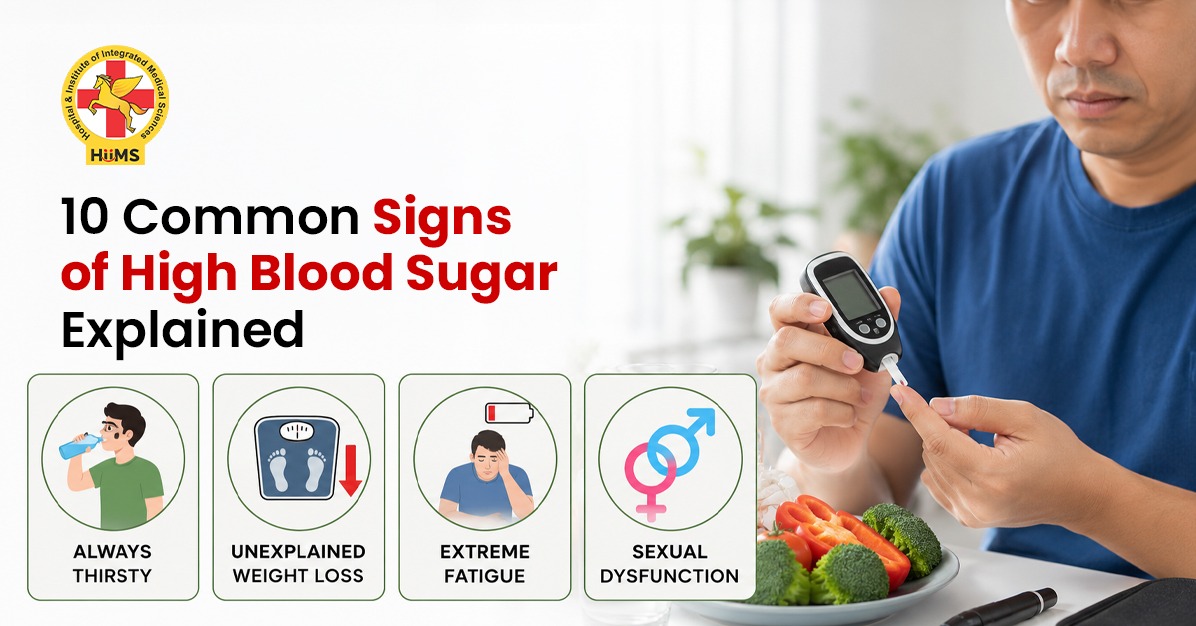
The hyperglycemia signs do not always appear suddenly. In the early stage, they are mild and easy to overlook, but as glucose levels keep climbing, the symptoms of high blood sugar become harder to ignore. Below are ten common signs that a person should never dismiss.
1. Frequent Urination
When there is too much sugar in the blood, the kidneys try to remove the extra glucose through the urine.
2. Excessive Thirst
Because the body is losing more fluid through urination, it naturally asks for more water, and this results in unusual thirst that does not go away easily.
3. Constant Fatigue
Even though there is plenty of sugar in the blood, the cells are not getting it properly, so the body feels drained of energy throughout most of the day.
4. Blurred Vision
High glucose levels can pull fluid from the eye lenses, changing their shape slightly and making it difficult to focus on the objects clearly.
5. Slow Healing of Wounds
Cuts, bruises, and the minor injuries take longer than usual to heal because the high sugar levels affect the blood circulation and the natural repair process of the body.
6. Unexplained Weight Loss
When the body cannot use glucose for energy, it starts using fat and muscle instead. This can lead to the unexpected weight loss.
7. Increased Hunger
Since the cells are starved of energy despite high sugar in the blood, the body keeps signalling hunger even shortly after a meal.
8. Tingling or Numbness
Nerve damage caused by long-term high glucose can lead to a tingling or numb feeling, often starting in the hands and feet.
9. Frequent Infections
A weakened immune response due to high sugar makes the body more prone to the skin infections, gum problems, and the urinary tract infections.
10. Headaches and Irritability
Sudden swings in the glucose levels can affect the brain function, leading to the headaches, poor concentration, and mood changes that seem to appear without reason.
Many people ignore the early warning signs of high blood sugar because they appear slowly. Knowing these symptoms can help you seek timely healthcare advice.
Long-Term Health Problems Caused by Elevated Blood Sugar
If left unmanaged for a long period, the elevated blood sugar levels can silently damage the several organs. The blood vessels are among the first to suffer, which raises the risk of heart disease and stroke. The kidneys may lose their filtering ability over the years, sometimes leading to the kidney failure. The eyes can develop a condition called diabetic retinopathy, which affects the vision permanently in severe cases.
Nerves, particularly in the legs and feet, often get damaged, causing pain or complete loss of sensation. The immune system also becomes weaker, making the body less capable of fighting infections. This is why the hyperglycemia symptoms should never be treated lightly, as the internal damage often begins long before the outward diabetes symptoms become visible.
The Ayurvedic Perspective on High Blood Glucose
Ayurveda refers to this condition as "Madhumeha," a subtype of the broader group of urinary disorders known as the Prameha. Some key points from this ancient system are,
Caused by the weak digestive fire, known as Agni.
Linked to an imbalance in the Kapha dosha.
Weak digestion leads to the toxin buildup, called Ama, in the body tissues.
This buildup disturbs the insulin-producing cells over time and is linked to high blood sugar symptoms.
Experts at Jeena Sikho HiiMS Panchkula explain it as a result of an imbalanced lifestyle, wrong food habits, and a disturbed routine, rather than a single disease. Herbs like bitter gourd, fenugreek, neem, and turmeric are mentioned in Ayurvedic texts for supporting glucose metabolism, though only under proper guidance.
How to Balance Blood Sugar Naturally
Recognising high blood sugar signs early makes the following lifestyle changes far more effective. A few consistent habits can help in managing glucose levels naturally:
Eating meals at fixed times daily.
Choosing whole grains over the refined carbohydrates.
Reducing sugary drinks and the processed snacks.
Doing regular physical activity, even a simple daily walk of thirty minutes, to help muscles use glucose more efficiently.
Getting adequate sleep of seven to eight hours to allow hormones to function properly.
Managing stress through the breathing exercises or light yoga to prevent unnecessary spikes.
Drinking enough water throughout the day to support the kidneys in flushing out the excess sugar.
Small changes, followed regularly, often make a bigger difference than sudden, short-term efforts.
Conclusion
High blood glucose is a condition that develops quietly but can leave visible effects on the body if ignored for too long. Recognising the early signs of high blood sugar, understanding their causes, and making the right lifestyle changes can help prevent complications in the future.
As explained through this article, with support from Jeena Sikho HiiMS Panchkula, both modern understanding and traditional Ayurvedic wisdom point toward the same conclusion, that balance in food, movement, and daily routine is the real key to keeping the body healthy and glucose levels steady. Anyone noticing repeated warning signs should not wait and should get their glucose levels checked at the earliest through a proper VOPD consultation for correct diagnosis and guidance.

FAQs
1. What are the signs of high blood sugar?
Frequent urination, excessive thirst, fatigue, blurred vision, and slow wound healing is the common signs.
2. What causes the high blood sugar?
Poor diet, lack of exercise, stress, obesity, family history, and certain illness can raise the blood sugar level.
3. Can high blood sugar develops without symptoms?
Yes, many people may not notice the symptoms in the early stage.
4. Why does high blood sugar cause frequent urination?
The kidneys remove the extra sugar through urine, which lead to more frequent urination.
5. Can Ayurveda help in supporting the healthy blood sugar levels?
Ayurveda focus on diet, lifestyle, and herbal support to help maintain the overall health under proper guidance.