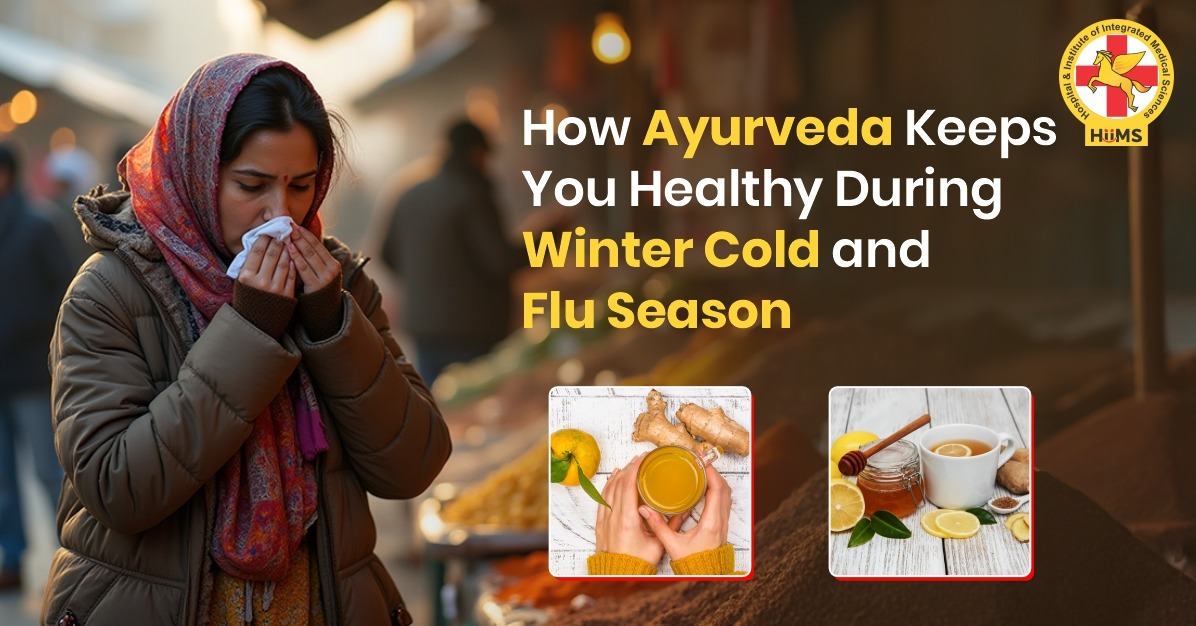
When winter arrives, the body faces a seasonal challenge. Cold temperatures cause people to get colds, the flu, stiff joints, and respiratory illnesses. Frozen air, wind, and sharp weather changes disturb inner harmony, weaken immunity, and leave us feeling weakened. Synthetic drugs might provide immediate relief, but not long-term wellness. A more natural way is through the ancient Indian science of healing, ”Ayurveda.” Ayurvedic remedies for winter cold and flu use nature-based tools to treat, including warm foods, immunity-enhancing herbs, and the rhythms of winter living. Such a gentle and firm strategy increases resistance and vitality. Ayurveda helps us with herbal remedies for winter health, warmth, and balance with proven herbal medications such as oil massage, digestive tea, and spices.
Ayurveda’s Approach to Winter Illnesses
According to Ayurveda, the imbalance of Vata and Kapha doshas may involve dryness, cold, cough, fatigue, and poor digestion in winter. This is why the Ayurvedic remedies for cold and flu aim to enhance digestion (Agni), eliminate toxins (Ama), and boost natural immunity-herbs like mulethi, ashwagandha, turmeric, and tulsi help to bring things back into balance. Acharya Manish Ji, founder of Jeena Sikho HiiMS Hospital, has encouraged Ayurvedic immunity boosters for winter, such as pranayama, oil massage, and an herbal routine, to build strength and avoid winter illnesses.
What Is a Cold and Flu in Ayurveda?
Ayurveda states that an aggravation of Vata-Kapha is the cause of colds and the flu. Digestion is poor when the digestive fire, or Agni, runs out. This causes the toxins (ama) to build up, obstructing the channels (srotas) and causing a buildup, even leading to cough and fever.
Symptoms You Shouldn’t Ignore
Sneezing and a runny nose
Sore throat and dry cough
Body aches and chills
Headache and fatigue
Mild fever or congestion
These indicate that ama (toxins) are accumulating, and your immune system is struggling. The earlier you act, the better the recovery.
Causes According to Ayurveda
Exposure to cold air or wind
Suppressed Agni due to heavy or cold food
Excessive consumption of dairy, sweets, or fried items
Poor sleep and stress
Weak immunity from seasonal transitions
These lifestyle misalignments cause Vata and Kapha aggravation and invite illnesses.
Cold and Flu Ayurvedic Remedies
Ayurveda seeks to detoxify the body, restore inner strength, and balance the doshas. Treatment often includes cold and cough ayurvedic remedies:
Herbal Kadha: A brew of tulsi, ginger, cinnamon, black pepper, and cloves, it may relieve symptoms and cleanse toxins from the respiratory tract.
Tulsi Ginger Tea: A concentrated daily solution for respiratory health, strengthening, and immunity.
Nasya Therapy: Clearing the respiratory tract of obstructions by putting warm sesame oil or Anu Taila into the nasal passages.
Honey-Lemon Water: Stir 1 tsp raw honey into warm water & lemon juice for morning detox & sore throat remedy.
Triphala tea balances the intestines and cleanses the body.
These natural remedies for seasonal flu are gentle yet effective and restore balance at the root level.
Lifestyle Tips for Winter Wellness
Your daily routine matters more in winter than you think. Follow these winter health tips in Ayurveda:
Drink a glass of warm lemon water when you wake up to cleanse your toxins.
Apply warm sesame oil (Abhyanga) to promote circulation and reduce vata before bathing.
Avoid cold food: Soups, stews, and khichdi are the best foods.
Season with cumin, ginger, cinnamon, and black pepper.
Do pranayama and yoga to help with breathing and immunity.
These Ayurveda for seasonal immunity tips help your body adapt to the season naturally.
The Benefits of Prevention Over Treatment
Maintaining balance is the ultimate road to health, says Ayurveda. Daily habits such as daily oil massages, regular detox, and mindful eating make your body robust.
Herbs like Giloy, Aswagandha, and Tulsi not only heal you but also make your body so strong that you don’t fall sick. Treat this list of herbal remedies for winter health as classic techniques, not seasonal trends.
Conclusion
In a world that runs after quick fixes, Ayurveda teaches us to slow down, tune in, and heal gently but deeply. Whether it's tulsi ginger tea for winter immunity, a spoonful of Chyawanprash, or a comforting cup of turmeric almond milk, these Ayurvedic remedies for winter cold and flu work harmoniously with your body.
At Jeena Sikho’s HiiMS Hospital, under the guidance of Acharya Manish Ji, thousands have regained their health using these natural approaches.
Don’t wait for illness to strike. Start your Ayurvedic winter wellness journey today. Visit Jeena Sikho & HiiMS Hospital and discover personalized natural healing that works.
FAQs
Which Ayurvedic treatments for the flu and winter cold are the best?
Tulsi, turmeric almond milk, and kadha are top Ayurvedic remedies for winter cold and flu.
What does Ayurvedic immunity mean in the winter?
Ayurvedic immunity boosters for winter include Chyawanprash, tulsi ginger tea, and warm foods.
Can turmeric and ginger home remedies help with flu symptoms?
Turmeric and ginger home remedies for the flu reduce inflammation and speed up recovery.
Are there natural remedies for seasonal flu in Ayurveda?
Kadha, steam inhalation, and herbal teas are effective natural remedies for the seasonal flu.
Is Tulsi ginger tea good for winter immunity in children?
Tulsi ginger tea for winter immunity is safe for children above 5 in mild doses.