High blood sugar is one of the most common health concerns today. When reading a blood test report, seeing high glucose numbers can be confusing especially since many people assume all diabetes is the same. However, Type 1 and Type 2 are two entirely different medical conditions.
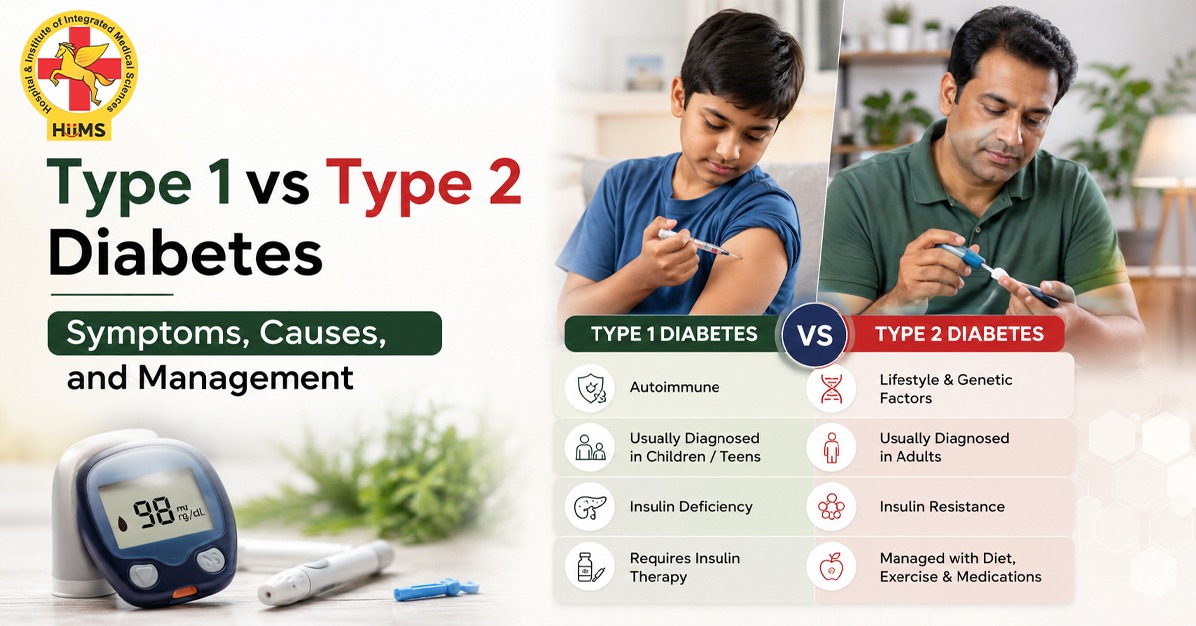
When looking at Type 1 vs Type 2 Diabetes, the difference lies in how your body handles insulin. In type 1 diabetes, the body stops producing insulin completely due to an immune system reaction. In type 2 diabetes, the body produces insulin but the cells cannot use it effectively.
Knowing which type you have dictates your daily food choices, exercise routine and long term care plan. In this blog, we will understand the causes, spot the symptoms, and adopt simple habits to manage your Type 1 vs Type 2 diabetes naturally.
Understanding Type 1 and Type 2 Diabetes
You need to look at how your body processes food for energy to understand both the conditions. Every time you eat, your digestive system breaks food down into sugar (glucose). This sugar enters your bloodstream and your body uses a natural hormone called insulin to unlock your cells so sugar can enter and fuel your body.
In type 1 diabetes, the pancreas stops making insulin entirely. The immune system mistakenly attacks and destroys the insulin-producing cells. Without insulin, sugar stays trapped in the blood and your body's cells are left without energy.
In type 2 diabetes, the pancreas continues to make insulin but your cells become desensitized to it. This is known as insulin resistance. Because the cells refuse to let sugar in easily. Glucose builds up in your bloodstream while the pancreas works extra hard to pump out even more insulin.
Causes of Type 1 vs Type 2 Diabetes
The primary causes behind these two conditions are very different and require distinct approaches:
Type 1 Diabetes Causes
This condition is not caused by diet or lifestyle habits. It occurs when the body's immune system accidentally attacks the internal cells in the pancreas that produce insulin. Genetics and environmental factors such as viral infections are the primary triggers.
Type 2 Diabetes Causes
Type 2 Diabetes Causes develop slowly over many years. Eating heavily processed foods, sitting for long hours, experiencing chronic stress and carrying extra weight can cause the body to resist insulin over time.
Recognizing the Symptoms
When blood sugar stays high for too long, your body sends out clear warning signals. Identifying these early helps prevent further health complications:
Type 1 Diabetes Symptoms
These symptoms usually appear rapidly over a few days or weeks. Key signs include sudden weight loss without trying, constant extreme thirst, frequent urination (such as bedwetting in children), and sudden exhaustion.
Type 2 Diabetes Symptoms
These signs develop quietly over months or years. Do not ignore slow healing cuts or sores, dark patches of skin around the neck or underarms, persistent tingling in the feet or hands and frequent fatigue.
Common Diabetes Symptoms: Both conditions share common signs like blurry vision, a persistent dry mouth and feeling continuously drained of energy.
Daily Management & Natural Care Protocols
Managing your sugar levels effectively comes down to creating reliable, healthy daily habits that support your metabolism.
Dietary Changes
Transitioning to whole, unprocessed foods is essential. Eat a large bowl of fresh raw salad (such as cucumber, carrots, and beetroot) before your warm meals. The natural fiber creates a protective barrier in your digestive tract. It slows down sugar absorption and prevents sudden spikes. Also replace refined flour and white rice with fiber-rich whole millets like jowar, bajra and ragi.
Herbal Support
Natural Herbs Strongly Support Healthy Digestion and Blood Sugar Balance. Including karela, methi seeds and amla in your diet helps to reduce internal inflammation and increase the sensitivity of cells to insulin.
Lifestyle Habits
Physical movement acts like a natural key that opens your cells to burn off trapped sugar. Aim for 30 to 45 minutes of daily brisk walking. Some gentle yoga postures like Mandukasana (Frog Pose) put gentle pressure on the abdominal area and help stimulate the pancreas.
Eating Schedule
Eating healthy food is as important as giving your digestive system enough rest. Finish your dinner by sunset or at least three hours before bedtime. This scheduled window gives your liver and pancreas a break to clean and repair themselves while you sleep.
You can make these lifestyle changes every day to help you with type 1 Diabetes management along with your medical care. It also provides a clear roadmap on how to reverse resistance in Type 2 Diabetes Management and achieve long term Diabetes Management.
How Jeena Sikho HiiMS Panchkula Supports Diabetes Management
Jeena Sikho HiiMS looks beyond quick fixes to address the root cause of metabolic health. Instead of just chasing lower sugar numbers, their care protocols focus on flushing out toxins, resetting digestion and giving your body the natural environment it needs to heal from within.
One of the unique therapy offered at HiiMS is Neem-Karela therapy. In this natural therapy, you press your bare feet into a fresh paste of crushed bitter gourd and neem leaves for about 30 minutes. The active herbal compounds are absorbed directly through the skin on the soles of your feet. It stimulates nerve endings, boosts blood flow, and helps naturally bring down elevated blood sugar levels.
Patients also receive Panchakarma detox therapies to gently clear stored waste and rebuild strong digestive system. This is paired with a clean, pH-balanced diet filled with raw vegetables and sprouts to reduce inflammation. Combined with natural herbs and daily exercise. To keep stress and cortisol levels low, patients practice gentle yoga and pranayama, making it easier to naturally stabilise sugar levels and maintain long term energy.
Conclusion
Understanding Type 1 vs Type 2 Diabetes provides the clarity needed to make practical, everyday choices for your body. Whether you are supporting your immune health or working to improve insulin sensitivity. Simple habits like eating fresh fiber, staying active and fixing your meal timings create lasting results.
If you are seeking natural diabetes management, you can visit the nearby Jeena Sikho HiiMS center. Or you can consult qualified healthcare professionals through HiiMS VOPD (video consultation) from home. You will receive a personalized diet plan, herbal support recommendations and direct guidance on how to safely and naturally control your sugar levels.

FAQs
Q: What is the main difference between Type 1 and Type 2 diabetes?
Type 1 is an autoimmune issue where the body stops making insulin entirely. Type 2 is a metabolic issue where cells become resistant to insulin.
Q: Can Type 2 diabetes be managed naturally through diet and lifestyle?
Yes. Eating raw fiber, walking daily, finishing dinner early and managing stress can help restore insulin sensitivity and stabilize sugar levels.
Q: How fast do symptoms usually appear in Type 1 and Type 2?
Type 1 symptoms appear rapidly over a few days or weeks and Type 2 symptoms develop silently over several months or years.
Q: How does Neem Karela therapy at HiiMS help lower blood sugar?
Pressing your feet into a fresh neem and karela paste lets your skin absorb natural compounds that stimulate nerve endings and improve blood flow.
Q: How can I consult a HiiMS doctor for Diabetes Management from home?
You can book an online appointment through HiiMS VOPD (video consultation) to share your medical reports and get a customized diet and lifestyle plan from home.