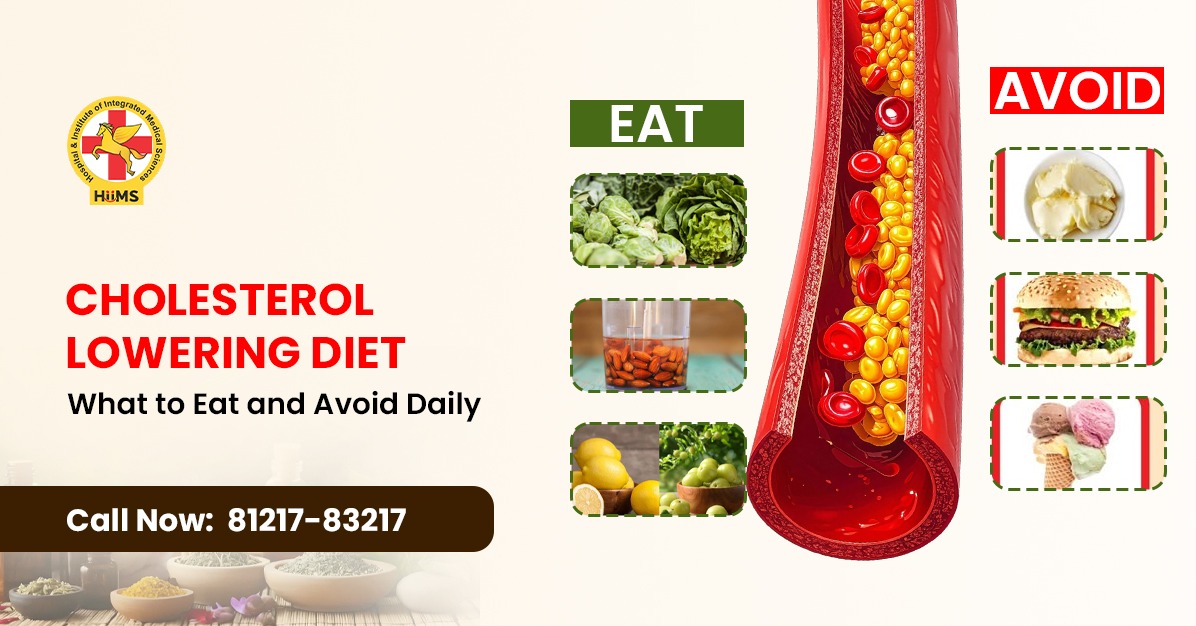
High cholesterol often progresses silently, with most people unaware until elevated levels appear in blood tests. Managing cholesterol is vital for maintaining heart health and preventing long-term complications like cardiovascular disease.
Although medications can assist, disciplined daily food choices provide one of the most effective natural approaches to cholesterol management. Maintaining a cholesterol-lowering diet involves emphasizing proper nutrition, improving digestion, and integrating sustainable lifestyle routines for long-term heart and metabolic wellness.
The approach focuses on foods that aid balanced cholesterol processing and reduce intake of items linked to excess cholesterol accumulation. Making informed food choices helps maintain healthy cholesterol levels and heart function.
At Jeena Sikho HiiMS Lucknow, we recommend an Ayurvedic-inspired method that harmonizes ancient traditions with contemporary nutritional science. A cholesterol-lowering diet plan helps sustain healthy lipid levels while improving vitality and overall wellness. Consistently following practices such as fiber-rich meals, heart-friendly fats, and mindful eating supports long-term cholesterol balance.
What Is a Cholesterol-Lowering Diet?
A cholesterol-lowering diet focuses on decreasing low-density lipoprotein (LDL) cholesterol, commonly called "bad" cholesterol, while supporting high-density lipoprotein (HDL), or "good" cholesterol. A cholesterol-friendly diet focuses on foods high in soluble fibre, nourishing oils, and antioxidants that aid healthy lipid metabolism and circulation. Avoiding fried foods, heavy dairy, and sugary choices is equally important. Consistent meal schedules and portion awareness support balanced fat use.
Grasping the core of a cholesterol-lowering diet plan makes selecting supportive daily foods more practical and effective.
Foods to Include in Your Daily Diet
Following a diet to lower cholesterol requires incorporating a variety of nutrient-rich foods:
Whole Grains
Oatmeal, barley, and brown rice are rich in soluble fiber, which reduces cholesterol absorption.
Fruits and Vegetables
Fibre-rich fruits like apples, pears, and berries, along with green vegetables such as spinach and broccoli, offer antioxidants that support proper cholesterol balance in the body.
Healthy Fats
Almonds and walnuts, as well as oils like olive oil, contain beneficial fats that assist in managing LDL cholesterol and supporting heart health.
Legumes
Plant proteins from lentils, chickpeas, and kidney beans offer soluble fiber that aids cholesterol regulation.
Herbs and Spices
Garlic, turmeric, and fenugreek encourage efficient digestion and help maintain balanced lipid levels.
While focusing on foods that lower bad cholesterol, attention must also be given to foods that can disturb lipid balance and are best reduced or avoided.
Foods to Avoid in a Cholesterol-Lowering Diet
Equally important is avoiding foods that elevate LDL cholesterol or impede its metabolism:
Fried and Processed Foods
French fries, chips, and packaged snacks contribute to unhealthy fat accumulation.
Red Meat and High-Fat Dairy
Cheese, butter, and fatty cuts of meat increase saturated fat intake.
Sugary Items
Soft drinks, pastries, and sweets can negatively affect cholesterol levels and contribute to insulin resistance over time.
Excess Salt and Oily Foods
Overconsumption can raise unhealthy cholesterol levels and strain heart health.
Cholesterol management is affected not just by what is eaten, but also by how meals are scheduled and spread over the day.
Disciplined & Intelligent Person’s Diet (DIP Diet) for Cholesterol Balance
At Jeena Sikho HiiMS Lucknow, a structured eating pattern known as the Disciplined & Intelligent Person’s Diet (DIP Diet) is often recommended as part of a practical diet to lower cholesterol, as it prioritizes fiber-rich fruits, vegetables, and light meals that assist the body in processing fats efficiently.
Breakfast (7–9 AM)
Plate 1 – Eat 3 to 5 types of seasonal fruits in a quantity of about 10 grams per kilogram of body weight.
Plate 2 – Choose light millet preparations such as poha, daliya, or millet upma.
Lunch (1–2 PM)
Plate 1 – Begin with a raw salad made from 3 to 5 seasonal vegetables.
Plate 2 – Follow with simple homemade foods like millet khichdi, chapati, or daliya.
Dinner (Before 7 PM)
Plate 1 – Take a mix of fruits and raw salad in an amount of roughly 5 grams per kilogram of body weight.
Plate 1 (if plate 2 is skipped) – Increase the quantity of fruits and salad to about 10 grams per kilogram of body weight.
Plate 2 – Drink freshly prepared vegetable soup.
Important Note: Plate 2 should always be eaten immediately after Plate 1 without any delay, as this order supports smooth digestion and balanced cholesterol processing.
Lifestyle Habits That Support Cholesterol Management
Healthy lifestyle practices enhance the benefits of a cholesterol-friendly diet.
Regular Exercise
Brisk walking, yoga, and aerobic movement encourage steady blood flow and assist in lowering LDL levels.
Consistent Meal Timing
Maintaining regular meal schedules helps the body process fats more efficiently.
Stress Management
Meditation, deep breathing, and relaxation techniques prevent stress-related lipid imbalances.
Adequate Sleep
Taking sufficient rest helps maintain hormonal regulation, stable cholesterol levels, and cardiovascular health.
Hydration
Drinking warm water supports digestion and detoxification.
These supportive habits closely align with Ayurvedic principles, which recognise digestion and metabolic balance as key to maintaining healthy cholesterol levels.
Ayurvedic Insights for Natural Cholesterol Control
Ayurvedic principles explain that high cholesterol often results from weak digestive strength and disrupted fat metabolism. At Jeena Sikho HiiMS, our approach focuses on strengthening digestion, encouraging light meals, and using herbs like Guggul, Triphala, and Fenugreek. When combined with disciplined eating habits, these natural remedies help support long-term cholesterol management.
By combining balanced nutrition, disciplined routines, and Ayurvedic understanding, cholesterol management becomes a sustainable and preventive approach rather than a temporary measure.
Conclusion
A cholesterol-lowering diet should be viewed not as a brief restriction, but as a lifelong approach to healthier living. Choosing foods that support healthy cholesterol, avoiding harmful fats, and following steady lifestyle routines help maintain optimal cholesterol balance.
When individuals follow a guided cholesterol care method, such as the approach at Jeena Sikho HiiMS Lucknow, they can regulate cholesterol levels, support heart health, and enhance overall metabolic well-being.
Start today with mindful choices and achieve a healthier tomorrow through consistent, Ayurvedic-inspired care.
To manage cholesterol naturally and safely, reach out to Jeena Sikho HiiMS Lucknow via +918121783217 or care@jeenasikho.com and get tailored assistance.
FAQs
1. How does fiber help cholesterol control?
Soluble fiber in the intestines attaches to cholesterol, supporting its removal and promoting balanced cholesterol levels.
2. Can diet alone reduce cholesterol levels?
A consistent diet to lower cholesterol can significantly improve lipid levels, especially in the early stages.
3. Does sugar affect cholesterol levels?
Excess sugar can increase triglycerides and worsen cholesterol imbalance.
4. Does weight loss help reduce cholesterol?
Maintaining a healthy weight supports better cholesterol balance.
5. When should someone seek medical advice for cholesterol?
If levels remain high despite diet and lifestyle changes, professional evaluation is advised.