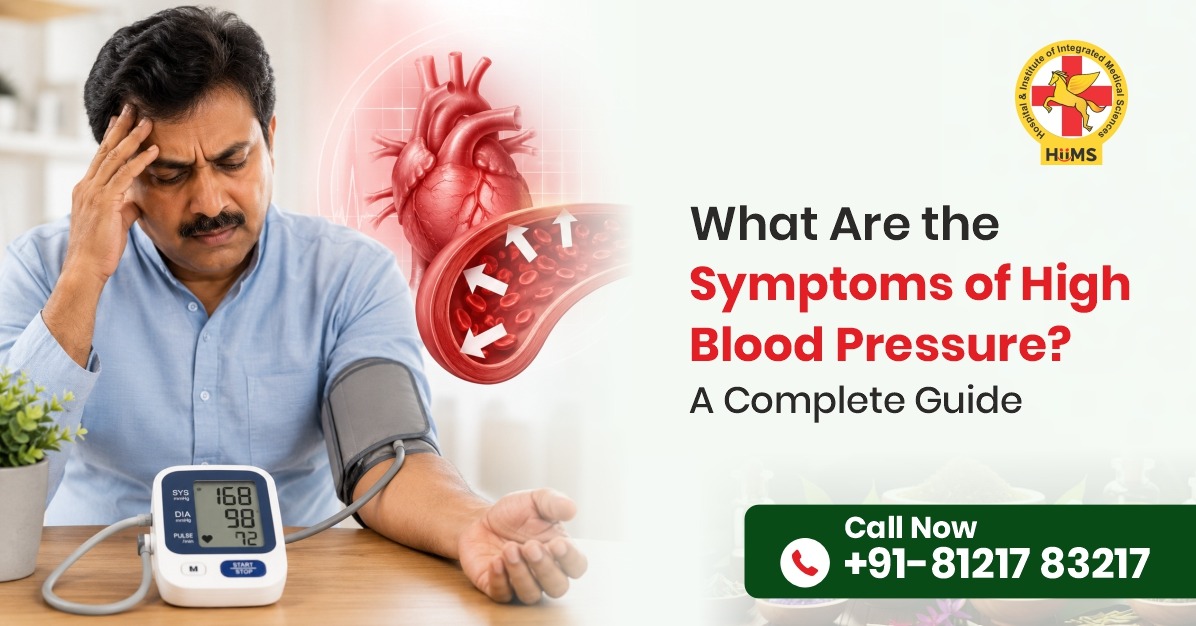
High blood pressure is one of the most common health conditions affecting people around the world. The concerning part is that many people live with it for years without even knowing they have it. This is why high blood pressure is often called a "silent condition." In some cases, the body gives certain warning signs, but these symptoms are easy to ignore or mistaken for something else.
Understanding the symptoms of high blood pressure can help people to seek the medical advice at right time and take steps to manage their health in a better way. At Jeena Sikho HiiMS Lucknow, awareness about the lifestyle related conditions and holistic wellness is encouraged, so that people can pay attention to their health before complications develop.
High Blood Pressure Explained in Simple Words
High blood pressure, also known as hypertension, means the pressure of blood flowing through the arteries stays higher than the normal. When the blood pressure remains uncontrolled, it may put extra strain on the heart, blood vessels, kidneys, and other organs.
A person may have high blood pressure even if they feel completely fine. That is why the regular health checkups and monitoring are important.
Symptoms of High Blood Pressure
Most people with high blood pressure do not experience any symptoms. However, when blood pressure becomes severely elevated or remains uncontrolled for a long period, some people may experience certain warning signs.
Frequent Headaches
Persistent headaches, especially in the morning, can sometimes be one of the high blood pressure symptoms. These headaches may feel different from the regular headaches and can occur repeatedly.
Dizziness or Feeling Lightheaded
Some people with the elevated blood pressure complain of dizziness or a spinning sensation. Although dizziness can happen due to many reasons, it may also be linked with the symptoms of hypertension in some cases.
Blurred or Disturbed Vision
Changes in vision, such as blurred eyesight or difficulty focusing, can occur when the high blood pressure affects the blood vessels of the eyes.
Shortness of Breath
Feeling breathless even after doing simple activities may be one of the hypertension symptoms that should not be ignored. It can happen because the heart has to work harder when the blood pressure remains high.
Chest Pain
Chest discomfort or tightness may sometimes occur in people with the uncontrolled blood pressure. This symptom requires immediate medical attention because it may also indicate the serious heart problem.
Fatigue and Weakness
Some people feel unusually tired or weak throughout the day. Although fatigue has many causes, it may also be among the high bp symptoms experienced by certain individuals.
Nosebleeds
Frequent nosebleeds are not common, but they can occur when blood pressure rises significantly. If nosebleeds happen repeatedly along with other symptoms, it is advisable to seek medical advice.
Irregular Heartbeat
A racing or pounding heartbeat can sometimes be one of the high blood pressure symptoms. Some people describe it as fluttering or a feeling that the heart is beating too fast.
Why Is High Blood Pressure Called a Silent Condition?
One of the biggest challenges with hypertension is that many people do not experience any warning signs. A person can have high blood pressure for years without any discomfort. This is why many people discover the condition only during a routine health checkup.
Because of this silent nature, knowing the symptoms of high blood pressure alone is not enough. Regular monitoring of blood pressure is equally important.
Who Is More Likely to Develop High Blood Pressure?
There are certain factors that may increase the chances of developing hypertension, including
Increasing age
Family history of high blood pressure
Being overweight or obese
Lack of physical activity
Excessive intake of the salt
Smoking and alcohol consumption
Stress and poor sleep habits
Those who have these risk factors should not ignore high bp symptoms and should check their blood pressure regularly, because early diagnosis makes management easier.
Warning Signs That Need Medical Attention
Certain symptoms, especially if they are frequent or severe, should not be ignored and may require a healthcare support.
Frequent headaches
Repeated dizziness
Chest pain
Difficulty in breathing
Sudden changes in the vision
Persistent tiredness
Recognising the symptoms of high blood pressure early and seeking a timely professional advice can help to prevent the possible complications, before they get worse.
Lifestyle Habits That May Help Support Healthy Blood Pressure
Eat a Balanced Diet - Eating plenty of fruits, vegetables, whole grains, and the healthy fats can help support heart health.
Stay Physically Active - Regular physical activity help maintain healthy circulation and supports the overall wellness of the body.
Manage Stress - Long term stress may affect blood pressure levels. Activities like meditation, deep breathing, and yoga can help to promote the relaxation.
Get Enough Sleep - Poor sleep can affect the overall health and may also contribute to the blood pressure issues in some individual.
Avoid Smoking and Excessive Alcohol - Making the healthy lifestyle choices can help support better cardiovascular health and reduces the risk of complications.
Conclusion
High blood pressure often develops silently, which makes regular monitoring and awareness extremely important. While many people may not notice any signs, understanding the symptoms of high blood pressure can help in recognising the possible warning signals and seeking the timely healthcare advice.
Adopting the healthy lifestyle habits and paying attention to the changes in the body can support overall well-being. At Jeena Sikho HiiMS Lucknow, the focus remains on promoting the awareness and encouraging a holistic approach toward better health and the long term wellness.

FAQs
1. Can high blood pressure occur without any symptoms?
Yes, high blood pressure is often called a silent condition because many people do not notice any warning signs for years.
2. Can headaches be a symptom of high blood pressure?
Headaches are not common in most people with high blood pressure. However, severe or persistent headaches may occur when blood pressure becomes very high. If headaches are frequent or severe, it is advisable to seek medical advice.
3. Does high blood pressure affect vision?
High blood pressure can sometimes affect the blood vessels in the eyes, leading to blurred vision or other changes in eyesight.
4. Why is high blood pressure called a silent condition?
It is called a silent condition because many people have it without experiencing any noticeable symptoms.
5. Can stress increase blood pressure?
Long term stress may contribute to increased blood pressure levels in some individuals.