High cholesterol rarely gives a warning. There is no pain and no clear sign. Most people find out only when a lab report comes back with red marks. By then, the levels may have been high for years.
The ICMR-INDIAB study, published in PLoS ONE in 2014, tested 16,607 adults across four regions of India. It found that 79% had at least one abnormal blood fat level. Obesity, diabetes and high blood sugar were common risk factors in this group.
So what really pushes these numbers up? This blog explains the causes of high cholesterol in simple words. It also covers who is at risk, how to prevent it, and what supportive care can offer.
What Is Cholesterol and What Causes Cholesterol to Rise?
Cholesterol is a waxy fat. Your body needs it to build cells and make hormones. Your liver makes most of it, and food adds the rest.
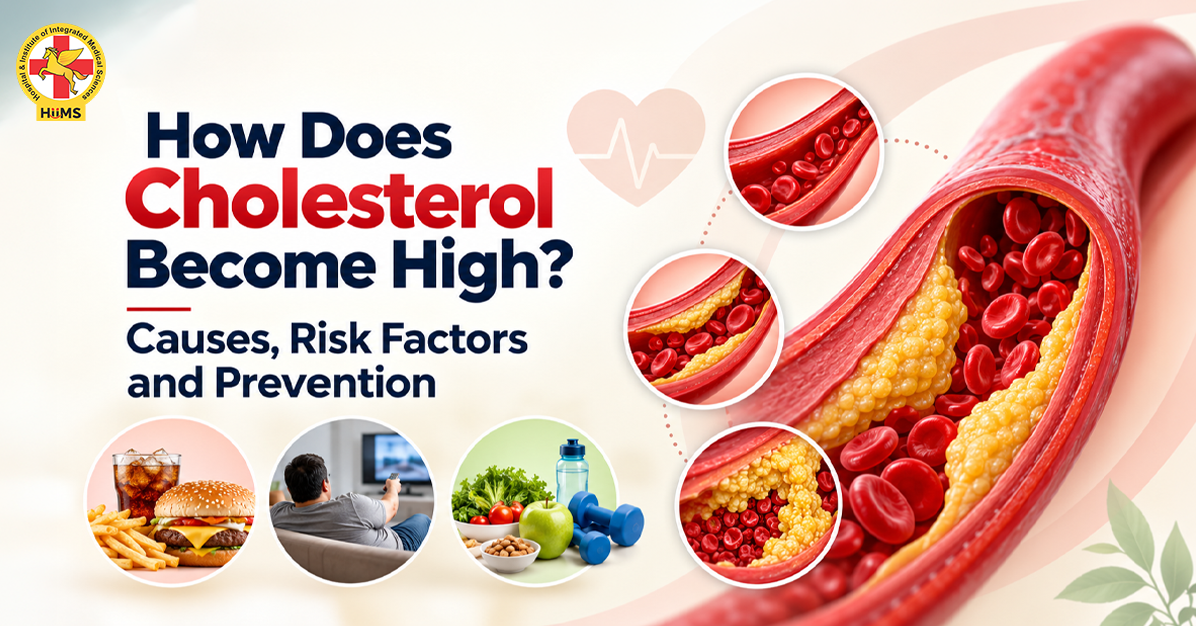
Doctors talk about two main types. LDL is the “bad” cholesterol, and it can build up on artery walls over time. HDL, known as the “good” cholesterol, helps carry extra cholesterol back to the liver.
So what causes cholesterol to rise? Usually, LDL goes up while HDL falls. Several habits and health conditions drive this change. Let’s look at them one by one.
Worried about your cholesterol numbers? Talk to our team.

Main Causes of High Cholesterol
Most causes come from daily life. A few come from health conditions or family history. Here are the main ones.
Diet High in Saturated and Trans Fats
Fried snacks, bakery items, and packaged foods carry a lot of unhealthy fat. Too much butter or ghee adds to the load. These fats raise LDL in the blood. Sugary foods and refined carbs also raise triglycerides. Meanwhile, a low-fibre diet makes things worse, because fibre helps the body remove extra cholesterol.
Lack of Movement and Belly Fat
Sitting for long hours slows down how the body uses fat. Extra weight, especially around the waist, is often linked to poor lipid levels. In contrast, regular movement helps lower LDL and raise HDL.
Smoking and Alcohol
Smoking lowers HDL and damages artery walls. Heavy drinking raises triglycerides. As a result, both habits raise the risk for your heart.
Medical Conditions
Some health problems raise cholesterol directly. Diabetes often lowers HDL and raises triglycerides. An underactive thyroid slows down how the body clears cholesterol. Kidney and liver problems can also upset blood fat levels.
Family History
Some people inherit a tendency toward high cholesterol. A condition called familial hypercholesterolaemia raises LDL from a young age. If a parent or sibling has high cholesterol or an early heart problem, get tested early.
Age and Hormonal Changes
Cholesterol tends to rise with age. Women may also see a rise after menopause, since hormone levels change.
Did you know? In the same ICMR-INDIAB study, 72.3% of people had low HDL. Another 29.5% had high triglycerides. So the problem goes beyond total cholesterol alone.
Risk Factors: Who Is More Likely to Have High Cholesterol?
Anyone can develop high cholesterol. However, some people face a higher risk:
Adults who are getting older
People with a family history of high cholesterol or heart disease
Also, people with diabetes, high blood pressure, or obesity
People with desk jobs and little exercise
Smokers and regular drinkers
Indians also tend to show a pattern of low HDL and high triglycerides. This makes the usual high cholesterol causes even more important to watch.
Also, high cholesterol usually causes no symptoms. The only way to know is a lipid profile blood test. Regular checks help you catch changes early.
Have a family history or risk factors? Get guidance from our experts.

Prevention: Daily Habits That Keep Cholesterol in Check
Prevention starts with small, steady habits. Knowing the causes of high cholesterol makes these habits easier to follow.
Eat more fibre. Add oats, vegetables, fruits, and lentils.
Avoid fried and packaged food.
Walk or exercise for at least 30 minutes on most days.
Keep your weight in check.
Sleep well and manage stress with breathing exercises or yoga.
Avoid smoking and limit alcohol.
Get a lipid profile test every year if you are at risk.
These steps work best when you follow them every day.
Cholesterol Treatment: What Standard Care Offers and Where It Falls Short?
Doctors usually start with lifestyle advice. If levels stay high they may add medicines such as statins. These medicines lower LDL, and many people with high heart risk rely on them.
However, medical care has limits. Treatment is often long-term, and people need regular tests. Some people notice side effects, such as muscle pain. Also medicines work on the numbers, but they do not change daily habits. If diet and activity stay the same, levels can rise again after stopping.
Because of this, many people look for supportive care that works on the root causes. That brings us to the Ayurvedic view.
An Ayurvedic View of High Cholesterol
Ayurveda does not see cholesterol as a single number. It looks at digestion, daily routine, and how the body handles fat. In traditional theory, weak digestion (Agni) leads to built-up waste (Ama). Over time, this can disturb the body’s fat tissue (Meda).
That is why Ayurveda focuses on food, routine, and herbs together. Research has also looked at this. A 2021 review in Medicina studied 32 trials with 1,386 people. It found moderate to high evidence that three Ayurvedic herbs lower cholesterol moderately. These herbs are garlic, guggulu, and black cumin.
Still, herbs work best as support, along with a healthy diet and regular medical advice. Understanding the causes of high cholesterol helps you use them wisely.
How Jeena Sikho HiiMS Approaches Cholesterol Care?
Jeena Sikho HiiMS is an integrated hospital. It brings Ayurveda, Naturopathy, Homeopathy, Unani, and modern science together. For cholesterol, the team studies your diet, habits and overall health first. Then it plans supportive care alongside your cholesterol treatment.
Care usually includes these therapies:
Panchakarma: Ayurvedic cleansing procedures that support the body’s natural detox. A doctor decides the plan after checking you.
Herbal Support: Herbs chosen by the doctor to suit each person’s needs.
pH-Balanced Diet: A simple, fresh diet that is light on digestion and low in fried and packaged food.
Lifestyle Changes: Practical guidance on sleep, movement, and stress.
Want a care plan built around your lifestyle? Connect with Jeena Sikho HiiMS experts via VOPD (video consultation) today.

Conclusion
High cholesterol builds up slowly and often without symptoms. Poor diet, low activity, belly fat, smoking, health conditions, family history, and age all play a part. Medical care manages the numbers. Healthy habits and supportive Ayurvedic care address the daily roots. Knowing the causes of high cholesterol is the first step toward prevention.
Take the first step toward healthier cholesterol with Jeena Sikho HiiMS. Book a VOPD (video consultation) today to connect with our holistic experts and receive personalised guidance tailored to your needs.
FAQs
1. Can young people have high cholesterol?
Yes. Diet, low activity, extra weight and family history can raise cholesterol even in the 20s and 30s. Regular testing helps catch it early.
2. Does high cholesterol cause symptoms?
Usually not. A lipid profile blood test is the only reliable way to know your levels.
3. Is eating less fat enough to lower cholesterol?
Not always. Weight, activity, sleep, and family history also matter. A fibre-rich diet helps too.
4. Can Jeena Sikho HiiMS care replace my cholesterol medicines?
No. HiiMS offer supportive care alongside regular check-ups. Never stop your medicines without your doctor’s advice.
5. What does Jeena Sikho HiiMS offer for cholesterol care?
It offer supportive care that include Panchkarma, herbal support, pH-balanced diet, and lifestyle guidance. A doctor plans it after checking each person.
Disclaimer: The information shared in this blog is for general educational and informational purposes only. It should not be considered a substitute for professional medical advice, diagnosis, or treatment. Please consult a qualified healthcare professional for advice based on your individual health needs. Do not make changes to your diet, lifestyle, or treatment plan without proper guidance.
Author: Kishan Kant Soni

Dr. Kishan Kant Soni has experience in Ayurveda of around 2 years. He is one of the best Ayurvedic Doctors in Meerut. His areas of expertise include the management of diabetes, Cancer, Liver diseases, Back pain, Kidney diseases, Heart disease and Skin disorder etc. Many individuals have benefited from her ayurvedic treatment.