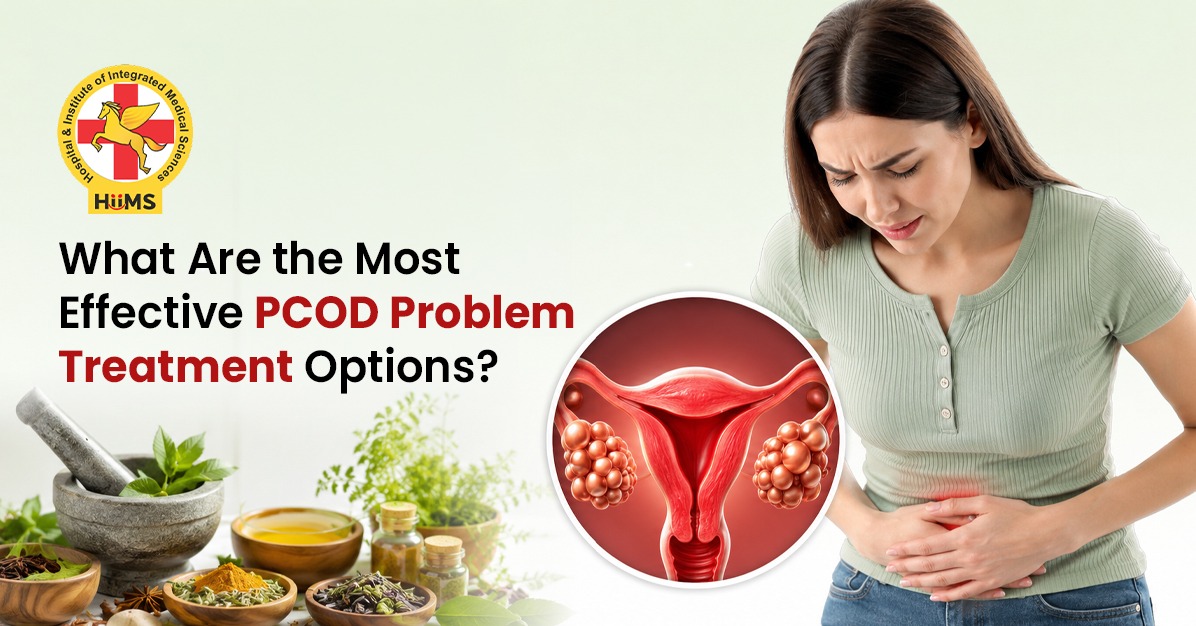
Polycystic Ovarian Disorder, or PCOD, is a disorder of hormone balance in women and can cause disorders in menstrual function, ovulation, weight control, skin and fertility. The manifestations of PCOD are different from one woman to another. There could be irregular or delayed periods, acne, hirsutism, hair loss or difficulty in managing their weight in some women, while others experience difficulty in conceiving due to ovulatory dysfunction.
As such, there is no PCOD problem treatment. This is because treatment for the disease would depend upon its manifestations, the general health and metabolic profile of the individual and planning for pregnancy.
At Jeena Sikho HiiMS, supportive Ayurvedic care may also focus on food habits, digestion, daily routine, physical activity and other individual lifestyle factors.
What Are the Common PCOD Symptoms?
PCOD symptoms can be different from one woman to another. Some women have mild symptoms, while others may experience several problems together.
Common PCOD problem symptoms may include:
Irregular, delayed or missed periods
Heavy or unpredictable menstrual bleeding
Acne and oily skin
Increased facial or body hair
Hair thinning or hair fall
Weight gain or difficulty losing weight
Changes in ovulation
Difficulty conceiving in some cases
Mood changes and tiredness
It is important to remember that these symptoms can also occur because of other health conditions. Therefore, irregular periods or acne alone should not be taken as proof of PCOD. A healthcare professional may consider menstrual history, symptoms, blood tests and sometimes ultrasound before making a diagnosis.
What Are the Most Effective PCOD Problem Treatment Options?
The most effective approach is usually based on the symptoms a woman wants to manage. Treatment is not necessarily about using medicines for every PCOD problem. In many cases, lifestyle habits are an important starting point.
1. Follow a Balanced Diet
Food plays an important role in overall hormonal and metabolic health. A balanced diet can include vegetables, fruits, whole grains, pulses, nuts, seeds and suitable sources of protein.
It is useful to reduce frequent intake of sugary drinks, sweets, highly processed foods and refined carbohydrates. Women who are overweight may benefit from gradual weight management. Even a modest reduction in body weight can improve some PCOD symptoms and may support more regular ovulation.
However, there is no need to follow an extremely restrictive diet. A simple eating pattern that can actually be followed for a long period is usually more practical.
2. Stay Physically Active
Other than this, physical exercise is another major factor that has to be taken into account while managing PCOD. Activities such as brisk walking, cycling, swimming, weight training, and yoga could be done according to an individual’s fitness and liking. Physical exercises may help one manage their weight, which in turn could help in improving insulin resistance. Even if one begins with walking daily, it could prove helpful if one has been inactive until now.
3. Medicines for Irregular Periods
When periods are very irregular, a doctor may prescribe medicines depending on the woman's health and pregnancy plans. Combined oral contraceptives are helpful for making the menstrual cycle regular and may also prove useful for acne and excess hair problems.
The progestin treatment is one such treatment that may be helpful for some women in controlling bleeding and protecting the uterine wall if periods occur too rarely.
4. Support for Insulin Resistance
Insulin resistance can occur along with PCOD. Medications such as metformin may be recommended by the healthcare practitioner in case there are metabolic issues.
Metformin can be recommended in case of metabolic characteristics in PCOS but does not have to be prescribed to all women who suffer from PCOD.
5. Fertility and Ovulation Support
PCOD does not mean that pregnancy is impossible. However, irregular ovulation can make conception more difficult for some women.
For women who are trying to conceive and have ovulation problems, medicines may be recommended to stimulate ovulation. Current international guidance considers letrozole the first-line pharmacological option for ovulation induction in women with PCOS and anovulatory infertility. Other options may be considered if needed.
Fertility medicines should always be used under the supervision of a qualified doctor.
6. Managing Acne and Excess Hair
Acne and excess facial/body hair may be difficult-to-manage PCOD symptoms. Treatment with hormones, medications for acne, anti-androgens, and cosmetic means to remove hair might be recommended by doctors based on the symptoms. The laser hair removal treatment, electrolysis, and other forms of treatment could be tried to get rid of excess hair. The right method will depend on various factors.
Can Ayurveda Support PCOD Management?
Ayurveda takes a broader view of health and may give attention to diet, digestion, daily routine, activity, sleep and stress. As a supportive approach, Ayurvedic care may focus on improving everyday habits rather than depending only on one method.
Yoga, relaxation practices, suitable food choices and regular physical activity may also become part of a healthy routine. Ayurvedic herbs or therapies, however, should not be started simply because they are natural. Their suitability can vary from person to person, especially when someone is already taking medicines or planning pregnancy.
At Jeena Sikho HiiMS, an individual approach can be considered by looking at symptoms, lifestyle and overall health before suggesting supportive Ayurvedic care.
Why Should PCOD Be Managed Properly?
PCOD is not only related to periods or ovarian changes. Some women may also have insulin resistance, high blood sugar, abnormal cholesterol or other metabolic concerns. Routine health check-ups are thus essential, particularly in cases where the symptoms persist for a long period of time.
The focus needs to be on managing the illness sustainably rather than finding out a fast solution. Good nutrition, exercise, adequate sleep, and appropriate medical advice may all play their part.
Conclusion
The most effective PCOD problem treatment depends on the woman's symptoms, health condition and personal goals. A healthy diet, regular exercise, weight management when appropriate and good daily habits form an important foundation. Medications may be needed for irregular cycles, issues related to insulin, acne, unwanted hair growth, and infertility issues.
Ayurveda treatment can be taken into account as an additional method along with proper medical diagnosis. In case you are having recurrent PCOD symptoms or any change in your menstrual cycle, please consult a professional doctor before taking any treatment. You can contact Jeena Sikho HiiMS via VOPD consultation.
FAQs
1. Which is the most effective PCOD problem treatment?
The treatment depends on the symptoms and may consist of eating right, exercising, sleeping properly, and taking medicine.
2. Which are the main PCOD symptoms?
Symptoms of PCOD may be irregular periods, acne, obesity, unwanted hair growth, balding and irregular ovulation.
3. Is there any way to control PCOD?
Healthy lifestyle including exercises, eating right, sleeping properly and reducing stress can manage PCOD symptoms.
4. How does Ayurveda help PCOD management?
Ayurveda can help PCOD management through customised diet, lifestyle, routines and therapies.
5. Can women with PCOD conceive?
PCOD influences the process of ovulation, but it can be managed to conceive.