Gallbladder surgery, especially for gallstones or gallbladder cancer, is one of the most common abdominal procedures today. In many cases, laparoscopic gallbladder removal (minimally invasive surgery) is recommended when stones cause repeated pain, infection, or complications.
But the real question is: Is surgery mandatory in every gallstone case? Medical science clearly states that silent gallstones (without symptoms) often do not require immediate surgery. Surgery becomes necessary when there is infection, blockage, pancreatitis, or suspicion of cancer.
In gallbladder cancer, surgical removal is usually the primary treatment in most treatment centers. However, surgery is not a small decision. Once the gallbladder is removed, digestion permanently changes. Bile flows directly into the intestine, which may affect fat digestion and bowel patterns.
Open Surgery vs Laparoscopic Surgery: The Cost and Risk Factor
In many gallbladder surgery cases, laparoscopic removal is planned. It is less invasive, cheaper, and has faster recovery. But sometimes, due to complications, doctors convert it to open surgery. Open surgery:
Has a larger incision.
Higher recovery time.
Higher cost.
Greater risk of postoperative complications.
If we look at costs, open surgery is usually more expensive than laparoscopic procedures. This brings up a fair question. Are all conversions to open surgery purely medical decisions, or can hospital systems and practical challenges sometimes play a role? This is not about blaming anyone. It is simply something patients should understand and discuss openly.
When Surgery Leads to Stoma: The Harsh Reality
In some complicated situations, especially advanced cancer or severe intestinal damage, doctors may need to create a stoma (colostomy) to protect the patient’s life.
A stoma means:
The intestine is brought outside through the abdominal wall.
A colostomy bag becomes permanent.
Daily life changes completely.
Stoma care is not just medical. It is emotional, social, and psychological. Quality of life often reduces. Recurrent surgeries increase trauma.
Some patients go through gallbladder removal, tumor recurrence, second surgery, and permanent stoma. This is not common in simple gallstones. But in cancer-related complications, it becomes reality.
A Patient’s Journey: When Gallbladder Surgery Changes Life
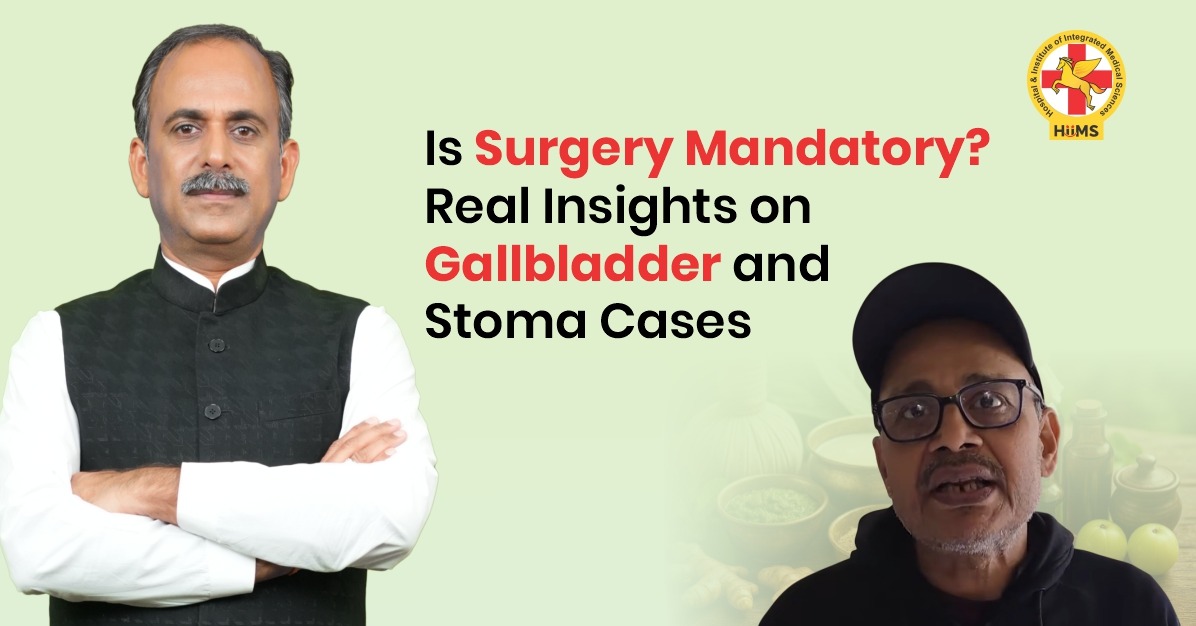
Mr. Pawan Kumar Lal Das had gallbladder surgery in 2011. It was planned as laparoscopic, but doctors had to switch to open surgery because of complications. This increased both recovery time and cost.
Years later, the tumor returned. He underwent another surgery in 2018 and continued medication. In 2023, after further regrowth, he required a major surgery that resulted in a permanent stoma. Since then, he has been living with a colostomy bag.
Medically, gallbladder cancer often has a high recurrence rate. Multiple surgeries may be needed in advanced stages. But beyond the medical facts, the journey brought financial strain and emotional stress.
After this experience, he began supporting the idea of adding Ayurvedic treatment and Panchakarma into mainstream healthcare conversations. Ayurveda focuses on early digestive and metabolic correction. The larger question remains — in some cases, could earlier integrative care reduce the need for repeated surgeries
Alternatives to Gallbladder Surgery: What Science Says
For uncomplicated gallstones, modern medicine acknowledges:
Asymptomatic stones may be monitored.
Dietary correction can reduce symptom frequency.
Weight control lowers risk.
Cholesterol management matters.
However, once acute inflammation, infection, or obstruction occurs, surgery becomes the standard recommendation. So the real answer is surgery is not mandatory in every gallstone case, but it becomes necessary in specific complications.
Acharya’s Perspective: Could Things Be Different?
From an Ayurvedic point of view, gallstones are not just a local organ problem. They are linked to:
Disturbed bile metabolism.
Poor digestion (Agnimandya).
Toxin accumulation (Ama).
Excess fat metabolism imbalance.
Acharya Manish Ji ’s viewpoint is clear: If digestive balance is corrected early, many gallstone cases may not reach the surgical stage. This does not mean cancer cases can be ignored. But it raises an important preventive question: Was digestive correction attempted early enough?
Ayurvedic Treatment Procedure
At Jeena Sikho Hiims, Ayurvedic gallbladder stone treatment follows a structured and supervised protocol.
Panchakarma is a structured Ayurvedic cleansing method, not a random detox. It focuses on correcting internal imbalance gradually. Virechana (Purgation Therapy) is used to regulate bile flow and reduce excess pitta. Basti (enema therapy) supports digestive balance and bile regulation. Udvartana (herbal powder massage) works on fat metabolism and cholesterol control. The goal is slow correction of imbalance rather than forceful removal.
Ayurvedic Herbal Remedies for Gallbladder Stones
Under medical supervision, certain herbs may be added as part of supportive care. Bhumi Amla is often used for liver health. Punarnava is linked with reducing swelling. Triphala helps improve digestion. Gokshura is traditionally connected with stone management, and turmeric supports bile balance. These herbs are not a replacement for emergency surgery, but they may support recovery when used properly.
Digestive Health After Surgery
After gallbladder removal, digestion needs extra attention.
Without the gallbladder:
Bile is no longer stored.
Fat digestion becomes irregular.
Some patients experience loose motions or bloating.
Post-surgery dietary discipline is essential. Ayurveda focuses strongly on this recovery phase.
Conclusion
Stoma creation is sometimes unavoidable in advanced cases. But prevention, early digestive correction, metabolic balance, and informed decision-making can change many outcomes. Surgery should always be a carefully considered medical decision, not a rushed one. Patients should clearly understand every step before agreeing to any major procedure.
For those who want to explore Ayurvedic treatment in a more gentle and structured way, proper medical supervision is necessary. At Jeena Sikho HiiMS, care programs focus on improving digestion and balancing metabolism. For more information, you may call +91 8042755629 or email care@jeenasikho.com.
FAQs
1. Is gallbladder surgery necessary for everyone?
It is usually needed only if there is pain, infection, blockage, or cancer risk.
2. Can gallstones be managed without surgery?
In early cases, diet control and supervised treatment may help. Emergency cases need medical care.
3. Are there risks after gallbladder removal?
Some people may have digestive changes or trouble with fatty foods.
4. What is a stoma?
It is a surgical opening with a colostomy bag, used in advanced or complicated cases.
5. Can Ayurveda help?
In non-emergency cases, supervised Ayurvedic care may support digestion and prevention.