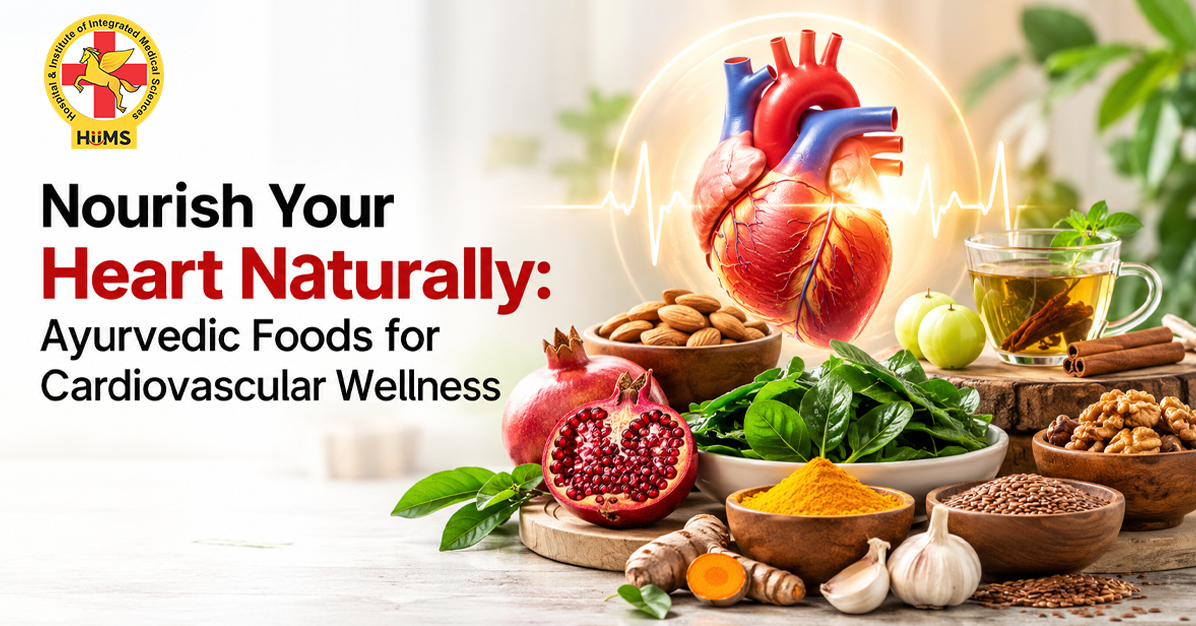
Your heart responds to your daily food choices more than most people think. It isn't usually one meal that makes the difference. Small habits are repeated over the years, and they gradually accumulate.
A systematic review published in the Journal of Hypertension looked at salt intake in over 227,000 Indian adults. It found people eat about 11 grams of salt a day on average. That's more than double the safe limit set by the World Health Organization, which is 5 grams. Too much salt raises blood pressure. And high blood pressure is one of the top causes of heart disease. So this one habit matters a lot. This blog looks at heart-healthy foods, shaped by both old Ayurvedic wisdom and simple, everyday eating.
Why Diet Matters So Much for Heart Health
What you eat, meal after meal, year after year, directly shapes blood pressure, cholesterol, and blood sugar. None of these shift overnight, but they also don't stay fixed; they respond to consistent change.
The salt study above makes this concrete: something as simple as avoiding excess salt meaningfully lowers cardiovascular risk. A heart health diet doesn't need to be complicated to work, it just needs to be consistent.
Curious what a heart-healthy diet could look like for you? Talk to our expert.

Ayurvedic Heart Care Tips: How Ayurveda Views the Heart
Ayurveda sees the heart as part of a wider system. It's considered closely connected to digestion (Agni), circulation, and emotional balance, all working together rather than as separate systems.
This is really at the core of Ayurvedic heart care tips: food and daily routine are treated as one combined picture, not a checklist of "good" and "bad" foods applied on top of an otherwise unchanged lifestyle.
Heart Healthy Diet Ayurveda Style: Foods That Support Your Heart

Here are the foods to include in your daily routine, each playing a role in supporting the heart over time.
Garlic
Ayurveda has long used garlic to support healthy blood flow. Modern research backs this up too. A review of 17 studies found that garlic lowered blood pressure in people who already had high blood pressure. Garlic is easy to add daily, raw in chutneys or cooked into meals.
Arjuna Bark
Arjuna is one of the most studied Ayurvedic herbs for heart health. A 2026 review looked at 9 studies with 537 heart failure patients. It found that Arjuna, taken alongside normal treatment, eased strain on the heart muscle. It also raised HDL, the "good" cholesterol.
Leafy Greens and Seasonal Vegetables
Spinach, fenugreek leaves, and other seasonal greens are rich in potassium. Potassium helps your body balance out extra salt. This is important, since most Indian diets already contain too much salt. Ayurveda also favours eating what's in season. These foods are easier for the body to digest.
Whole Grains Over Refined Grains
Try swapping white rice or maida for whole wheat, millets like bajra and jowar, or brown rice. This keeps your blood sugar steadier through the day. Steadier blood sugar means less strain on your blood vessels over time. Millets are deeply rooted in traditional Indian diets and are naturally rich in fibre.
Nuts and Seeds
Walnuts, almonds, and flaxseeds give your heart healthy fats. Ayurveda suggests soaking almonds overnight before eating them. This is thought to make them easier to digest. It's a small habit that fits easily into any morning.
Warm, Freshly Cooked Meals Over Processed Food
This isn't about one single food. It's a core Ayurvedic idea. Ayurveda favours fresh, warm, home-cooked food over cold, packaged, or reheated meals. This naturally cuts down on the hidden salt and preservatives found in most packaged food. And that ties straight back to the salt problem we started with.
Turmeric
Turmeric's active compound, curcumin, has been studied for easing inflammation in the body. This matters, since researchers now see ongoing inflammation as a real driver of heart disease. Turmeric already sits in most Indian kitchens, so it's one of the easiest additions to make.
Pomegranate
Pomegranate's reputation as a "heart-healthy" fruit is worth looking at honestly. A small 2004 study of just 10 patients found daily pomegranate juice reduced artery wall thickening by up to 30% over a year, a striking result. Pomegranate is a healthy, antioxidant-rich fruit worth including.
Want a heart health diet plan built around foods like these? Talk to our experts for personalised plan.

Holistic Ayurvedic Heart Care: Beyond Just Food
Food is only part of the picture. Holistic Ayurvedic heart care also looks at daily routine (dinacharya), stress management, sleep, and gentle movement, all alongside diet, not instead of it.
Food supports the body, but stress and routine affect the heart just as directly. A heart-healthy meal eaten in a rushed, high-stress state doesn't deliver the same benefit as the same meal eaten calmly.
Ayurvedic Wellness for the Heart: Simple Daily Habits
A few small daily habits round out Ayurvedic wellness for the heart:
Eat meals at the same times each day
Chew your food slowly instead of rushing
Skip heavy or fried food late at night
Drink enough water throughout the day
Take a short walk after meals
Supporting Your Heart-Healthy Diet: How Jeena Sikho HiiMS Bengaluru Can Help
Jeena Sikho HiiMS Bengaluru builds on this same food-first idea and turns it into a full heart care plan. As an integrated hospital, it brings together Ayurveda, Naturopathy, Homeopathy, Unani, and modern medicine. So a heart-healthy diet becomes just one part of a bigger plan, not advice handed out on its own. Alongside diet, care is built around a few core therapies:
Hriday Basti: Warm medicated oil held over the chest using a herbal-dough ring, traditionally used to support circulation and ease stress on the heart.
Panchkarma: Ayurvedic cleansing therapies used as a base for heart care, decided after a doctor's assessment.
pH-Balanced Diet: A personalised plant-based meal rich in fresh fruits and raw vegetables, suited to your specific condition.
Herbal Support: Including Arjuna, Ashwagandha, and Garlic, given under a doctor's supervision.
Mind & Body Healing: Yoga, Pranayama and Meditation to manage stress, since ongoing stress adds real strain to the heart.
Conclusion
A heart health diet doesn't need to be extreme to work, it needs to be consistent. Less salt, more whole foods, and ingredients like garlic, Arjuna, and leafy greens, backed by real research, all add up over time. Ayurveda's broader lens, looking at routine, stress and digestion alongside food, rounds out what a genuinely heart-healthy lifestyle looks like.

If you want to build your personalised diet plan for your heart health, visit Jeena Sikho HiiMS Bengaluru today. You can also book a VOPD (video consultation) to connect with our experts online and receive a personalised heart-healthy plan from home.
FAQs
What foods should I avoid for better heart health?
Avoid excess salt, fried and processed foods, and refined grains like maida and white rice. These contribute to high blood pressure and poor blood sugar control over time.
Can garlic really help lower blood pressure?
Research shows garlic supplementation can meaningfully lower blood pressure in people who already have hypertension, though it doesn't show the same effect in people with normal blood pressure.
Is pomegranate actually good for the heart?
It's a healthy, antioxidant-rich fruit worth including in your diet, but the dramatic early claims about it reversing artery thickening haven't held up in larger, more rigorous studies.
How long does it take to see results from a heart health diet?
Diet-related improvement in blood pressure and cholesterol typically build over weeks to months of consistent habits not overnight. Patience and consistency matter more than any single food.
Can Ayurvedic herbs like Arjuna replace my heart medication?
No. Arjuna and similar herbs are best used as a support alongside standard medical treatment not as a replacement. Always consult your doctor before adding any herb to your routine.