When the arteries that carry blood to the heart become narrow, it is often referred to as heart blockage. This narrowing may take place when plaque starts collecting inside the artery walls. Plaque is made up of substances such as cholesterol, fats and other materials present in the blood. The buildup does not always happen quickly. In fact, it may continue for years without causing any noticeable problem. Later, some people may start feeling pressure or discomfort in the chest, especially while walking, climbing stairs or doing some physical work. Breathlessness and unusual tiredness can also be noticed. At times, the discomfort may be felt in the arm, neck, back or jaw instead of the chest.
These signs can easily be confused with ordinary tiredness or indigestion. For this reason, knowing the symptoms of heart blockage and noticing any unusual change in the body can be helpful. A good diet, regular movement, enough sleep and a simple daily routine also support heart wellness.
How Does Heart Blockage Affect Blood Flow?
When the coronary arteries become narrow, the heart may not receive as much blood as it needs. The need for blood and oxygen becomes greater when a person walks fast, climbs stairs or does some physical work. If the supply is not enough at that time, a person may notice chest pressure, breathlessness or unusual tiredness.
At first, the narrowing may not create any clear problem. A person may feel perfectly normal while resting and only notice a change after doing some activity. As the narrowing becomes greater, symptoms of blocked arteries may become easier to notice or may start appearing even after less physical effort.
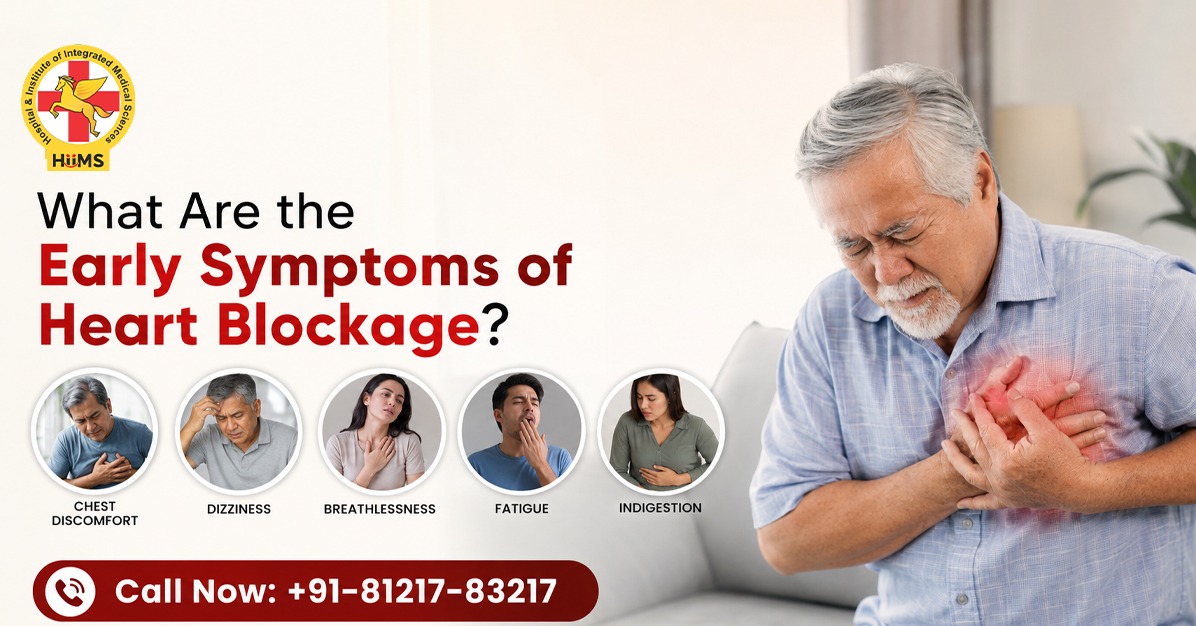
What Are the Early Symptoms of Heart Blockage?
The heart artery blockage symptoms are not the same for everyone. In some people, they become noticeable mainly while walking, exercising, or doing other physical work.
Chest Pressure or Discomfort
There may be a feeling of pressure, heaviness or tightness in the chest when the heart is not getting enough blood.
Shortness of Breath
Getting out of breath while walking, climbing stairs or doing normal daily work can sometimes be related to reduced blood supply to the heart.
Unusual Tiredness
If simple daily activities start making you feel unusually tired, it is something that should not be ignored.
Discomfort in the Arm, Neck, Jaw or Back
Sometimes, heart-related discomfort is not felt only in the chest. It can also move towards the arm, shoulder, neck, jaw or back.
Dizziness or Lightheadedness
Feeling dizzy or lightheaded suddenly, mainly when other symptoms are present, needs proper attention.
Unusual Sweating
Unusual sweating can sometimes be among the heart blockage symptoms, especially with chest discomfort.
Nausea or Indigestion-Like Feeling
At times, nausea or a feeling similar to indigestion may occur along with other heart-related symptoms.
Who Has a Higher Risk of Heart Artery Narrowing?
Heart artery narrowing can be linked with certain health conditions as well as some habits followed over many years. Having one of these factors does not mean a person has a blockage, but it can increase the possibility.
The factors commonly seen include:
High blood pressure
High cholesterol
Diabetes
Smoking
Excess body weight
Lack of physical activity
Older age
Family history of heart disease
Even people with these factors may not notice heart blockage symptoms in the early stage. For this reason, taking care of heart health is important, especially when several risk factors are present.
What Should You Do If You Notice These Signs?
Chest pain or difficulty in breathing does not always mean that there is a heart blockage. However, any new or repeated change in the body deserves some attention. Symptoms of heart blockage may not always be strong, and in some people they develop slowly.
When such signs continue to appear, talking to a qualified healthcare professional is advisable. A blockage cannot be confirmed only from symptoms, so further evaluation may be needed to understand what is causing the problem.
Conclusion
Knowing the symptoms of heart blockage can help a person notice important changes in the body at the right time. Chest pressure, breathlessness, unusual tiredness, discomfort in the arm or jaw, dizziness, sweating, and nausea may occur in different people. These symptoms by themselves do not confirm a heart blockage, so it is better to understand their cause with proper guidance.
You can also consider a VOPD consultation at Jeena Sikho HiiMS Lucknow for the guidance related to your individual health needs and lifestyle. At the same time, sudden or severe chest discomfort should always be treated as an emergency.

FAQs
1. Can heart blockage happen without any chest pain?
Yes, many people notice only tiredness or breathlessness without any strong chest pain.
2. Can stress cause symptoms similar to heart blockage?
Stress and anxiety may also cause a tight feeling in the chest and difficulty in breathing, which can sometimes be mistaken for a heart-related problem.
3. Who is more likely to develop heart artery narrowing?
People with high blood pressure, high cholesterol, diabetes, a smoking habit or a family history of heart disease.
4. When should someone seek medical guidance for these symptoms?
If symptoms repeat often or occur during simple daily tasks, timely guidance should be taken.
5. How can Jeena Sikho HiiMS help with heart-related concerns?
You can book a VOPD consultation with Jeena Sikho HiiMS for the proper guidance based on your individual symptoms.