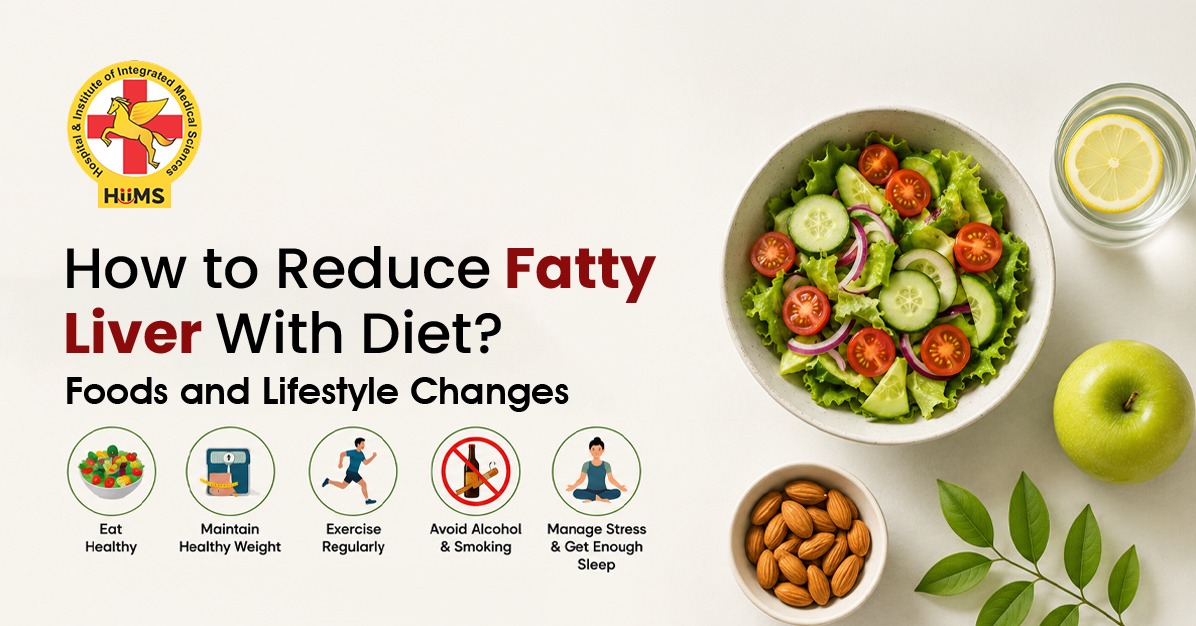
Fatty liver is often linked with excess weight, diabetes, high cholesterol and an inactive lifestyle. At its initial stages, there are no obvious symptoms, and it can be diagnosed via blood tests or ultrasounds. Proper dietary and lifestyle habits will ensure good liver health and help in managing this condition.
Fatty liver diet is not about depriving yourself of nutrition and food, as well as eliminating carbs and fat from your diet completely. It is about consuming more whole foods, managing portion sizes, and minimising intake of foods rich in added sugars, refined carbohydrates and bad fats. In case you are overweight, losing some weight will also help in decreasing the amount of fat inside the liver.
Apart from diet, exercise, adequate sleep, and control of certain medical conditions, including diabetes and high cholesterol levels, also play a key role. At Jeena Sikho HiiMS, the integrated treatment can include proper nutrition, lifestyle recommendations, and health needs of an individual patient.
How Can Diet Help With Fatty Liver?
Your daily diet affects body weight, blood sugar, cholesterol and metabolic health, all of which can be connected with fatty liver. Eating too many processed foods, sugary drinks and high-calorie foods can make the weight management more difficult.
Rather than depending on one particular food, focus on the overall quality of your meals. Include vegetables, whole fruits, whole grains, dal, beans, suitable protein sources, nuts and healthy fats. At the same time, reduce added sugar, refined foods and frequent fried meals.
Small changes followed consistently are usually more practical than a very restrictive diet that is difficult to maintain.
Foods to Eat in a Fatty Liver Diet
Vegetables are an important part of a healthy diet and can be added to most meals without much effort. They provide the fibre and essential nutrients while helping you keep your meals light and balanced.
1. Green and Non-Starchy Vegetables
Vegetables should be a regular part of your meals. Spinach, methi, broccoli, cauliflower, cabbage, cucumber, tomato, carrots and beans provide fibre and important nutrients.
You can include vegetables in different meals through vegetable poha, moong dal chilla, salads, cooked sabzi or vegetable soups.
2. Whole Fruits
Whole fruits such as guava, apple, orange, papaya and berries can be included in a balanced diet. They provide fibre along with vitamins and minerals.
It is best to opt for whole fruits over fruit juice. Processed fruit juices and beverages have significant levels of sugar and help you ingest extra calories easily.
3. Whole Grains
Carbohydrates do not need to be completely removed from a fatty liver diet. Instead, choose whole grain options more often and pay attention to portion size.
Oats, barley and whole wheat are useful choices. Rice can also be included in moderation, especially when combined with vegetables and a protein source.
4. Dal, Beans and Legumes
It is quite convenient to include dal, chickpeas, rajma, peas, and lentils in Indian diets. This is because they give fibre and vegetable protein.
A simple meal consisting of dal, vegetables, salad, and an adequate amount of roti can be a healthy choice.
5. Nuts, Seeds and Healthy Fats
Walnuts, almonds, flaxseeds and chia seeds provide healthy unsaturated fats and other nutrients. Since nuts and seeds are calorie dense, small portions are enough.
Healthy fats can also come from suitable plant oils and fish. The aim is to choose better sources of fat rather than removing all fat from the diet.
6. Suitable Protein Sources
If you eat non-vegetarian food, fish, seafood, skinless poultry and eggs can be included according to your health needs. Fish can also provide omega 3 fatty acids.
Vegetarian options include dal, beans, chickpeas and other legumes. Try to prepare protein-rich foods without excessive frying or heavy sauces.
Foods to Avoid or Limit With Fatty Liver
Sugary Foods and Drinks
Soft drinks, drinks laden with sugar, candy, cakes, pastries, and other foods rich in sugar content should be consumed in moderation, as the consumption of too many sugar-filled drinks may lead to overconsumption of calories.
Refined Carbohydrates
White bread, maida-based foods, many bakery products and other refined carbohydrate foods should not become regular staples. Choose whole-grain alternatives where possible and keep portions reasonable.
Fried Foods
Samosas, pakoras, french fries and other deep-fried foods can be high in calories and fat. Having them occasionally is different from eating them regularly, so keep fried foods limited.
Highly Processed Foods
Packaged snacks, processed meats and highly processed meals may contain high amounts of sugar, salt, refined carbohydrates or saturated fat. Build most meals around fresh or minimally processed foods instead.
Alcohol
Alcohol can contribute to liver injury. If you have fatty liver, discuss alcohol use with a healthcare professional, particularly if you have another liver condition.
What Should Your Plate Look Like?
Portion control is an important part of a healthy fatty liver diet. A simple plate method can make meals easier to balance.
Half of the plate: Vegetables and other non-starchy foods
One quarter: Whole grains or another suitable carbohydrate
One quarter: Protein such as dal, beans, fish, poultry or eggs
For an Indian meal, you can have more vegetables and salad, a moderate portion of roti or rice and a suitable serving of dal or another protein source.
Sample One-Day Fatty Liver Diet Plan
A general fatty liver diet plan may include:
Breakfast: Vegetable poha or moong dal chilla with unsweetened tea
Mid-morning: One whole fruit such as guava or apple
Lunch: Dal, mixed vegetable sabzi, salad and a moderate portion of whole wheat roti
Evening: A small portion of unsalted nuts or seeds with unsweetened tea
Dinner: Mixed vegetables with dal, beans, eggs or another suitable protein source with a moderate portion of whole grain food
Drinks: Water throughout the day
This is a general example. People with diabetes, high cholesterol, obesity or other health concerns may require a personalised meal plan.
Can Weight Loss Help With Fatty Liver?
When it comes to being overweight, a slow weight reduction programme may help with managing your fatty liver condition. Reducing your body fat will help you decrease the fat content in your liver.
But drastic dieting is not required. All that is needed is portion control, less consumption of sugar beverages, more vegetables, and exercise.
Lifestyle Changes Along With Diet
Diet alone is not the sole factor when it comes to having a healthy liver. Engaging in some form of exercise may be helpful in terms of managing one's weight and metabolism. Brisk walking, cycling, swimming, and strength training may be considered.
In case one works sitting down, it would be ideal to move around rather than staying in one position for many hours. Having a proper sleeping schedule is also key in maintaining a good metabolism.
Those who suffer from diabetes, high cholesterol, or high blood pressure should see a medical practitioner.
Can Ayurveda Support Fatty Liver Management?
Ayurveda gives importance to food, digestion, daily routine and individual health needs. Maintaining suitable eating habits and a consistent routine can form part of an overall wellness approach.
As for Jeena Sikho HiiMS, an integrative approach to support care can also incorporate issues such as dietary and lifestyle modifications and personalisation according to the patient’s needs. But taking herbs without a prescription is not recommended. People suffering from fatty liver disease should consult professionals about the use of herbs.
When Should You Consult a Liver Doctor or Liver Specialist?
It can go undetected for quite a while. Should you have had a test such as an ultrasound or blood tests indicating fatty liver or elevated liver enzymes, be sure to discuss the test findings with a medical practitioner.
Liver specialists or liver doctors will be able to help you understand what tests should be done based on the results and will recommend a liver treatment plan diseases depending on the underlying problem and its severity.
Conclusion
Managing fatty liver starts with everyday habits. A balanced fatty liver diet can include vegetables, whole fruits, whole grains, dal, beans, suitable protein, nuts and healthy fats. Sugary drinks, highly processed foods, frequent fried foods and refined carbohydrates should be limited.
Gradual weight management, regular exercise and proper sleep can further support better metabolic and liver health. If you have been diagnosed with fatty liver or have abnormal liver tests, consult a liver doctor or liver specialist rather than relying only on home remedies. At Jeena Sikho HiiMS, you can also seek personalised guidance through VOPD according to your health needs.
FAQs
1. Is it possible to manage fatty liver through dieting?
The use of a healthy diet may help fatty liver disease if it helps in managing body weight and metabolism. A healthy diet works better than focusing on only one specific type of food.
2. Am I allowed to consume rice with fatty liver?
There is no necessity to avoid rice entirely. The focus should be on the quantity of rice along with the selection of whole-grain rice where possible.
3. Which fruits are good for fatty liver?
Whole fruits such as guava, apple, orange, papaya and berries can be included in moderation. Whole fruit is generally preferable to fruit juice.
4. Will walking help to overcome fatty liver?
Physical activities can facilitate healthy weight and metabolism. Walking can serve as an easy choice for most people and can be combined with other forms of exercises.
5. Should I take liver detox supplements?
Do not start supplements simply because they are marketed as liver detox products. Speak with a healthcare professional before taking herbs, vitamins or other supplements for fatty liver.