Your heart keeps functioning whether you are sleeping, walking, eating, or sitting at your desk. So, when something changes, the body may give you small signs before the problem becomes serious. Chest pain is one of the symptoms people usually notice, but it is not the only one. Breathlessness, unusual tiredness, sweating, dizziness, or even stomach discomfort can also need attention in some situations.
Heart problems can affect people differently, which is why it helps to understand what your body is trying to tell you. A symptom does not always mean that you have a heart condition, but a new symptom that keeps coming back should not be taken lightly.
In this blog, you will learn about 10 common symptoms and when it is important to look for help.
Why You Should Not Ignore Heart Problem Symptoms
The body does not always give the same warning to everyone. Heart health symptoms may depend on the person's condition, age and overall health. Some heart problem symptoms can also look like ordinary tiredness, gas or stress. Knowing the common signs can help you notice a change and get the right advice at the right time.
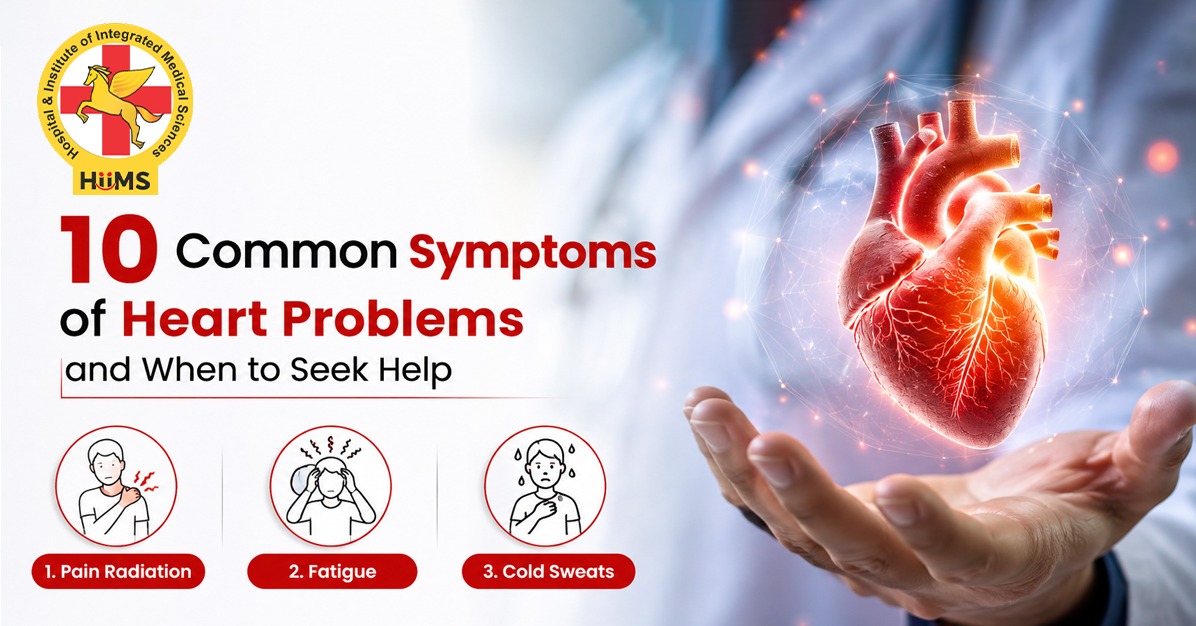
10 Common Symptoms of Heart Problems
1. Chest Pain or Pressure
Chest pain may feel like pressure, heaviness, squeezing or tightness. Sudden or lasting chest discomfort needs quick medical attention, especially when other symptoms appear with it.
2. Shortness of Breath
Feeling breathless after heavy exercise can be normal. But if you become short of breath while walking, climbing a few stairs or resting, it is worth getting checked.
3. Unusual Tiredness
Everyone feels tired after a long day. The concern is when you feel unusually weak or tired without a clear reason, especially if this change continues for several days.
4. Pain in the Arm, Jaw, Neck or Back
Heart-related pain does not always stay in the chest. Discomfort can sometimes move towards the arm, shoulder, back, neck or jaw. These are important heart disease warning signs when they occur with other symptoms.
5. Fast or Irregular Heartbeat
A racing, fluttering or pounding heartbeat can happen because of stress, caffeine or other reasons. If it keeps happening or comes with dizziness, chest discomfort or fainting, speak with a doctor.
6. Dizziness or Feeling Faint
A sudden feeling that you may faint, along with weakness or an unusual heartbeat, should not be ignored. Repeated occurrences need proper medical assessment.
7. Sudden Sweating
Sweating after exercise or in hot weather is common. Sudden cold sweating without an obvious reason is different, particularly when it happens with chest discomfort, nausea or weakness.
8. Nausea or Upper Stomach Discomfort
Sometimes people think that nausea or upper stomach discomfort is simply gas or acidity. When it starts suddenly with chest discomfort or pain in the upper body, it needs more attention.
9. Swelling in the Feet or Ankles
Swollen feet or ankles can have many causes. However, swelling that keeps returning, especially with breathlessness or unusual tiredness, should be discussed with a healthcare professional.
10. Ongoing Cough or Breathing Problems
A cough that does not settle or breathing difficulty without an obvious reason should not be ignored. Along with other signs of heart problems, it may need further assessment.
When Should You Seek Immediate Help?
Do not wait at home if you have severe or sudden chest discomfort, serious breathing problems, fainting, cold sweating, or pain spreading towards your arm, back, neck or jaw. These can be early signs of heart disease and may need emergency care.
What Can Affect Heart Health?
Food habits, lack of physical activity, smoking, alcohol, long-term stress, high blood pressure, high blood sugar and cholesterol can affect heart health. Family history can also play a role. Small changes in daily routine can be useful, but regular health checks are equally important.
How Ayurveda Looks at Heart Health
Ayurveda looks at health through food, daily routine, digestion, lifestyle and individual body type. Aahar focuses on food, Vihar on daily habits, Shaman on Ayurvedic formulations and Shodhan on specially selected therapies. At Jeena Sikho HiiMS, these principles can form part of an integrated care plan based on the person's health needs.
Ayurvedic and Integrated Heart Care at Jeena Sikho HiiMS
Jeena Sikho HiiMS combines Ayurvedic care with health assessment, lifestyle guidance and selected therapies. Depending on the person's condition, care may include diet guidance, yoga, pranayama, Ayurvedic therapies and Panchakarma under professional supervision. The objective is to understand the person's concerns and plan suitable care instead of following the same approach for everyone.
Conclusion
Knowing the signs of heart problems can help you take unusual changes more seriously. Chest discomfort, breathlessness, unusual tiredness, sweating, dizziness, palpitations or pain in the upper body should not be ignored when they are sudden, repeated or occur together.
These symptoms can have different causes, so it is better to get proper healthcare advice than to guess the reason yourself. For severe symptoms, seek emergency medical help without delay.
For ongoing concerns, you can also opt for an online video consultation (VOPD) with expert doctors at Jeena Sikho HiiMS Bengaluru and discuss your health concerns from home.
FAQs
Q1: What are common symptoms of heart problems?
Chest discomfort, breathlessness, unusual tiredness, sweating, dizziness and changes in heartbeat are some symptoms that may need attention.
Q2: Can heart problems feel like gas or acidity?
Upper stomach discomfort or nausea can sometimes occur with heart-related symptoms, so sudden discomfort should be assessed carefully.
Q3: When should chest pain be taken seriously?
Sudden or lasting chest pressure, especially with breathlessness, sweating or upper-body pain, needs immediate medical attention.
Q4: Can stress affect the heartbeat?
Stress can make the heartbeat feel faster or stronger, but repeated or unusual palpitations deserve a proper health check.
Q5: Can Ayurveda be part of heart care?
Ayurveda can form part of supervised integrated care through diet, lifestyle, yoga and selected therapies based on individual needs.