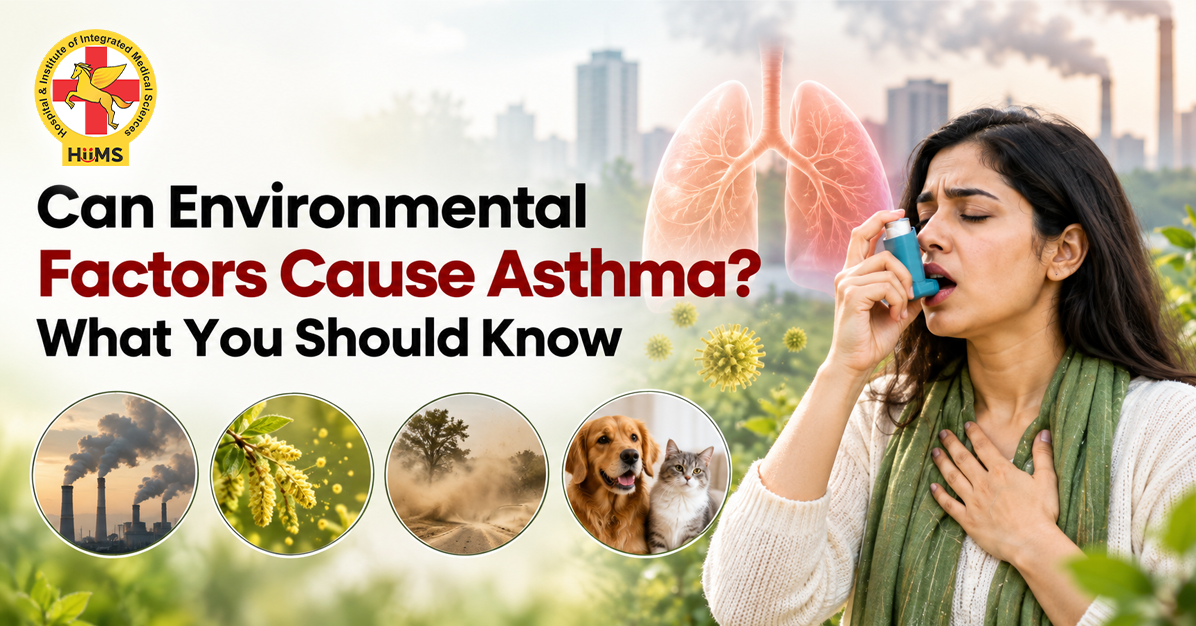
A dusty road, traffic smoke, construction work nearby, a damp room, or even a strong room freshener can make breathing uncomfortable for some people. But can these everyday exposures actually be an asthma cause, or do they simply bring on symptoms in people who already have sensitive airways? The answer is not the same for everyone.
Asthma can develop through a combination of genetic, allergic and environmental influences, while certain surroundings can also trigger or worsen existing symptoms. This is why noticing where and when breathing problems occur can be useful.
In this blog, we will look at the common environmental factors linked with asthma, what medical institutions say about them, how Ayurveda perceives such influences, and how Jeena Sikho HiiMS Bengaluru approaches respiratory care.
Can Environmental Factors Really Be an Asthma Cause?
Asthma does not usually start because of one isolated factor. A person's family history, allergies and the surroundings they live or work in can come together in different ways. Air pollution, tobacco smoke, dust, mould, certain workplace exposures and changing weather may affect sensitive respiratory tracts, while the same exposure may cause little trouble for someone else. The asthma cause can therefore be difficult to trace to one thing.
If you notice that coughing, wheezing or chest tightness repeatedly appears after being around dust, smoke or a particular workplace substance, it is worth discussing that pattern with a doctor rather than ignoring it. At Jeena Sikho HiiMS Bengaluru, you can discuss your breathing concerns with doctors and understand which factors may need closer attention.
Experiencing recurring cough, wheezing or chest tightness? Talk to doctors at Jeena Sikho HiiMS Bengaluru and explore the possible factors affecting your breathing.

What Does WHO Say About Asthma Causes?
The World Health Organization (WHO) indicates that asthma is linked with inflammation and narrowing of the small airways and that there is often no single direct cause. It lists family history, allergic conditions, tobacco smoke, air pollution, respiratory infections, house dust mites, mould and exposure to chemicals, fumes or dust at work among factors associated with asthma. WHO also states that smoke, pollen, weather changes, animal fur and strong fragrances can trigger or worsen symptoms.
Which Environmental Factors Can Trigger or Worsen Asthma?
Once you start looking closely at your surroundings, some possible asthma triggers become easier to notice. They can be present outside the home, inside it, or even at work.
Air Pollution and Traffic Smoke
Busy roads expose people to vehicle emissions and fine particles in the air. Smoke from tobacco, burning materials and industrial activity can also irritate sensitive airways. CDC reports that air pollution and secondhand smoke can trigger asthma attacks, which makes paying attention to local air conditions especially useful for people who already notice breathing changes outdoors.
Dust, Dust Mites and Indoor Allergens
House dust is not simply what accumulates on furniture. It can contain dust mites, pet dander and other particles that may cause problems for people with allergies. Bedding, mattresses, carpets and soft furnishings can collect these particles over time, making regular cleaning particularly important in the bedroom.
Mould and Damp Spaces
A damp wall, water leak or poorly ventilated bathroom can create conditions where mould grows. Breathing in mould can trigger asthma symptoms, and dealing with moisture and water damage rather than allowing damp areas to remain untreated.
Weather and Sudden Temperature Changes
Cold, dry air, high humidity and sudden weather changes can affect some people with asthma. One person may notice breathing difficulty on a cold morning, while another may feel worse during humid weather.
Workplace Dust, Chemicals and Fumes
For some people, the workplace itself can become an important source of exposure. Cleaning chemicals, wood dust, flour, metal dust, fumes and chemical vapours are among the exposures linked with work-related asthma. CDC's National Institute for Occupational Safety and Health observes and reports that workplace exposures can cause new asthma or make existing asthma worse.
How Does Ayurveda Look at Environmental Factors and Asthma?
Ayurveda looks at respiratory health as part of a person's wider daily routine rather than considering the breathing system separately. From an Ayurvedic viewpoint, Vata and Kapha are traditionally associated with respiratory complaints, and factors such as cold surroundings, dampness, unsuitable food and irregular routines may influence this balance.
The Ayurvedic approach also gives importance to Aahar, Vihar, Shaman and Shodhan. In simple terms, this means looking at food, daily habits, selected herbal preparations and therapies according to the individual's condition.
An Integrated Approach to Asthma Care at Jeena Sikho HiiMS Bengaluru
At Jeena Sikho HiiMS Bengaluru, the approach can begin by looking beyond the immediate breathing issue and focusing on the root cause of the problem, understanding the person's routine, food habits, surroundings and recurring asthma symptoms. The hospital describes its care as combining Ayurvedic principles with contemporary healthcare, with treatment planned according to individual needs.
One of the approaches used at HiiMS is the CAAT Protocol, which focuses on Capacity of Lungs, Afferent Mismatch Correction, Air Flow and Test. It is a structured approach for asthma and related breathing concerns, used alongside suitable care and lifestyle measures.
Understanding the CAAT Protocol
The four parts of CAAT are:
C — Capacity of Lungs: Focuses on breathing capacity through suitable postures and controlled breathing.
A — Afferent Mismatch Correction: Addresses the difference between breathing signals sensed by the brain and what is happening during breathing.
A — Air Flow: Includes controlled breathing practices intended to encourage smoother airflow.
T — Test: Helps observe breathing patterns and changes over time.
Simple Ways to Reduce Environmental Asthma Triggers
You cannot control every part of the surroundings, but you can often change some of the exposures around you. Keep bedding clean, deal with dampness or visible mould, avoid tobacco smoke, limit unnecessary exposure to strong fragrances and chemical sprays, and notice whether particular places repeatedly bring on breathing symptoms.
If outdoor pollution affects you, paying attention to air-quality information can help you plan outdoor activities more carefully. CDC also advises practical measures such as regular bedding care, controlling indoor humidity and addressing mould or water damage.
Conclusion
Your surroundings can be an important part of the asthma picture. Dust, smoke, polluted air, mould, weather changes and workplace exposures may trigger symptoms or, in some situations, contribute to the development of asthma.
However, there is not exactly one simple asthma cause, which is why noticing your personal patterns matters. Ayurveda adds another perspective by looking at food, routine, environment and internal balance together, while appropriate medical evaluation remains important when breathing symptoms continue.

At Jeena Sikho HiiMS Bengaluru, an integrated approach can consider these individual factors while planning care. You can also opt for a VOPD consultation with expert doctors at Jeena Sikho HiiMS to discuss your respiratory concerns from the comfort of your home and understand the next appropriate step.
FAQs
Q1: Can air pollution trigger asthma symptoms?
Air pollution can irritate sensitive airways and trigger asthma symptoms in some people, particularly during periods of poor air quality or heavy exposure to traffic and smoke.
Q2: Can dust and mould make asthma worse?
Dust, dust mites and mould can act as triggers for some people with asthma, especially when exposure occurs repeatedly inside the home.
Q3: Can weather changes trigger asthma?
Cold, dry air, high humidity and sudden weather changes can trigger breathing symptoms in some people, although individual responses can vary considerably.
Q4: Can workplace chemicals cause breathing problems?
Workplace exposure to certain chemicals, fumes, dust and cleaning products can cause new work-related asthma or make existing asthma symptoms worse.
Q5: How does Ayurveda approach asthma and environmental triggers?
Ayurveda considers respiratory health alongside food, daily routine, environmental influences and traditional concepts such as Vata and Kapha, with care selected according to the individual.